
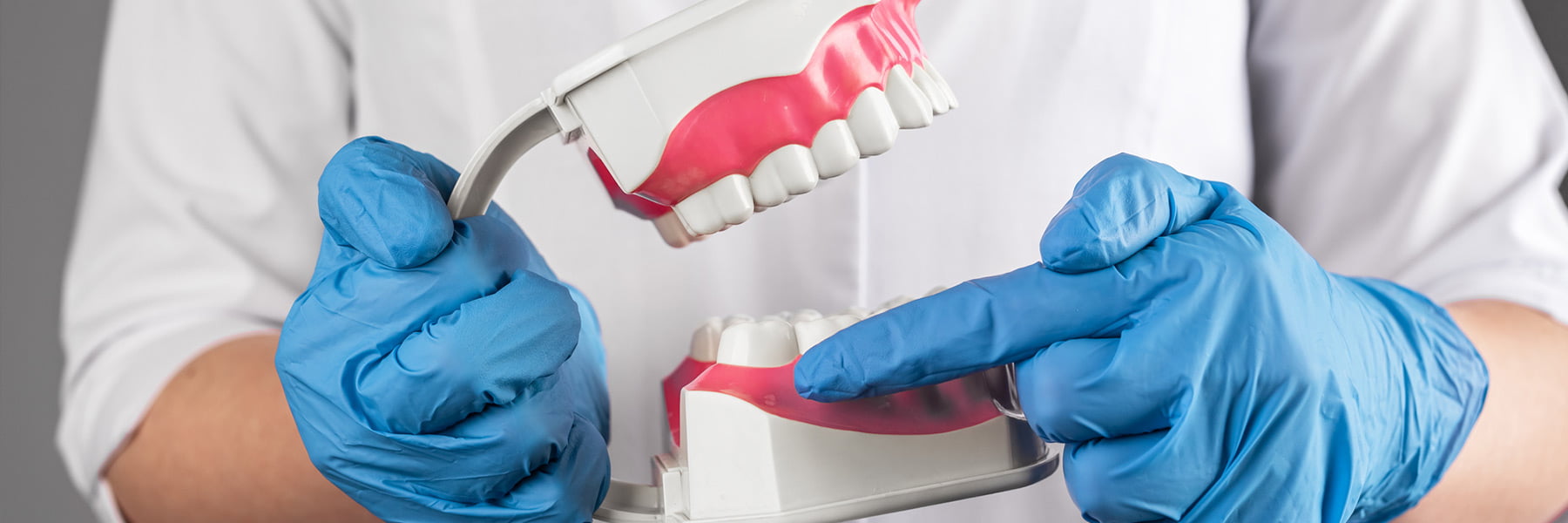
Yes, Invisalign can correct many bite problems as well as straighten crooked teeth. Depending on the individual case, Invisalign can be used to improve excessive overbite or deep bite, selected underbites, open bites, crossbites and other forms of dental misalignment.
However, not every bite problem is caused purely by the position of the teeth.
Some malocclusions are primarily dental, meaning the teeth themselves are positioned incorrectly. Others are skeletal, meaning the underlying upper and lower jaws differ significantly in size, shape or position.
This distinction is important because clear aligners can move teeth very effectively, but they cannot simply reposition a fully grown adult jawbone in every case.
At Glow Dental in Battersea, we assess the teeth, bite, gums and jaw relationship before recommending Invisalign. More complex cases can also be assessed through our specialist orthodontic service.
What Is an Overbite?
An overbite describes how much the upper front teeth overlap the lower front teeth vertically when you bite together.
A certain amount of overlap is completely normal. The term deep bite is generally used when the upper teeth overlap the lower teeth excessively.
A significant deep bite can sometimes result in:
- Excessive wear of the front teeth
- Lower teeth contacting the gum or palate behind the upper front teeth
- Chipping or damage to the teeth
- Difficulty achieving an even bite
- Cosmetic concerns about how much of the lower teeth are hidden
The British Orthodontic Society identifies deep bite as one of the common bite problems treated with orthodontics.
Overbite vs Overjet: What’s the Difference?
These terms are often confused.
Overbite describes the vertical overlap between the upper and lower front teeth.
Overjet describes how far the upper front teeth project horizontally in front of the lower front teeth.
A person can have:
- A deep overbite without particularly prominent front teeth
- A large overjet without a severe deep bite
- Both problems at the same time
The treatment required can therefore be quite different.
Can Invisalign Fix an Overbite or Deep Bite?
Yes. Invisalign can successfully improve many mild and moderate dental deep bites.
Modern systematic reviews show that clear aligners can reduce excessive vertical overlap, although the amount of correction actually achieved may be less than the amount predicted by the digital treatment plan.
Depending on your bite, Invisalign treatment may involve:
- Moving selected front teeth vertically
- Changing the inclination of the front teeth
- Adjusting the position of back teeth
- Creating space for more favourable tooth positions
- Using tooth-coloured Invisalign attachments for additional control
- Using elastics in selected cases
Your treatment is planned tooth by tooth rather than simply pushing all of the upper teeth backwards.
How Effective Is Invisalign for a Deep Bite?
Recent research suggests that clear aligners can be effective for mild to moderate dentoalveolar deep bites.
However, deep-bite correction is one of the areas where the computer-predicted movement and the movement that actually occurs can differ.
This means treatment may require:
- Additional planned correction
- Attachments
- Elastics
- Additional refinement aligners
At Glow Dental, your progress is monitored during treatment so that changes can be made if the teeth do not track exactly according to the initial digital plan.
You can read more about refinements and daily aligner wear in our guide to what to expect when wearing Invisalign.
Can Invisalign Move the Upper Teeth Back?
Yes, selected upper teeth can be moved backwards when there is sufficient space and the movement is clinically appropriate.
Space may be created through techniques such as:
- Moving back teeth backwards in suitable cases
- Small amounts of interproximal reduction (IPR)
- Dental arch changes
- Extraction in selected more complex cases
However, prominent upper teeth can sometimes result partly from the underlying jaw relationship rather than tooth position alone.
A proper assessment is therefore necessary before promising that Invisalign can simply “push the front teeth back”.
Can Invisalign Move the Lower Jaw Forward?
Not in the same way as jaw surgery or a specialist growth-modifying appliance.
For adults, Invisalign primarily works by moving teeth within the existing jaws.
In growing teenagers, certain Invisalign treatment systems and orthodontic appliances can sometimes be used as part of treatment designed to influence the bite while jaw growth is still occurring.
But a significant adult skeletal discrepancy should not be described as something that clear aligners can simply correct by “moving the jaw”.
If the underlying jaw position is the main cause of the bite problem, specialist orthodontic assessment may be necessary.
When Might an Overbite Need Jaw Surgery?
Most people with an overbite will not require jaw surgery.
However, severe bite problems can occasionally be caused by a significant difference in the position or size of the upper and lower jaws.
In those situations, orthodontics alone may not be able to produce an ideal bite or facial relationship.
The British Orthodontic Society explains that where the jawbones themselves are significantly out of position, orthognathic surgery may sometimes be combined with orthodontic treatment.
Glow Dental’s consultant orthodontist is also experienced in complex orthodontic and orthognathic cases, allowing patients with more significant skeletal discrepancies to receive an appropriate assessment.
Can Invisalign Fix an Underbite?
Invisalign can treat some underbites, particularly when the problem is mainly dental.
An underbite occurs when the lower front teeth sit in front of the upper front teeth when the jaws are closed.
It can result from:
- Upper teeth positioned too far backwards
- Lower teeth positioned too far forwards
- A relatively small or retrusive upper jaw
- A relatively prominent lower jaw
- A combination of tooth and jaw factors
How Does Invisalign Correct an Underbite?
For a suitable dental underbite, aligners may be used to:
- Move selected lower teeth backwards
- Move selected upper teeth forwards
- Correct individual teeth that are in reverse bite
- Coordinate the upper and lower dental arches
- Use attachments or elastics to improve control of the movement
This is different from physically moving an adult lower jaw backwards.
Can Invisalign Fix a Severe Underbite?
Sometimes clear aligners can form part of the treatment, but a severe skeletal underbite may require a different approach.
If the lower jaw is substantially larger or further forward than the upper jaw, simply tilting the teeth to camouflage the discrepancy may not be appropriate.
Depending on severity and age, treatment options might include:
- Specialist orthodontics
- Fixed braces
- Growth-modifying treatment in younger patients
- Combined orthodontics and jaw surgery in selected adults
Our specialist orthodontic service allows more complex jaw and bite relationships to be assessed properly rather than assuming Invisalign is the right solution for every underbite.
Can Invisalign Fix an Open Bite?
Yes. Clear aligners can successfully treat many dental anterior open bites in adults.
An open bite occurs when some upper and lower teeth do not meet when the jaws are closed.
A common example is an anterior open bite, where the back teeth meet but a vertical gap remains between the upper and lower front teeth.
Possible causes include:
- Tooth position
- Tongue posture or tongue thrust
- Long-term thumb or finger sucking during childhood
- Jaw growth pattern
- A combination of dental and skeletal factors
How Does Invisalign Close an Open Bite?
The movement required varies between patients.
Clear-aligner treatment may involve:
- Moving front teeth vertically
- Controlling the vertical position of back teeth
- Changing tooth inclination
- Using attachments
- Using elastics or other auxiliary techniques where needed
Recent systematic reviews show that clear aligners can successfully increase overbite and close anterior open bites in suitable adult patients.
However, a severe skeletal open bite remains a more complex orthodontic problem and may require specialist treatment, additional appliances or jaw surgery.
Can an Open Bite Come Back After Invisalign?
Any orthodontic result can relapse, but open bites can be particularly challenging when an underlying habit or skeletal growth pattern contributes to the problem.
For example, if persistent tongue posture helped cause the original open bite, simply moving the teeth may not eliminate every factor encouraging them to move back.
Long-term retainer wear is therefore important after treatment.
Can Invisalign Fix a Crossbite?
Yes. Invisalign can treat many dental crossbites.
A crossbite occurs when one or more upper teeth bite inside the corresponding lower teeth rather than slightly outside them.
Crossbites can affect:
- The front teeth
- The back teeth
- One side of the mouth
- Both sides
What Is the Difference Between a Dental and Skeletal Crossbite?
This distinction can determine which treatment is most appropriate.
Dental Crossbite
A dental crossbite occurs mainly because individual teeth are tilted or positioned incorrectly.
Invisalign can often move these teeth into the correct relationship.
Skeletal Crossbite
A skeletal crossbite results from a discrepancy in the width or position of the jaws — for example, an upper jaw that is significantly too narrow.
Simply pushing the upper teeth outwards may not safely correct the underlying problem.
Growing children may benefit from a dedicated palatal expansion appliance. Adult skeletal expansion can require more specialised orthodontic techniques and, in some severe cases, surgery.
Why Should a Crossbite Be Assessed?
A crossbite is not simply a cosmetic issue.
Depending on the type, it can contribute to:
- Uneven tooth wear
- Trauma to particular teeth
- Gum recession around teeth placed outside the ideal bone position
- Unbalanced chewing
- A functional jaw shift
In growing children, some crossbites can also influence the way the jaws develop, so earlier orthodontic assessment may be beneficial.
Can Invisalign Pull a Tooth Down?
Invisalign can produce controlled vertical movement known as extrusion in suitable teeth.
Extrusion means moving an erupted tooth further out of its socket towards the biting plane.
This may be useful when:
- One tooth sits higher than neighbouring teeth
- Vertical alignment needs improving
- Selected movements are required as part of bite correction
Tooth-coloured attachments are often used to give the aligner additional grip for vertical movements.
How Predictable Is Tooth Extrusion With Invisalign?
Vertical tooth movements can be more challenging than simple tipping or alignment.
The amount that can be achieved depends on:
- Which tooth needs to move
- The shape of the tooth
- The amount of movement required
- Attachment design
- Available space
- The patient’s biological response
Additional refinement aligners may therefore be required.
Can Invisalign Pull Down an Impacted Tooth?
This is a different situation.
An impacted tooth is a tooth that has failed to erupt normally and may remain partly or completely inside the gum or jawbone.
Complex impacted teeth — particularly impacted canine teeth — may require:
- Specialist orthodontic assessment
- Surgical exposure of the tooth
- Orthodontic traction
- Fixed braces or a combination of orthodontic techniques
Clear aligners alone are therefore not automatically the appropriate solution for an unerupted or deeply impacted tooth.
Can Invisalign Fix All Bite Problems?
No orthodontic appliance is ideal for every case.
Invisalign has become considerably more sophisticated and can now treat many cases that historically would have required fixed braces.
However, treatment becomes less predictable when there are:
- Severe skeletal discrepancies
- Very large tooth movements
- Complex extraction cases
- Severely impacted teeth
- Major jaw asymmetry
- Complex root movement requirements
- Severe crossbites requiring true skeletal expansion
The British Orthodontic Society specifically advises that aligners are highly effective for selected cases but are not automatically the best option for every complex orthodontic problem.
A responsible consultation should therefore discuss all suitable orthodontic options, not simply Invisalign.
What Are Invisalign Attachments?
Attachments are small shapes of tooth-coloured composite material bonded temporarily to selected teeth.
They provide additional grip between the aligner and tooth, making more controlled movements possible.
Attachments can help with movements such as:
- Rotation
- Extrusion
- Intrusion
- Root control
- Complex bite correction
The number, shape and position of attachments vary according to the movements required.
Why Are Elastics Sometimes Used With Invisalign?
Some bite corrections require forces between the upper and lower teeth that cannot be produced by the plastic aligners alone.
Small orthodontic elastics can sometimes be attached between the upper and lower arches to help:
- Correct certain overbites
- Improve some underbites
- Correct selected crossbites
- Improve the way the upper and lower teeth meet
If elastics are prescribed, wearing them as instructed is important for achieving the planned result.
How Many Hours a Day Do You Need to Wear Invisalign?
Clear aligners only work while they are in contact with your teeth.
Invisalign recommends approximately 20–22 hours of daily wear, while British Orthodontic Society patient guidance advises essentially full-time wear except for eating, drinking anything other than plain water and cleaning the teeth.
Regularly leaving the trays out for long periods can reduce the predictability of bite correction and may result in the next aligners no longer fitting properly.
How Long Does Invisalign Take to Correct a Bite?
There is no universal “6–18 month” rule that applies to every bite problem.
Treatment time depends on:
- The type of bite problem
- Its severity
- How many teeth need moving
- Whether elastics are required
- Whether extractions or IPR are needed
- How reliably the aligners are worn
- How the teeth respond to treatment
- Whether refinement aligners are needed
Some relatively straightforward cases can be completed in several months, while comprehensive bite correction can take considerably longer.
Your 3D Invisalign plan provides a more useful individual estimate after your teeth and bite have been assessed.
Do You Need Refinements After Invisalign Bite Correction?
Quite often.
Teeth are living biological structures and do not always move exactly as the initial computer simulation predicts.
At the end of the first series of aligners, your dentist may carry out another scan if:
- The bite needs further adjustment
- A tooth has not tracked completely
- More vertical movement is required
- The final alignment could be improved
Additional aligners are known as refinements.
Needing refinements does not necessarily mean Invisalign treatment has failed; they are a normal part of many comprehensive cases.
Will the Bite Stay Corrected After Invisalign?
Orthodontic treatment does not end with the final active aligner.
Your teeth can move after Invisalign, so retainers are needed to help maintain both:
- Tooth alignment
- The corrected bite
Glow Dental offers several retention options, including:
- Clear removable retainers
- Fixed bonded retainers
- Invisalign Vivera retainers
Long-term retention is important if you want to preserve your orthodontic result.
Why Gum Health Matters Before Invisalign Bite Correction
Orthodontic treatment moves teeth through the supporting bone, so the health of the gums and periodontal tissues needs to be considered before treatment begins.
Active gum disease should generally be brought under control before elective tooth movement.
At Glow Dental, your teeth and gums are examined before Invisalign planning. Our dental hygienists can help improve plaque control, while patients with more advanced periodontal disease can be assessed through our specialist periodontal service.
Invisalign vs Fixed Braces for Bite Correction
Both systems can produce excellent results, but one may be more appropriate for a particular movement.
Invisalign May Be Particularly Attractive When:
- The required movements are predictable with clear aligners.
- You want a discreet removable appliance.
- You are able to wear the aligners consistently.
- Being able to remove the appliance for cleaning is important to you.
Fixed Braces May Be Preferable When:
- Very complex tooth movements are needed.
- There is severe crowding.
- Complex extraction mechanics are required.
- Patient compliance with removable aligners is likely to be difficult.
- The orthodontist believes fixed appliances will provide more predictable control.
Glow Dental offers both Invisalign and specialist orthodontic treatment, allowing your bite to determine the appliance rather than choosing the appliance first and trying to make every bite fit it.
How Does Glow Dental Plan Invisalign Bite Correction?
At Glow Dental in Battersea, Invisalign treatment begins with a consultation to understand both your cosmetic concerns and how your teeth currently meet.
The treatment process can include:
- Dental examination to make sure the teeth and gums are healthy
- 3D digital scanning of your teeth
- Detailed bite assessment
- ClinCheck digital treatment planning
- A digital preview of the proposed tooth movements
- Attachments and elastics where required
- Regular progress monitoring
- Refinement aligners where appropriate
- Long-term retainers after treatment
Glow Dental is currently a Platinum Invisalign Provider and also has a consultant orthodontist available for complex cases involving more significant bite or jaw discrepancies.
Our Invisalign patients are generally reviewed at intervals during treatment, with appointments planned according to the complexity and progress of the case.
See Real Invisalign Before and After Results
Every bite is different, so real completed cases can be more useful than generic illustrations when considering treatment.
Our Invisalign before-and-after gallery shows actual Glow Dental patients treated for concerns including:
- Crowding
- Spacing
- Uneven tooth alignment
- Smile symmetry
- Selected bite problems
View Invisalign Before and After Results
Frequently Asked Questions About Invisalign and Bite Correction
Can Invisalign fix a deep overbite?
Yes. Invisalign can successfully improve many mild and moderate dental deep bites. More severe skeletal cases may require a different or combined orthodontic approach.
Can Invisalign fix a 100% overbite?
Potentially, but the percentage alone does not determine whether Invisalign is suitable. The orthodontist needs to understand whether the deep bite is caused by tooth position, jaw relationships or a combination of factors.
Can Invisalign fix an overjet?
It can treat many cases involving prominent upper front teeth, depending on the amount of space required and the underlying jaw relationship. Significant skeletal discrepancies can be more complex.
Can Invisalign move my lower jaw forward?
In adults, Invisalign mainly moves teeth rather than physically advancing the lower jawbone. Growing teenagers can sometimes receive orthodontic treatment designed to influence the developing bite and jaw relationship.
Can Invisalign fix an underbite?
Yes, selected dental underbites can respond very well to clear aligners. Severe skeletal underbites may require specialist orthodontic treatment or jaw surgery.
Can Invisalign fix an open bite?
Yes. Research supports clear-aligner treatment for many adult anterior open bites. Severe skeletal open bites remain more complex and may require additional treatment.
Can Invisalign fix a crossbite?
Many dental crossbites can be corrected with Invisalign. Crossbites caused primarily by a significant jaw-width discrepancy may require expansion or another specialist orthodontic approach.
Can Invisalign pull a tooth down?
Limited extrusion of erupted teeth is possible with clear aligners, often using attachments. More difficult vertical movements are less predictable and may require refinements or alternative techniques.
Can Invisalign bring down an impacted canine?
A deeply impacted canine often requires specialist orthodontics and sometimes surgical exposure with orthodontic traction. Invisalign alone is not automatically the appropriate method.
Are elastics used with Invisalign?
Yes. Elastics can be used in selected cases to create additional forces between the upper and lower teeth during bite correction.
How long does Invisalign take to fix an overbite?
It depends on the severity and cause of the bite. A straightforward dental correction may take several months, while a comprehensive bite correction can take considerably longer. Your digital treatment plan provides a more useful individual estimate.
Can Invisalign completely correct every bite?
No. Some complex skeletal or dental problems are more predictably treated with fixed braces, specialist appliances or combined orthodontic and surgical treatment.
Can Invisalign Fix Your Bite? The Bottom Line
Invisalign can treat far more than slightly crooked front teeth. In suitable patients, clear aligners can successfully improve deep bites, overjets, selected underbites, open bites and crossbites as well as crowding and spacing.
However, the key question is not simply “Can Invisalign move these teeth?”
It is:
“What is causing the bite problem, and which orthodontic treatment will correct it most predictably and safely?”
Dental bite problems can often be treated with aligners alone. More significant skeletal discrepancies may require specialist appliances, fixed braces or, occasionally, orthodontics combined with jaw surgery.
At Glow Dental, we use 3D digital scans and Invisalign ClinCheck technology to plan treatment and have access to specialist orthodontic expertise for more complex cases.
You can learn more about Invisalign at Glow Dental, explore our real Invisalign results, or contact Glow Dental in Battersea to arrange a complimentary Invisalign consultation.
Written by:
Glow Dental
Published:
Last updated: