How much toothpaste should you actually put on your toothbrush? Many adverts show a thick ribbon covering the entire brush head, while other advice recommends only a pea-sized amount.
The correct answer depends mainly on your age, the fluoride strength of the toothpaste and whether you are using an ordinary or prescription product.
For young children, controlling the amount is particularly important because they are more likely to swallow toothpaste. For adults, the exact size of the blob matters less than using an appropriate fluoride toothpaste, brushing every tooth surface thoroughly and following the instructions on the product.
Why Does the Amount of Toothpaste Matter?
Toothpaste is not simply there to create foam or make your mouth feel fresh. Fluoride toothpaste plays an important role in protecting teeth against decay by helping enamel resist and recover from acid attacks.
Using an enormous amount does not make your teeth cleaner. What matters more is:
- Using toothpaste with the correct fluoride concentration
- Brushing effectively for around two minutes
- Brushing twice a day
- Cleaning all tooth surfaces and along the gum line
- Spitting out excess toothpaste without rinsing immediately afterwards
For young children, using too much fluoride toothpaste regularly can also increase the amount of fluoride they swallow while their permanent teeth are developing, which is why UK guidance gives specific recommendations for toothpaste quantities in different age groups.
How Much Toothpaste Should Adults Use?
Unlike the advice for young children, current UK preventive dental guidance does not set a universal “pea-sized” amount for every adult using ordinary fluoride toothpaste.
Most adults should use a toothpaste containing 1,350–1,500 ppm fluoride and use enough to brush all tooth surfaces effectively, following the manufacturer’s directions.
You do not need to cover the entire toothbrush with a thick strip of toothpaste. More toothpaste does not mean more effective cleaning and often simply produces more foam.
The most important steps are to brush:
- At least twice a day
- For approximately two minutes
- Last thing at night or before bed
- On at least one other occasion during the day
After brushing, spit out the excess toothpaste but do not rinse with water. This leaves fluoride around the teeth for longer and improves its protective effect.
How Much Toothpaste Should Children Use?
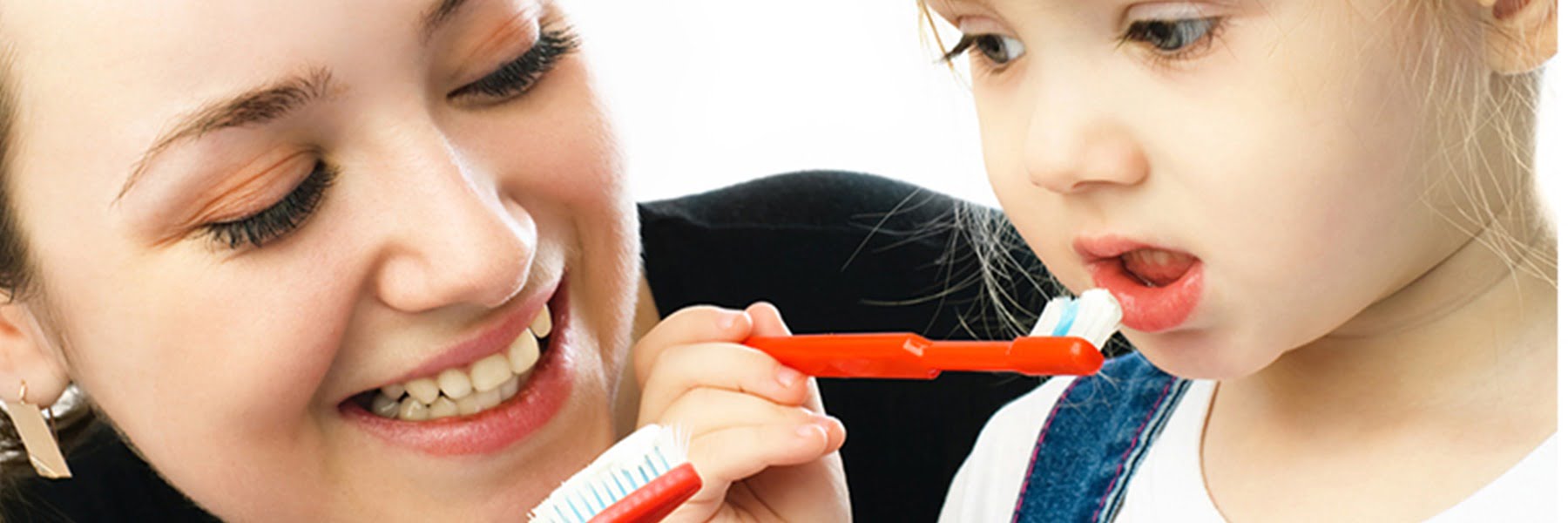
For children, the amount of toothpaste matters much more because younger children often swallow some toothpaste while brushing.
Children Under 3 Years
As soon as the first baby tooth appears, brushing should begin twice daily with fluoride toothpaste.
Children under the age of three should use only a smear of toothpaste containing at least 1,000 ppm fluoride.
A smear means a very thin film of toothpaste on the brush — not a full blob.
Parents or carers should do the brushing at this age.
Children Aged 3 to 6 Years
Children aged three to six should use no more than a pea-sized amount of fluoride toothpaste.
The toothpaste should contain at least 1,000 ppm fluoride. Children at higher risk of tooth decay may be advised by their dentist to use a toothpaste containing 1,350–1,500 ppm fluoride.
Encourage children to spit the toothpaste out after brushing but do not encourage rinsing with water.
Children Aged 7 and Over
From around age seven, children can generally use standard family toothpaste containing 1,350–1,500 ppm fluoride.
The precise quantity is less critical than it is for toddlers, but there is still no benefit in covering the toothbrush with a large amount of toothpaste.
Children should continue to be supervised or assisted with brushing until they are able to clean all their teeth effectively themselves.
For more advice about protecting developing teeth, visit our children’s dentistry page.
Why Should Children Not Use Too Much Toothpaste?
Young children often swallow toothpaste because they have not yet developed the ability to spit reliably.
Swallowing excessive amounts of fluoride repeatedly while permanent teeth are developing can contribute to dental fluorosis.
Mild fluorosis usually appears as fine white lines or patches within the enamel and often has no effect on the health or function of the teeth. More obvious fluorosis is much less common in the UK.
The recommended smear and pea-sized quantities allow children to benefit from fluoride’s protection against tooth decay while limiting the amount that may be swallowed.
What If My Child Swallows Toothpaste?
Swallowing a tiny amount during normal brushing is common, particularly in young children, and is one reason only small quantities should be used.
However, children should not be allowed to eat toothpaste directly from the tube.
Keep toothpaste somewhere young children cannot access it unsupervised and teach them gradually to spit out excess toothpaste after brushing.
If a child consumes a large quantity of toothpaste, seek appropriate medical advice rather than waiting for symptoms to develop.
How Much Prescription High-Fluoride Toothpaste Should You Use?
This is one situation where you should not simply apply the ordinary pea-sized rule.
Prescription toothpastes containing 2,800 ppm or 5,000 ppm fluoride are used for selected people at high risk of tooth decay.
Current UK guidance advises:
- 2,800 ppm fluoride toothpaste may be considered from age 10 in people at high risk of dental caries.
- 5,000 ppm fluoride toothpaste may be considered from age 16 in people at particularly high risk.
The amount and frequency should follow the specific product instructions and the directions provided by your dentist. Some high-fluoride products have licensed instructions that differ significantly from ordinary supermarket toothpaste.
Do not share prescription-strength toothpaste with another family member, even if they also experience tooth decay.
People who may be considered for high-fluoride toothpaste include those with:
- Repeated or active tooth decay
- Root surface decay
- Significant dry mouth
- A high-sugar diet that has been difficult to modify
- Medication that increases decay risk
- Certain medical conditions or dental circumstances that make decay more likely
A dental examination allows your dentist to assess your individual decay risk and decide whether ordinary or prescription-strength fluoride toothpaste is appropriate.
How Much Sensitive Toothpaste Should You Use?
For everyday brushing, use sensitivity toothpaste according to the manufacturer’s directions rather than applying excessive amounts.
Some sensitivity toothpastes can also be applied directly to a particularly sensitive area after brushing, but this depends on the product. Follow the instructions or your dentist’s advice.
Do not assume that persistent pain is simply tooth sensitivity. Sensitivity can also be caused by:
- Tooth decay
- A cracked tooth
- Gum recession
- Dental erosion
- A leaking or damaged filling
- Grinding or clenching
If one tooth suddenly becomes sensitive or the symptoms continue despite using sensitivity toothpaste, arrange a dental examination.
How Much Whitening Toothpaste Should You Use?
Using more whitening toothpaste will not make your teeth whiten faster.
Whitening toothpaste mainly helps remove surface stains rather than changing the underlying colour of the tooth. Some products achieve this partly through abrasive polishing ingredients.
Applying more toothpaste or brushing harder can increase abrasion without giving you a better whitening result.
Use the amount recommended on the packaging and brush gently.
If you want to change the actual shade of your teeth rather than simply remove surface staining, professionally supervised teeth whitening is a more predictable option.
Does the Amount Change if You Use an Electric Toothbrush?
No special additional amount of toothpaste is required simply because you use an electric toothbrush.
In fact, the smaller round or compact head found on many electric toothbrushes naturally holds less toothpaste than a traditional manual brush.
That does not reduce the effectiveness of brushing.
The toothbrush physically removes plaque, while the toothpaste provides fluoride and other active ingredients. You do not need a thick layer covering every bristle.
What About Braces?
People with fixed braces are at increased risk of plaque collecting around brackets and wires, but this does not mean that dramatically more toothpaste is required.
The important factors are:
- Using fluoride toothpaste
- Cleaning carefully around every bracket
- Cleaning along the gum line
- Using interdental brushes where appropriate
- Following any additional fluoride advice provided by your dentist or orthodontist
If you have braces and repeatedly develop areas of early decay, your dental team may recommend additional preventive measures.
What If You Have Dry Mouth?
People with persistent dry mouth have less saliva available to neutralise acids and remineralise teeth, which can significantly increase the risk of cavities.
Using more ordinary toothpaste is not necessarily the solution.
Instead, your dentist may recommend:
- A suitable fluoride toothpaste
- Prescription high-fluoride toothpaste if your decay risk is sufficiently high
- A fluoride mouthwash used at a different time from brushing
- Dry-mouth gels or saliva substitutes
- Changes to diet or medication where appropriate
Persistent dry mouth should be discussed with your dentist because it may be related to medication, medical conditions or other underlying factors.
Should You Use More Toothpaste if You Have Implants, Crowns or Fillings?
Not generally.
Having dental restorations does not mean you need to cover the entire toothbrush with toothpaste.
However, oral hygiene becomes particularly important around crowns, bridges and dental implants because plaque can accumulate around their margins and surrounding gums.
Your dentist or dental hygienist can show you the most effective brushing and interdental cleaning techniques for your particular dental work.
Does More Toothpaste Mean Cleaner Teeth?
No.
The physical removal of plaque depends much more on your brushing technique than on the quantity of toothpaste.
A large amount of toothpaste creates more foam, which can actually make some people feel that they need to stop brushing before the recommended two minutes.
Instead of concentrating on how much foam is produced, concentrate on systematically cleaning:
- The outside surfaces of every tooth
- The inside surfaces
- The chewing surfaces
- The gum line
- Hard-to-reach back teeth
Should You Rinse After Brushing?
No. Spit out the excess toothpaste, but do not immediately rinse your mouth with water.
This is one of the simplest ways to increase the benefit you receive from fluoride toothpaste.
Rinsing immediately after brushing washes away the concentrated fluoride remaining around the teeth.
If you use fluoride mouthwash, it is generally better to use it at a different time of day rather than immediately after brushing, unless your dentist has advised otherwise.
Can Toothpaste Expire?
Yes. Toothpaste normally carries an expiry or use-by date specified by the manufacturer.
Once that date has passed, the manufacturer can no longer guarantee that the product will perform exactly as intended. Over time:
- The texture may change
- The ingredients can separate
- The flavour may deteriorate
- The intended effectiveness and stability of active ingredients may no longer be guaranteed
Expired toothpaste is not automatically dangerous simply because the date has passed, but there is little reason to continue using it when a fresh fluoride toothpaste is inexpensive and readily available.
Check the date on the tube or packaging and replace toothpaste that is significantly out of date, has separated or has noticeably changed in consistency.
Is a Full Strip of Toothpaste Harmful?
For a healthy adult using ordinary toothpaste appropriately, accidentally using a full strip is unlikely to be a problem. It is simply unnecessary.
For young children, however, regularly covering the whole toothbrush with toothpaste is not recommended because they may swallow a much larger quantity of fluoride than intended.
That is why the recommended amounts are much more specific for children under seven.
Quick Guide: How Much Toothpaste Should You Use?
- Children under 3: a smear of toothpaste containing at least 1,000 ppm fluoride.
- Children aged 3–6: a pea-sized amount containing at least 1,000 ppm fluoride.
- Children 7+: standard 1,350–1,500 ppm fluoride toothpaste; follow product instructions and avoid excessive amounts.
- Most adults: 1,350–1,500 ppm fluoride toothpaste; use enough for effective brushing rather than assuming more is better.
- Sensitivity or whitening toothpaste: follow the product directions.
- 2,800 ppm or 5,000 ppm prescription toothpaste: follow your dentist’s and the specific product’s instructions precisely.
What Matters More Than the Amount of Toothpaste?
The size of the toothpaste blob is only one small part of maintaining healthy teeth.
For most people, the most important everyday habits are:
- Brush twice daily for around two minutes.
- Use an appropriate fluoride toothpaste.
- Brush last thing before bed and on one other occasion.
- Clean carefully along the gum line.
- Clean between the teeth every day where appropriate.
- Spit after brushing rather than rinsing.
- Limit the frequency of sugary foods and drinks.
- Attend dental examinations according to your individual oral-health needs.
If you are unsure whether you are using the right toothpaste, fluoride strength or brushing technique, our dental hygienists can provide personalised oral-hygiene advice.
You can also arrange a routine dental check-up at Glow Dental so we can assess your risk of tooth decay, gum disease and tooth wear and recommend products appropriate for you.
Contact Glow Dental in Battersea to arrange an appointment.
Written by:
Glow Dental
Published:
Last updated: