
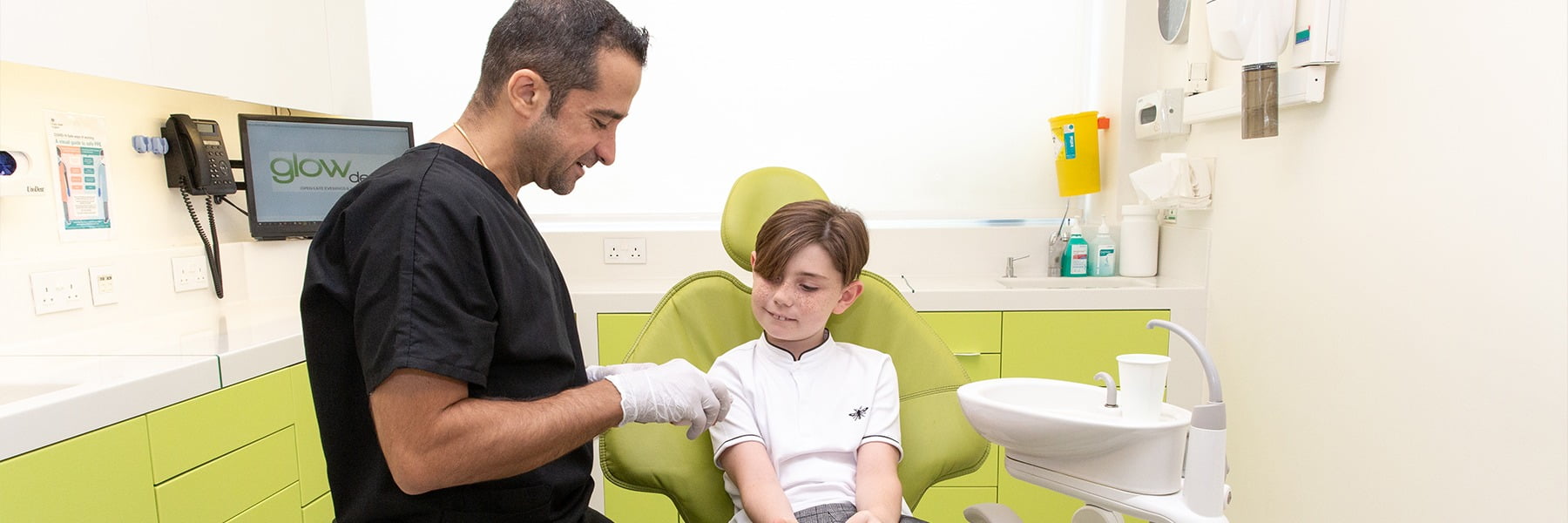
Parents often ask: when should my child first see a dentist?
The general advice is to arrange your child’s first dental visit when their first milk teeth appear, or by their first birthday at the latest.
Although a baby may have only one or two teeth, an early appointment allows the dentist to check their development, offer preventive advice and help your child become familiar with the dental practice.
Regular visits are an important part of children’s dentistry and can help establish healthy habits from an early age.
Why Should Children Visit the Dentist So Early?
Early dental visits are not only about checking for problems. They give parents an opportunity to ask questions and learn how to care for their child’s teeth properly from the beginning.
An early appointment allows the dentist to:
- Check that the teeth and gums are developing normally
- Look for early signs of tooth decay
- Explain how and when to brush a baby’s teeth
- Recommend suitable fluoride toothpaste
- Discuss bottle feeding, dummy use, diet and sugar intake
- Answer questions about teething
- Help the child become comfortable in a dental environment
Introducing dental visits before there is a problem can help children see the practice as a familiar and positive place rather than somewhere they attend only when they are in pain.
What Happens at a Child’s First Dental Appointment?
A child’s first dental appointment is usually short, gentle and relaxed. The dentist may ask the parent to hold the child on their lap while checking the mouth.
The appointment may include:
- A gentle examination of the teeth, gums and mouth
- A check of how the milk teeth are developing
- Advice about brushing technique
- Guidance on fluoride toothpaste
- A discussion about food, snacks and drinks
- Advice on reducing the risk of tooth decay
Treatment is rarely needed during a routine first visit. The aim is usually to introduce the child to the dentist, provide preventive advice and make the experience calm and positive.
You can learn more about what happens during routine dental examinations at Glow Dental.
When Should You Start Brushing a Baby’s Teeth?
Start brushing as soon as the first milk tooth appears. Brush twice a day, including immediately before bedtime.
Children under three should use a small smear of toothpaste containing at least 1,000 parts per million of fluoride. Children aged three to six should use a pea-sized amount.
Young children need help and supervision with brushing. Encourage them to spit out the toothpaste after brushing, but avoid rinsing with water, as this washes away the protective fluoride.
Is Dental Care Free for Children in the UK?
NHS dental treatment in England is free for children under 18 and for young people under 19 who are in full-time education.
This can include routine examinations and clinically necessary NHS dental treatment. However, access depends on whether a dental practice is accepting NHS patients. Private fees may apply where treatment is provided privately.
Dental charging and eligibility rules differ across England, Scotland, Wales and Northern Ireland. Read our guide to free dental treatment for children in the UK for further information.
Why Should Parents Not Wait Until a Child Is Older?
Tooth decay can develop soon after the first milk teeth appear. Milk teeth have a thinner layer of enamel than adult teeth, which means decay can progress quickly if it is not identified and managed.
Tooth decay is also a major cause of hospital admission among young children in England. Early dental appointments can help identify concerns sooner and give parents practical advice on brushing, fluoride and reducing sugar intake.
Milk teeth are important for eating, speaking, smiling and maintaining space for the adult teeth. Keeping them healthy supports a child’s wider development and wellbeing.
How Often Should Children See a Dentist?
After the first appointment, the dentist will recommend how often your child should return. The interval is based on their individual oral health rather than applying the same schedule to every child.
The recommended frequency may depend on:
- The child’s age
- Their risk of tooth decay
- Brushing and oral hygiene habits
- Diet and frequency of sugary foods or drinks
- Previous dental problems
- Medical history
- How the teeth and jaws are developing
Some children may need to be seen every three or six months, while children with a lower risk of dental problems may be reviewed less frequently.
Tips for a Successful First Dental Visit
Parents can help make the first appointment feel calm and positive by preparing their child in a simple and reassuring way.
- Choose a time when your child is normally well-rested.
- Explain that the dentist will count and look at their teeth.
- Keep your language simple and positive.
- Avoid words such as “pain”, “hurt”, “injection” or “needle”.
- Read a children’s story about visiting the dentist.
- Avoid sharing negative experiences from your own dental history.
- Bring a favourite comfort toy if this helps your child relax.
- Remain calm, as children can notice parental anxiety.
There is no need to prepare your child with a detailed description of the appointment. The dental team can explain each step using age-appropriate and reassuring language.
What If My Child Is Afraid of the Dentist?
It is normal for some children to feel uncertain in a new environment. They may not be ready to sit in the dental chair or open their mouth fully during their first appointment.
The dental team may begin by simply speaking to the child, showing them the room or allowing them to become familiar with the chair and equipment. Building confidence gradually can be more effective than trying to complete too much during one visit.
Regular positive appointments can help reduce anxiety and make future treatment easier if it is ever needed.
What If My Child Is Older and Has Never Visited a Dentist?
It is never too late to arrange a first appointment. If your child is three, four or older and has not yet visited a dentist, book an examination as soon as possible.
The dentist can check the child’s teeth and gums, identify any concerns and provide advice appropriate to their age. Dental teams are experienced in helping children who may feel nervous or unfamiliar with the practice.
When Should a Child See an Orthodontist?
A routine dentist can monitor how your child’s teeth and jaws are developing. If there are signs of crowding, bite problems or concerns about jaw growth, the dentist may recommend an orthodontic assessment.
Not every child needs early treatment, but some problems can benefit from being identified before all of the adult teeth have appeared. Learn more about early orthodontic treatment at Glow Dental.
Key Points for Parents
- Arrange the first dental visit when the first milk teeth appear or by age one.
- Start brushing as soon as the first tooth comes through.
- Use an age-appropriate amount of fluoride toothpaste.
- The dentist will recommend a recall interval based on the child’s individual needs.
- Early, positive visits can help children become comfortable with dental care.
- It is never too late to arrange a child’s first dental appointment.
Book Your Child’s First Dental Appointment
If your child’s first tooth has appeared, or they have not yet visited a dentist, our friendly team can help make their first appointment calm and positive.
Learn more about our children’s dental care or contact us to arrange an appointment at our Battersea dental practice.
Written by:
Glow Dental
Published:
Last updated: