
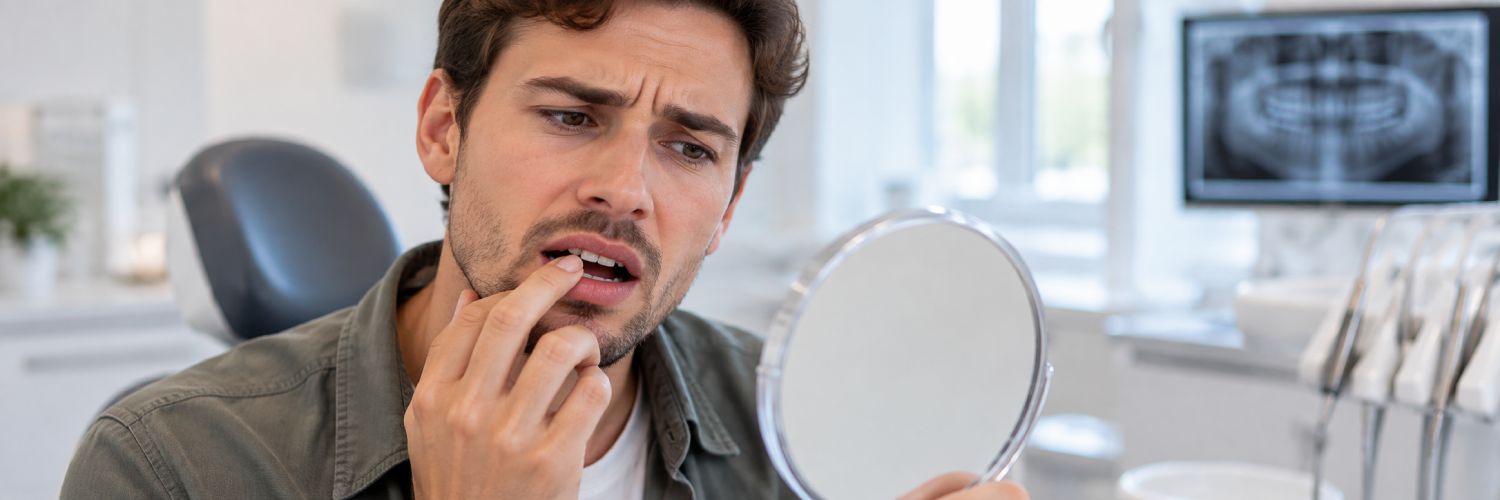
Biting into something hard and suddenly feeling a piece of your tooth break away can be quite a shock. Sometimes it’s just a tiny chip that you notice with your tongue. Other times, a larger section breaks off, leaving a sharp edge, sensitivity or even severe toothache.
The good news is that most chipped and broken teeth can be repaired. Modern dentistry offers several ways to restore damaged teeth, from simple polishing and composite bonding to dental crowns and root canal treatment.
However, the right treatment depends on how much of the tooth has broken, whether the nerve has been affected and how much healthy tooth structure remains.
In this article, we’ll explain how dentists repair broken teeth, whether a chipped tooth can heal on its own, why a damaged tooth might be associated with headaches and when you should seek urgent dental care.
Can a Broken Tooth Be Repaired?
Yes, in many cases. Even when a fairly large piece of a tooth has broken away, a dentist may be able to rebuild it or protect the remaining structure with a suitable restoration.
A small chip on a front tooth might need nothing more than smoothing or composite bonding. A broken back tooth that takes substantial pressure when chewing may need a filling, onlay or crown.
If the break has reached the pulp, which contains the tooth’s nerves and blood vessels, root canal treatment may be needed before the tooth can be restored.
Unfortunately, not every tooth can be saved. A deep fracture extending into the root, a tooth that has split into separate sections or one with insufficient healthy structure may need to be removed.
It’s worth remembering that the appearance of a broken tooth doesn’t always tell you how serious the damage is. A tooth that looks relatively normal can have a deep crack, while a dramatic-looking chip may involve only the outer enamel.
That’s why a dental examination is important before deciding whether a tooth can be repaired.
What Should You Do Immediately After Breaking a Tooth?
Whether you’ve broken a tooth while eating, playing sport or after an accident, a few sensible steps can help protect it until you see a dentist.
1. Save Any Broken Pieces
If you can find the fragment of tooth that has broken off, keep it.
The NHS recommends placing the fragment in a small container of milk or saliva and taking it to your dental appointment. In suitable cases, the dentist may be able to reattach the original piece.
Don’t try to glue it back yourself. Household adhesives are not suitable for use inside the mouth and could damage the tooth or surrounding tissues.
2. Gently Rinse Your Mouth
Rinse your mouth carefully with lukewarm water to remove loose debris. If your gum or lip is bleeding, apply gentle pressure with clean gauze or a clean cloth.
If bleeding is heavy or cannot be controlled, seek urgent medical care.
3. Protect Sharp Edges
A freshly broken tooth can have surprisingly sharp edges that catch your tongue or irritate the inside of your cheek.
If necessary, a small amount of orthodontic wax from a pharmacy can temporarily cover an accessible sharp edge until your appointment.
Avoid filing or grinding the tooth yourself. You could remove healthy enamel or make the damage worse.
4. Avoid Chewing on the Damaged Tooth
Choose softer foods and chew on the opposite side of your mouth. Avoid nuts, hard sweets, ice and anything that could put additional pressure on the broken area.
If the tooth is sensitive, you may also find that very cold, hot or sweet foods make it uncomfortable.
5. Arrange a Dental Appointment
Even if the tooth isn’t painful, arrange an assessment. A dentist can check whether the damage is limited to the enamel or whether there is a deeper crack that needs treatment.
If a large piece has broken off, the tooth is loose, the nerve appears exposed or you’re experiencing significant pain, seek an emergency dental appointment.
Important: If an entire adult tooth has been knocked out, rather than just chipped, it needs emergency attention as soon as possible. A completely knocked-out baby tooth must not be pushed back into the gum.
How Can a Dentist Fix a Broken Tooth?
There isn’t one repair that works for every broken tooth. Dentists choose a treatment based on the extent of the damage, the location of the tooth, your bite and whether the remaining tooth is strong enough to support a restoration.
1. Smoothing and Polishing a Small Chip
If you’ve only lost a tiny piece of enamel and the tooth is otherwise healthy, your dentist may simply smooth the rough edge.
This is often one of the simplest treatments for a minor chip. The dentist carefully adjusts and polishes the affected area so that it feels comfortable against your tongue and blends more naturally with the neighbouring teeth.
However, smoothing isn’t always appropriate. If the chip has affected the tooth’s appearance significantly, exposed sensitive dentine or weakened the biting edge, a restoration may be a better choice.
2. Composite Bonding for Chipped Front Teeth
Composite bonding is a popular way to repair chipped front teeth, particularly when appearance is an important consideration.
A tooth-coloured resin is carefully applied to rebuild the missing section. Your dentist shapes the material to match the natural contours of the tooth, hardens it with a curing light and polishes the surface.
When appropriately placed, the repair can blend closely with the surrounding enamel.
Composite bonding offers several advantages:
- Small chips can often be repaired in one appointment.
- The material can be matched to the natural tooth colour.
- It usually requires little or no removal of healthy enamel in suitable cases.
- Minor damage to the bonding itself can often be repaired.
- It can restore the original tooth shape without requiring a full crown.
However, bonding isn’t appropriate for every fracture. Large breaks, weak underlying tooth structure or heavy biting forces may require a stronger restoration.
For more information, read our Composite Bonding FAQ, which covers durability, maintenance and the repair of chipped bonding.
3. Dental Fillings for Damaged Teeth
If a section of your tooth has broken because of decay or an old filling has failed, a new dental filling may be sufficient.
At Glow Dental, we use tooth-coloured composite materials to rebuild damaged teeth and restore their function.
The dentist removes any decay or compromised filling material, prepares the tooth and places composite in layers to recreate the missing structure.
Find out more about our dental fillings in Battersea.
4. Dental Crowns for Larger Breaks
When a substantial part of a tooth is missing, a filling may not offer enough long-term protection.
A dental crown is a custom-made restoration that fits over the prepared tooth, restoring its shape and allowing it to function more normally.
Crowns are commonly recommended when a tooth:
- Has lost a large amount of its original structure.
- Has a large filling and has become weakened.
- Has fractured around one or more biting surfaces.
- Needs protection following certain root canal treatments.
- Cannot be restored predictably with a simple filling.
Some damaged teeth can also be restored with an inlay or onlay, which replaces or covers specific damaged sections without necessarily covering the whole tooth.
Your dentist will explain which option is most appropriate after examining the remaining tooth structure.
You can learn more about dental crowns and bridges at Glow Dental.
5. Porcelain Veneers for Selected Front Teeth
If the damage is mainly cosmetic and affects the visible surface or edge of a front tooth, a porcelain veneer may be an option.
A veneer is a thin restoration bonded to the front of a tooth to improve its appearance, shape or proportions.
Veneers can be useful for certain chipped, uneven or worn front teeth, but they are not the right treatment for a tooth with a deep structural fracture or an untreated infection.
Unlike simple polishing or some bonding procedures, veneers may require preparation of the natural enamel.
Our guide to porcelain veneers in Battersea explains how the treatment works.
6. Root Canal Treatment for a Badly Broken Tooth
A deeper fracture may expose or damage the pulp inside a tooth. This can cause intense sensitivity, prolonged toothache or pain when biting.
If the pulp has become irreversibly inflamed or infected, root canal treatment may allow the tooth to be saved.
During treatment, the dentist or endodontist removes the damaged pulp, cleans and disinfects the root canals, and seals the tooth. A permanent filling, onlay or crown may then be needed to restore its strength.
At Glow Dental, our specialist endodontic service includes microscope-assisted root canal treatment.
It’s important to understand that root canal treatment deals with damage or infection inside the tooth. It cannot make a tooth with an untreatable root fracture structurally sound again.
If you’re concerned about this treatment, we’ve also addressed common questions in our article Are Root Canals Bad for You?.
7. Tooth Extraction When Repair Isn’t Possible
Although preserving natural teeth is generally preferable, extraction is sometimes necessary.
A tooth that has split down through its root, fractured too far below the gum or lost most of its supporting structure may not be suitable for a lasting repair.
If removal is recommended, your dentist can discuss whether the tooth should be replaced with a dental implant, bridge or denture.
For more information about the procedure and costs, see our article How Much Does a Tooth Extraction Cost in the UK?.
Can a Broken Tooth Be Repaired If Half of It Is Missing?
It’s a question patients often ask after a back tooth breaks around a large filling or a front tooth loses a noticeable section.
Even if half a tooth has broken off, it may still be possible to save it.
What matters most isn’t simply the percentage of tooth that’s missing. The dentist also needs to assess the position of the fracture, the condition of the root and the amount of sound tooth structure remaining above the gum.
For example, a molar that has lost a large cusp may be restored with an onlay or crown if the remaining tooth is healthy and stable.
On the other hand, a seemingly smaller fracture that extends vertically into the root can be much more difficult to treat.
Dental X-rays and clinical tests can help the dentist decide whether repair is realistic, although fine cracks are not always visible on ordinary X-rays.
Can a Broken Tooth Cause Headaches?
Yes, dental problems can sometimes be associated with headaches, although a broken tooth does not automatically cause one.
The relationship is not always straightforward because several structures around the teeth, jaw and face share closely connected sensory pathways.
Referred Pain From a Damaged Tooth
When a broken or cracked tooth becomes painful, the discomfort may not stay confined to that particular tooth.
Some people experience pain that seems to spread towards the jaw, ear or temple. This is known as referred pain.
Deep inflammation or infection inside a tooth can produce pain that is difficult to pinpoint, especially when the affected tooth is a molar.
However, a headache by itself is not enough to diagnose a dental problem. There are many other possible causes.
Teeth Grinding and Jaw Tension
Another important connection is teeth grinding, also known as bruxism.
People who regularly clench or grind their teeth may develop worn or fractured teeth. The same habit can also place additional strain on the jaw muscles, contributing to facial discomfort and headaches.
According to the NHS, symptoms of teeth grinding can include broken teeth, jaw pain, earache and headaches.
This means that a chipped tooth and recurring headaches may sometimes have a common cause rather than the chipped tooth directly causing the headache.
If grinding is suspected, your dentist can assess your teeth, jaw muscles and bite. A protective night guard may be recommended in suitable cases.
When Should You Be Concerned About Headaches and Tooth Pain?
If you have a broken tooth alongside persistent headaches, jaw discomfort or pain when chewing, arrange a dental examination.
Seek urgent dental advice if you also develop facial swelling, fever, increasing pain or other possible signs of infection.
However, don’t assume that a new or severe headache is coming from your teeth. A sudden extremely painful headache, neurological symptoms or a headache following a significant head injury needs urgent medical assessment. If a dental injury happened during a fall or impact and you’re experiencing vomiting, confusion, loss of consciousness or visual disturbances, seek emergency medical help.
Can a Broken Tooth Grow Back?
Unfortunately, no. Once a piece of a permanent tooth has broken off, it cannot naturally grow back.
To understand why, it helps to know a little about the structure of a tooth.
The outside of the crown is covered by enamel, the hardest substance in the human body. Enamel protects the underlying dentine and the sensitive tissues deeper inside the tooth.
Unlike your skin or bones, enamel does not contain living cells capable of regenerating an entirely new section after it has been lost.
Your teeth do have some natural protective mechanisms. Saliva and fluoride can help remineralise areas of enamel affected by early mineral loss, which is one reason fluoride toothpaste is so important.
But remineralisation is not the same as regrowing a missing piece of tooth.
If you’ve chipped an edge or broken a corner, the missing structure will not simply reappear, no matter how long you wait.
Fortunately, dental materials such as composite resin and porcelain can be used to restore the missing shape and protect the remaining tooth.
What About a Broken Baby Tooth?
Baby teeth are eventually replaced by permanent teeth, but a broken baby tooth does not repair itself either.
It’s also important not to assume that a damaged baby tooth can simply be ignored because it will eventually fall out.
Dental trauma in children may affect the surrounding tissues and, in some cases, the developing permanent tooth underneath.
If your child chips or breaks a tooth, arrange a dental assessment so that the injury can be managed appropriately.
Will a Chipped Tooth Smooth Out on Its Own?
A chipped tooth can sometimes feel less sharp over time, but that doesn’t mean the damage has healed.
Very small rough edges may become slightly worn through everyday contact, and your tongue may gradually become less sensitive to an uneven surface.
However, there is no guarantee that the tooth will become comfortably smooth or that its shape will improve.
More importantly, natural wear cannot restore missing enamel or repair a crack.
If the chipped edge is catching your tongue, cutting your cheek or making your bite uncomfortable, it’s better to have it assessed and professionally polished.
Can You File Down a Chipped Tooth Yourself?
No. Using a nail file, sandpaper or another household tool to smooth a tooth is not advisable.
Even though enamel is extremely hard, removing too much of it can expose sensitive underlying layers and permanently change the shape of the tooth.
A dentist can determine whether a small amount of polishing is safe or whether bonding would provide a better result.
Trying to smooth the tooth yourself could turn a minor cosmetic problem into one that requires more extensive treatment.
Can a Chipped Tooth Be Left Untreated If It Doesn’t Hurt?
A chipped tooth isn’t always painful. In fact, small chips limited to the outer enamel may cause little or no discomfort.
Whether treatment is necessary depends on the size and position of the damage.
A tiny chip that isn’t sharp, sensitive or affecting the bite may only require professional assessment and possibly polishing. Your dentist may recommend monitoring it rather than placing a restoration.
However, a larger chip can expose dentine, make the tooth more vulnerable to further damage or indicate an underlying crack.
Be particularly cautious if you notice:
- Sharp pain when biting or releasing pressure.
- New sensitivity to cold, heat or sweet foods.
- A visible crack extending down the tooth.
- A piece breaking away from around an existing filling.
- Discomfort that comes and goes without an obvious trigger.
- The tooth changing colour after an injury.
- Swelling or tenderness around the affected tooth.
These symptoms may indicate damage beyond a superficial chip.
Even without symptoms, the NHS recommends seeing a dentist if you have chipped, cracked or broken a tooth.
What Happens If You Ignore a Broken Tooth?
The consequences depend on how badly the tooth has been damaged.
A very small enamel chip may remain stable for a long time, but deeper cracks and fractures can sometimes worsen with repeated chewing pressure.
The Tooth May Break Further
Every time you bite or chew, pressure is transferred through your teeth. If a tooth already has a structural weakness, continued loading may cause another piece to fracture.
Sensitivity May Develop
Enamel acts as a protective barrier. When enough of it is lost to expose dentine, the tooth may become sensitive to temperature changes, certain foods or brushing.
Decay Can Develop Around the Damaged Area
An irregular edge, a cracked filling or an area that traps food can make cleaning more difficult.
If plaque accumulates around the damaged area, the risk of further decay may increase.
The Nerve May Become Inflamed or Infected
In a deeper fracture, bacteria may reach the pulp inside the tooth.
Depending on the extent of the damage, this can lead to persistent pain, infection or a dental abscess.
Not every cracked tooth develops these complications, but delaying assessment can sometimes limit the available treatment options.
How Much Does It Cost to Repair a Broken Tooth in the UK?
The cost depends on whether the tooth needs minor polishing, composite bonding, a filling, a crown or more complex treatment.
There is no single UK price for repairing a broken tooth. NHS dental charges in England follow treatment bands, while private practices set their own fees.
At Glow Dental, our published private fees currently include:
- Emergency dental appointment: £90.
- Tooth-coloured fillings: £285–£375.
- Dental crowns: From £990.
These are published guide prices rather than a fixed quote for every broken tooth. The cost of composite bonding or more complicated restorative treatment will depend on the individual case.
If you need root canal treatment or an extraction, these procedures have their own fees.
Your dentist will examine the tooth, discuss the available treatments and explain the expected cost before proceeding.
For current information, please see our Glow Dental fee guide.
Is It a Dental Emergency If You Break a Tooth?
Not every chipped tooth needs emergency treatment, but certain symptoms mean you should seek help promptly.
A small chip with no significant pain, bleeding or sensitivity can often be assessed at a routine dental appointment.
However, you should request urgent dental care if:
- A large piece of tooth has broken off.
- There is severe or persistent pain.
- The tooth is loose or has moved out of position.
- The damage appears to expose the nerve or causes marked sensitivity.
- You have swelling or signs of a dental infection.
- The injury is preventing you from eating or closing your teeth together normally.
- You have knocked out a permanent tooth.
Severe facial or jaw injuries, uncontrolled heavy bleeding, or significant swelling affecting breathing require emergency medical attention through A&E or 999.
If you’re in England and cannot access a dentist for an urgent problem, NHS 111 can advise on appropriate services.
Glow Dental provides emergency dental care in Battersea for patients experiencing broken teeth, toothache and other urgent dental concerns.
How Can You Prevent Your Teeth from Chipping or Breaking?
Accidents aren’t always avoidable, but certain habits can make tooth fractures less likely.
- Avoid chewing extremely hard objects. Ice, pen lids and hard sweets can place unnecessary stress on teeth.
- Don’t use your teeth as tools. Opening packaging or biting through plastic can damage enamel.
- Address teeth grinding. If you clench or grind your teeth, ask your dentist whether a protective night guard may help.
- Wear a suitable sports mouthguard. A properly fitted mouthguard can help protect teeth during activities where dental injuries are possible.
- Keep up with dental examinations. Regular check-ups help identify decay, failing fillings and cracks before further damage occurs.
- Look after existing restorations. Large fillings, crowns and bonding should be checked if they feel loose or uncomfortable.
- Maintain good oral hygiene. Brush twice daily with fluoride toothpaste and clean between your teeth regularly.
If you’ve chipped the same tooth more than once, it’s worth investigating why. Repeated breakages can sometimes indicate a bite problem, grinding or a restoration that needs reassessment.
Frequently Asked Questions About Broken and Chipped Teeth
Can a Front Tooth Be Repaired If It Breaks?
Yes. Small to moderate breaks in front teeth can often be repaired using composite bonding. More extensive damage may require a veneer or crown, depending on the condition of the tooth. If the nerve has been damaged, root canal treatment may also be necessary.
Can You Fix a Broken Tooth at Home?
No home remedy can permanently repair a broken natural tooth. Temporary dental products from a pharmacy may help protect an exposed or uncomfortable area while you arrange treatment, but they are not a substitute for professional repair. Never use household glue or try to reshape the tooth yourself.
Does Repairing a Chipped Tooth Hurt?
Repairing a small chip with polishing or composite bonding is often straightforward and may not require an injection. If the damage extends into dentine, involves decay or requires more extensive preparation, local anaesthetic may be recommended to keep you comfortable.
How Long Does a Repaired Tooth Last?
It depends on the restoration, the size of the break and how much biting pressure the tooth experiences. Some repairs last for many years, while others need occasional maintenance or replacement. Composite bonding can sometimes be repaired if it chips again. Crowns and other restorations also require ongoing care and are not guaranteed to last indefinitely.
Can a Cracked Tooth Heal Itself?
No. A true crack in a tooth does not heal in the same way as a broken bone. Very fine superficial enamel lines may not need active treatment, but deeper cracks can require a restoration or other dental care to reduce the risk of further damage.
Why Did My Tooth Break While Eating Something Soft?
A tooth can break during an ordinary meal if it was already weakened by decay, a large filling, previous damage or an existing crack. The food may simply have applied the final pressure to a weakened section. A dentist can examine the tooth to identify why it fractured.
Can a Broken Tooth Cause an Infection?
Yes, particularly if the fracture allows bacteria to reach the pulp or if decay is already present. Warning signs include persistent pain, swelling, a bad taste, tenderness when biting or fever. These symptoms need prompt dental assessment.
Can a Broken Tooth Be Saved Without a Crown?
Often, yes. Smaller chips may only need polishing or bonding, while some larger areas can be restored using fillings or onlays. A crown is usually considered when the remaining tooth needs more extensive protection. Your dentist will recommend the most suitable option based on the extent of the damage.
Can Composite Bonding Break Again?
Yes. Composite is durable when properly placed, but it isn’t indestructible. Bonding may chip under excessive pressure, especially if you grind your teeth or regularly bite hard objects. Fortunately, many minor bonding defects can be repaired. Read our article Can Composite Bonding Damage Teeth? for more information about its benefits, limitations and maintenance.
Broken or Chipped Tooth? Visit Glow Dental in Battersea
Breaking a tooth can be worrying, especially if the damage is visible when you smile or you’re concerned that the tooth might need to be removed.
However, many broken teeth can be restored successfully, and the most appropriate solution is not always the most complicated one.
At Glow Dental, we offer a range of restorative and cosmetic dental treatments, including composite bonding, tooth-coloured fillings, crowns, veneers and specialist root canal treatment.
Our team will assess the damage, explain whether the tooth can be repaired and discuss treatment options that balance appearance, function and long-term dental health.
If you’ve broken or chipped a tooth, contact Glow Dental to arrange an assessment.
Glow Dental
87 Northcote Road
Battersea, London SW11 6PL
Telephone: 0207 223 7096
The sooner a damaged tooth is assessed, the sooner you’ll know whether it needs a simple repair or something more involved.
Sources and Further Reading
The information in this article is informed by established dental guidance, including:
- NHS – Chipped, Broken or Cracked Tooth
- NHS – Dental Treatments
- NHS – Teeth Grinding (Bruxism)
- NHS – Emergency and Urgent Dental Appointments
- East Kent Hospitals NHS Foundation Trust – Dental Trauma
This article is intended for general patient information and does not replace an individual dental examination or medical advice. Treatment options and outcomes depend on the nature and extent of the injury. Seek urgent professional care for severe pain, significant swelling, uncontrolled bleeding or serious injury.
Written by:
Glow Dental
Published:
Last updated: