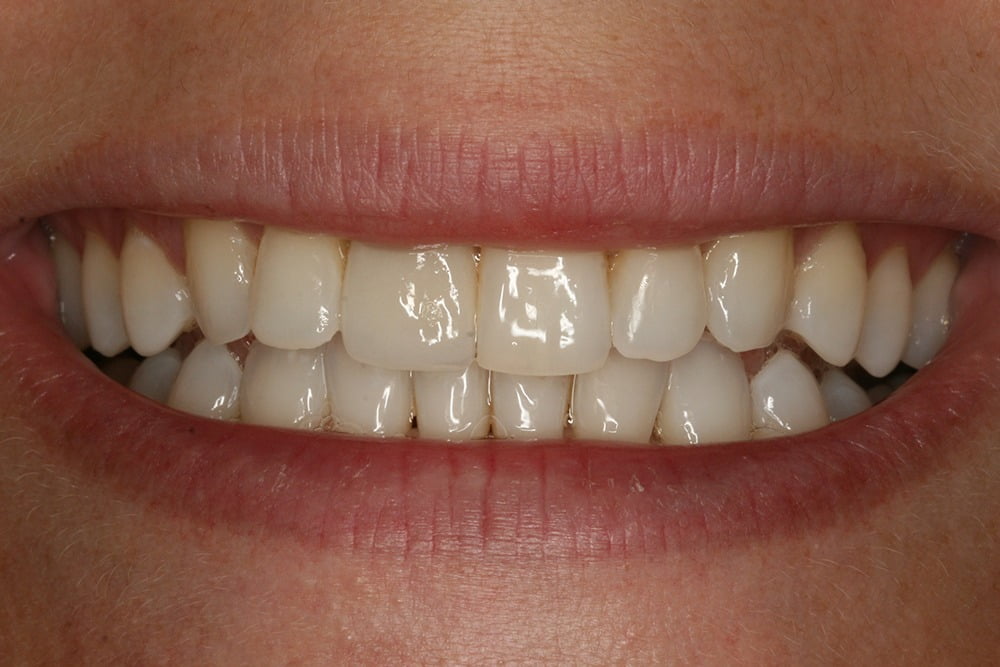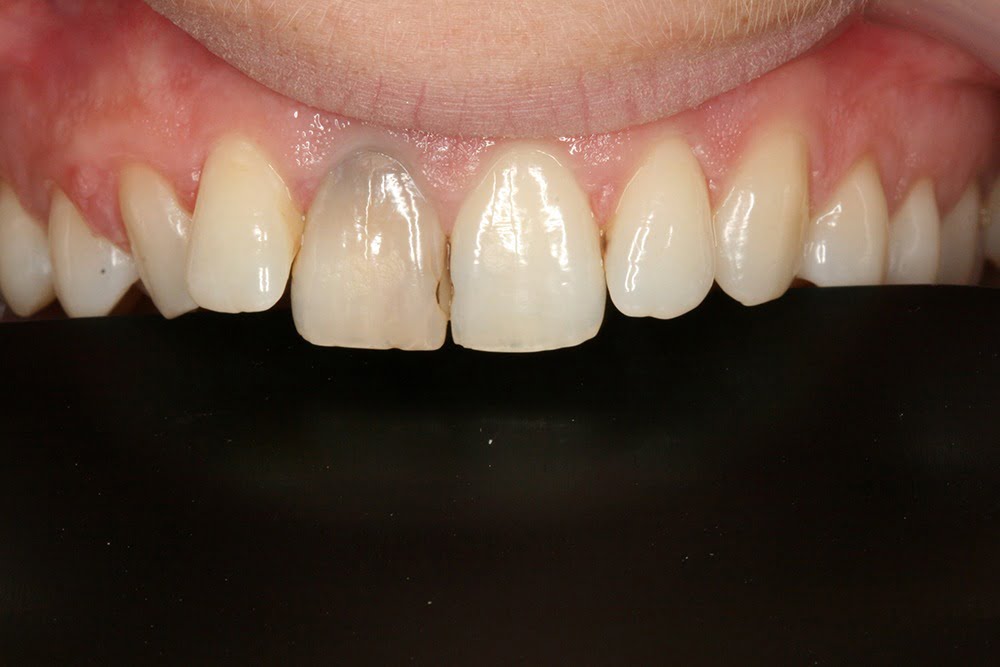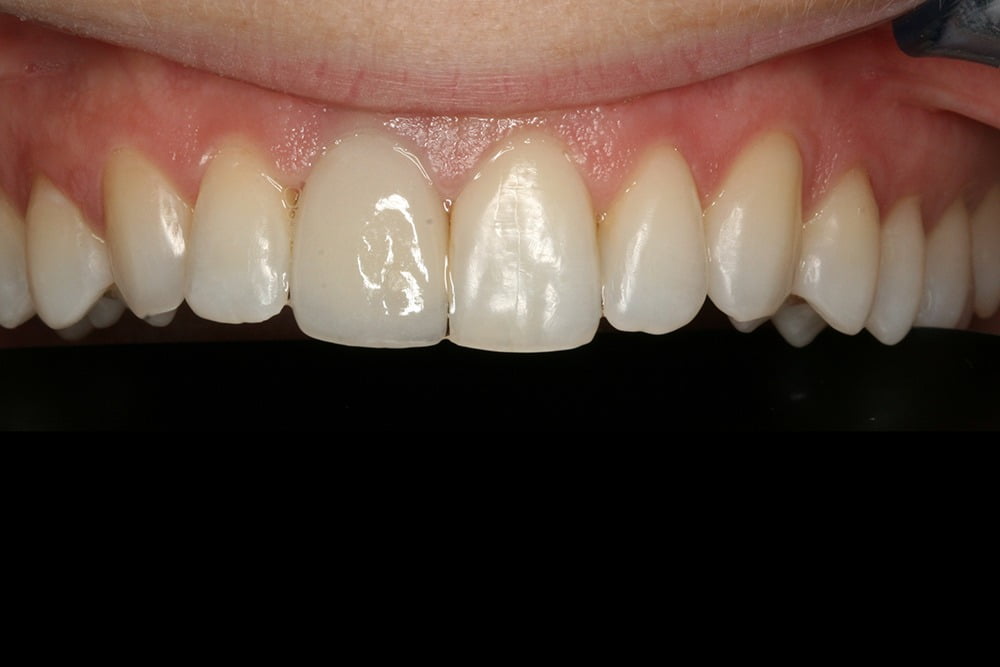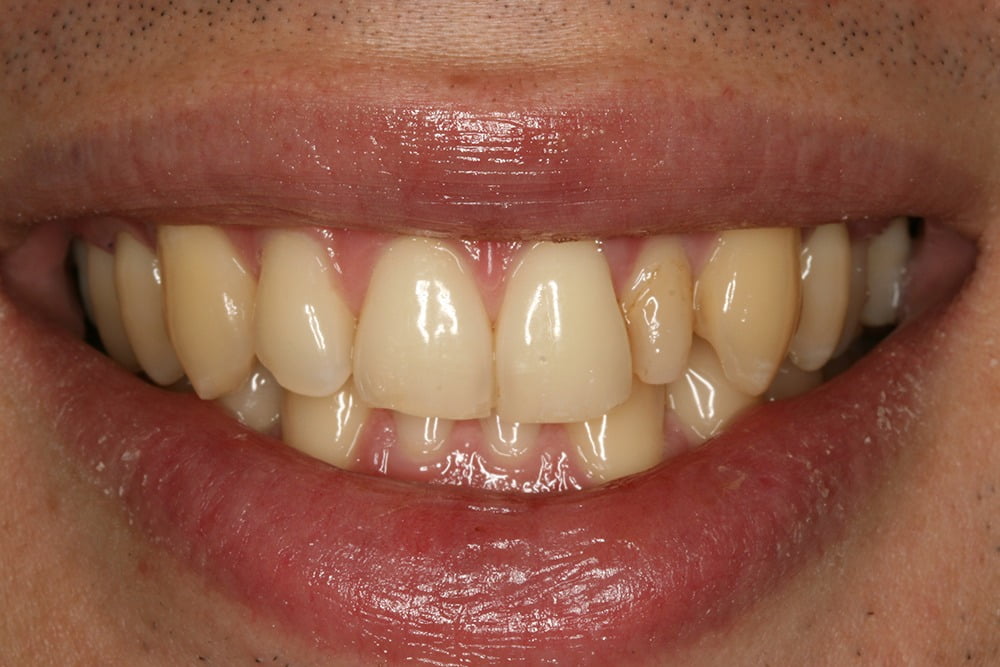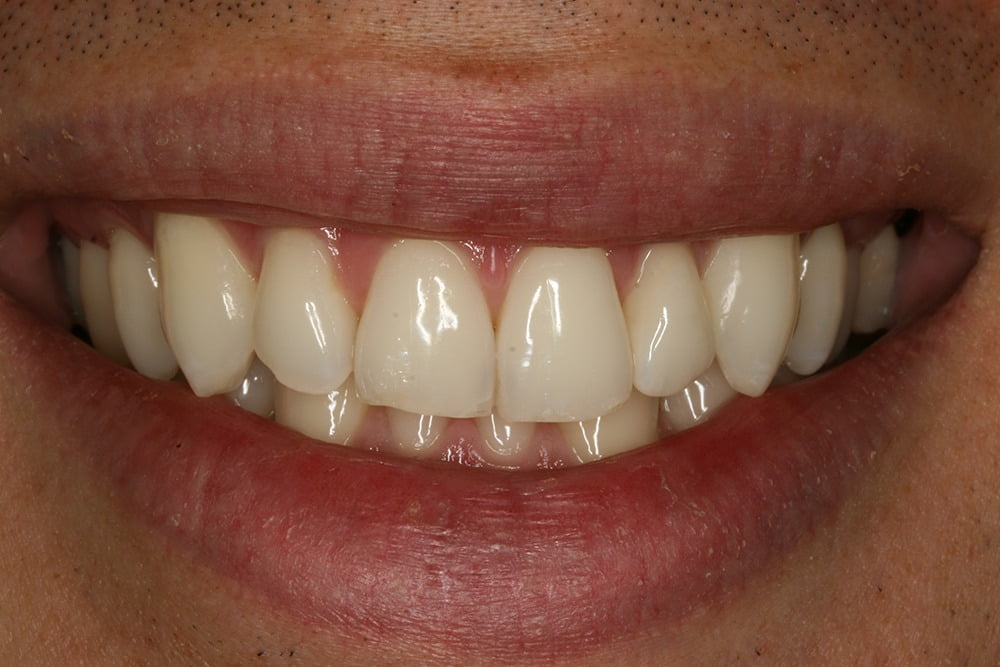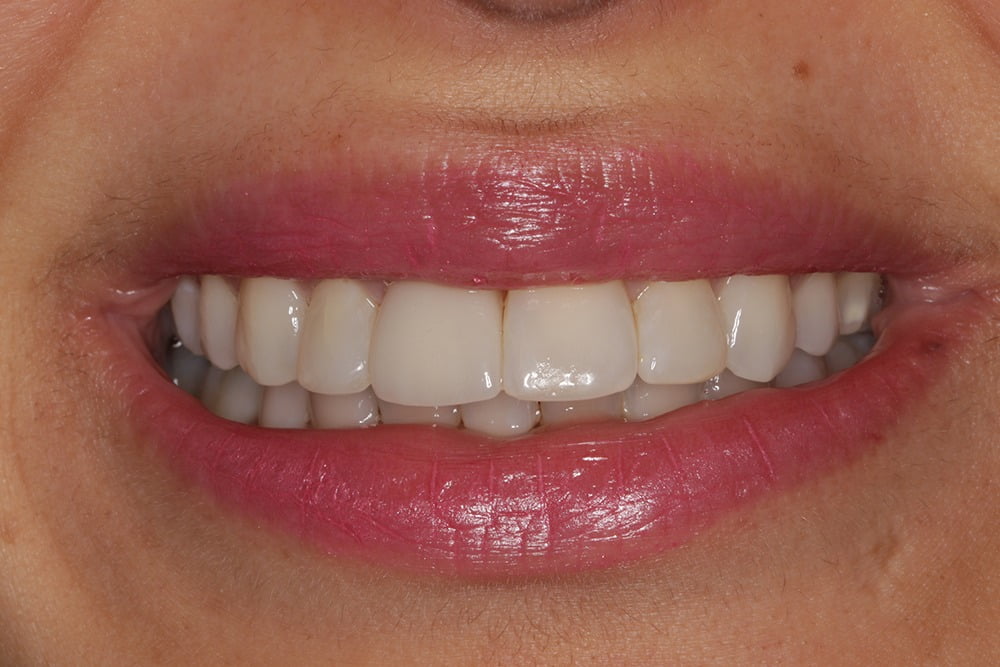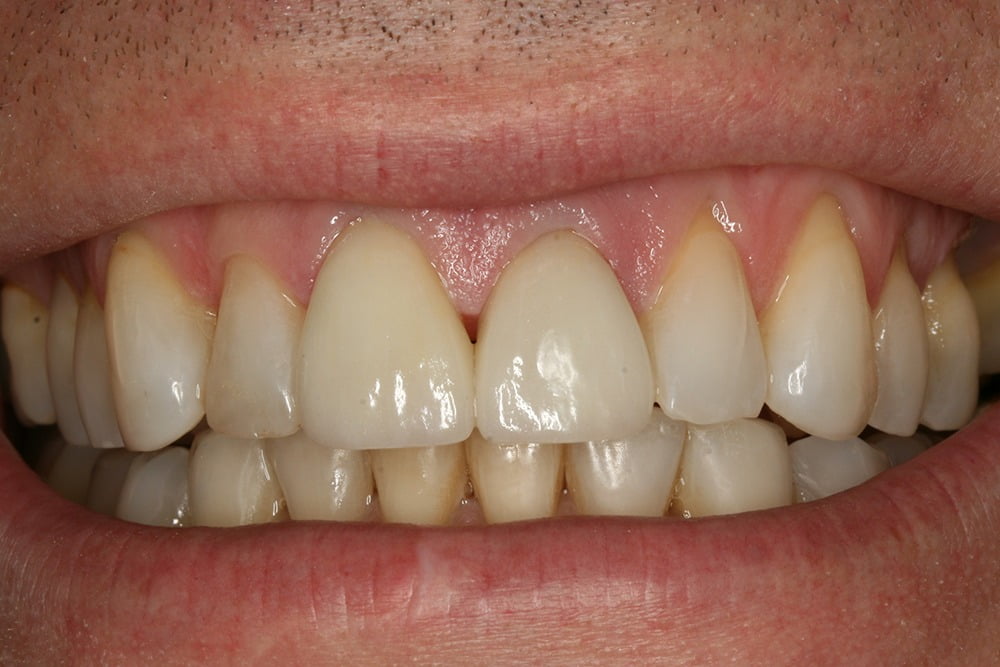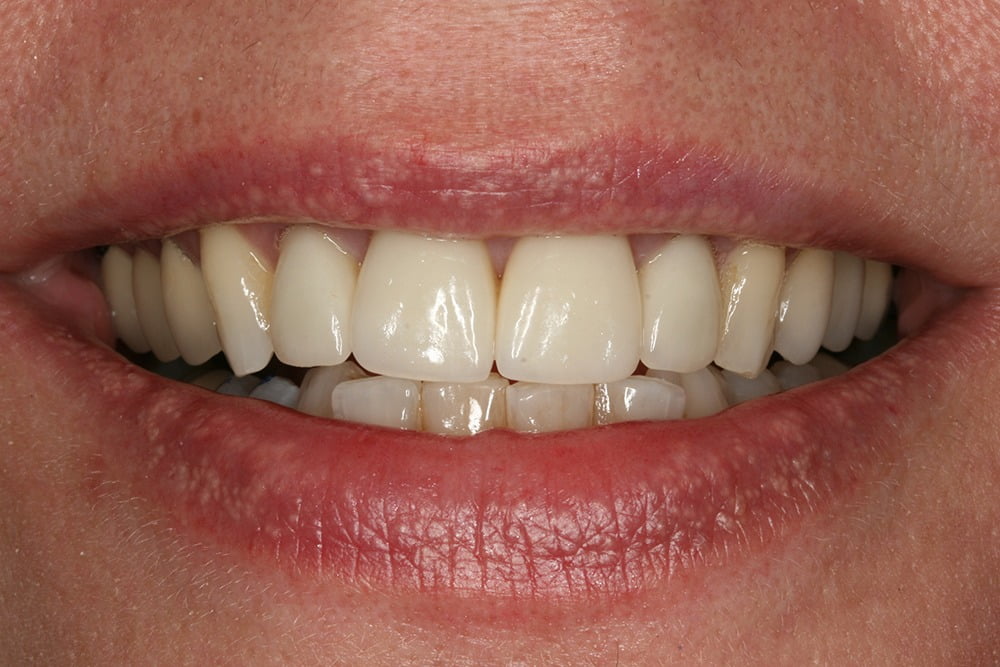

If you have crooked, uneven or slightly overlapping teeth, porcelain veneers can sometimes create the appearance of a straighter and more symmetrical smile without months of orthodontic treatment. However, veneers do not physically straighten or move the teeth. Instead, they change the visible shape, colour and proportions of the tooth surfaces.
This makes veneers most suitable for selected cosmetic cases where the underlying tooth position allows an attractive result without removing an excessive amount of healthy enamel. If teeth are significantly crowded, rotated or affecting the bite, orthodontic treatment or Invisalign may provide a more conservative long-term solution.
At Glow Dental in Battersea, veneers, composite bonding, whitening and orthodontics can all be considered during treatment planning so that the approach is based on your natural teeth rather than simply choosing the quickest cosmetic option.
What Are Dental Veneers?
Veneers are thin restorations attached to the visible front surface of teeth to alter their appearance.
They can be used to change:
- Tooth shape
- Tooth length or width
- Colour
- Small gaps
- Minor irregularities
- Selected chips or worn edges
- The appearance of mildly crooked teeth
Glow Dental provides porcelain veneers in Battersea and may also use composite resin for selected cosmetic treatments.
Can Veneers Fix Crooked Teeth?
Veneers can make selected crooked teeth look straighter, but they do not correct the actual position of the tooth or its root.
For example, if one front tooth is slightly set back, narrow, rotated or uneven compared with neighbouring teeth, the visible surface can sometimes be redesigned so that the finished smile appears much more even.
The dentist achieves this by carefully controlling the shape and thickness of the veneer.
There is a limit to how much misalignment can reasonably be disguised. If a tooth projects significantly forwards, placing a veneer in an ideal position may require substantial tooth reduction. In that situation, moving the natural tooth orthodontically first may preserve considerably more healthy enamel.
Which Crooked Teeth Can Veneers Work Best For?
Veneers may be considered where the main problem is aesthetic and the misalignment is relatively limited.
Examples can include:
- Mildly rotated front teeth
- Small differences in tooth position
- Uneven tooth shapes
- Small spaces between teeth
- Teeth that appear too narrow or short
- Mild asymmetry between neighbouring teeth
- Teeth that are both discoloured and irregular in shape
The actual suitability depends on more than what the teeth look like from the front. Your dentist also needs to assess the bite, enamel available for bonding, gum health and how much preparation would be required.
When Are Veneers Not the Best Way to Treat Crooked Teeth?
Veneers are generally less appropriate when achieving the desired result would require aggressive removal of healthy tooth structure.
Orthodontics may be preferable where there is:
- Significant crowding
- Severely rotated teeth
- A substantial overjet
- An open bite or deep bite requiring correction
- Crossbite
- Teeth positioned substantially outside the dental arch
- A bite that places excessive force on the proposed veneers
Glow Dental provides both Invisalign clear aligners and specialist orthodontics, so orthodontic movement can be considered before irreversible restorative treatment.
Veneers vs Invisalign for Crooked Teeth
The fundamental difference is that Invisalign moves teeth while veneers change their appearance.
| Veneers | Invisalign |
|---|---|
| Change tooth shape, colour and visible alignment | Physically moves natural teeth |
| Can produce a cosmetic change within a relatively short period | Usually requires months of orthodontic treatment |
| May require removal of enamel | Usually does not require cutting down the visible tooth surfaces |
| Can change colour as well as shape | Does not change the natural colour of teeth |
| Restorations eventually require maintenance or replacement | Natural teeth remain natural but require long-term retention |
| Best for selected aesthetic irregularities | Better suited to genuinely correcting tooth position and bite relationships |
In some cases, the best result comes from combining the treatments rather than choosing one or the other.
Can Invisalign Be Done Before Veneers?
Yes, and this can be one of the most conservative approaches where teeth are significantly misaligned.
Moving the natural teeth into more favourable positions first can reduce how much enamel needs to be removed when veneers are subsequently placed.
After orthodontics, you may also discover that fewer veneers are needed than originally expected. Some teeth may only require composite bonding or no restorative treatment at all.
Glow Dental’s own veneer service recognises that veneers may be used after short-term orthodontic treatment where combining approaches produces a better result.
Veneers vs Composite Bonding for Crooked Teeth
Composite bonding can also disguise minor irregularities by adding tooth-coloured resin directly to the tooth.
Compared with porcelain veneers, composite bonding may require little or no enamel removal in suitable cases and can be repaired relatively easily if it chips.
Porcelain veneers generally offer greater colour stability and different optical properties, while composite may offer a more conservative and repairable approach for smaller changes.
If the amount of reshaping required is modest, it is worth asking whether composite bonding could achieve your goals before committing to porcelain.
You can compare real examples in Glow Dental’s composite bonding patient gallery.
Do Teeth Need to Be Shaved Down for Veneers?
Sometimes, but the amount varies considerably.
Modern veneers can be very thin, and selected cases can require minimal tooth preparation. Occasionally, little or no preparation may be required.
However, “no-prep veneers” are not automatically better. If adding porcelain without preparation would make a tooth bulky or create an unnatural contour, some controlled enamel reduction may be needed.
This becomes particularly important with crooked teeth. A tooth projecting forwards may require much more preparation if the objective is to make its veneer line up visually with neighbouring teeth.
That is one reason orthodontic treatment before veneers can be substantially more conservative in selected patients.
Why Preserving Enamel Matters
Porcelain veneers rely on adhesive bonding to the underlying tooth.
Clinical evidence shows excellent long-term results for ceramic veneers, particularly where restorations can be bonded predominantly to healthy enamel.
Preserving enamel is therefore not simply about making treatment sound “minimally invasive”. It can contribute to predictable adhesive performance and should be an important consideration during treatment planning.
What Happens Before Having Veneers?
1. Dental Examination
Your dentist should first assess your teeth, gums and bite and check for tooth decay, cracks, significant wear and existing restorations.
Active dental disease should be managed before elective veneer treatment begins.
If you have not had your teeth checked recently, a dental examination is an appropriate starting point.
2. Discussing Your Goals
Your dentist will ask what specifically concerns you about your teeth rather than assuming every irregularity needs correcting.
Possible goals may include changing:
- Alignment
- Colour
- Shape
- Length
- Width
- Spacing
- Symmetry
3. Considering Orthodontics First
If tooth position is the main concern, Invisalign or another orthodontic treatment should be discussed before teeth are irreversibly prepared for veneers.
4. Digital Smile Planning
Glow Dental uses Digital Smile Design for selected cosmetic cases.
Digital scans, photographs and smile analysis can help the dentist and patient discuss the planned tooth proportions and appearance before treatment begins.
A digital simulation is a useful planning and communication tool rather than a guarantee of an identical final result.
5. Trial Smile or Mock-Up
Depending on the treatment, a mock-up may allow proposed changes to tooth length, shape and proportions to be previewed before the definitive veneers are made.
This can be particularly useful when veneers are being used to camouflage differences in tooth position.
Should Teeth Be Whitened Before Veneers?
If you want your natural teeth lighter as well as having veneers, professional teeth whitening will often be completed first.
Porcelain veneers do not whiten after they have been fitted in the same way as natural teeth. Whitening first allows the final porcelain shade to be selected against your planned natural tooth colour.
This is particularly important when only some of the visible teeth are receiving veneers.
What Happens When Porcelain Veneers Are Fitted?
The exact sequence depends on the treatment plan, but porcelain veneer treatment commonly involves:
- Assessment and treatment planning
- Shade and smile-design planning
- Conservative preparation of the teeth where required
- Digital scanning or impressions
- Temporary restorations where appropriate
- Laboratory manufacture of the veneers
- Checking shape, colour and fit
- Adhesive bonding to the teeth
- Final bite adjustments and polishing
Because veneers are individually manufactured restorations, the final result depends on both clinical planning and laboratory work.
Do Veneers Make Crooked Teeth Completely Straight?
They can create a much straighter appearance, but the underlying teeth remain in their original positions.
This distinction matters because changing only the visible front surface does not correct the root position or every bite relationship.
For a mild cosmetic irregularity, that may be perfectly acceptable. For more significant malocclusion, genuine orthodontic correction may provide a healthier and more stable approach.
Are Veneers Permanent?
Porcelain veneers are long-term restorations, but they should not be described as permanent in the sense that they will necessarily last for the rest of your life.
They may eventually require repair or replacement because of:
- Fracture or chipping
- Debonding
- Gum recession
- Changes to neighbouring natural teeth
- Dental decay around a margin
- Trauma
- Changes in appearance over many years
If enamel has been removed to place the veneers, the tooth will continue to require a restoration in the future.
How Long Do Porcelain Veneers Last?
There is no guaranteed lifespan, but modern ceramic veneers have good long-term clinical evidence.
A recent systematic review and meta-analysis reported long-term survival of approximately 94–97% at around ten years for several commonly used ceramic veneer materials.
This does not mean an individual patient has a guaranteed 95% chance that every veneer will remain unchanged for ten years. Results vary according to tooth preparation, bonding substrate, bite, material, clinician, oral health and patient habits.
Earlier systematic evidence similarly identified fracture and debonding among the more common reasons veneers eventually require intervention.
Can Veneers Chip or Break?
Yes. Porcelain is strong when appropriately bonded and loaded, but veneers can fracture or chip.
Risk can be influenced by:
- The amount of natural tooth structure remaining
- The bite
- Heavy tooth-to-tooth forces
- Trauma
- Nail biting
- Chewing hard objects
- Using teeth to open packaging
- Bruxism or clenching
If you grind your teeth significantly, tell your dentist during treatment planning. A protective appliance may be considered after cosmetic treatment where appropriate.
Read more about night guards and protecting dental restorations.
Can You Get Veneers if You Grind Your Teeth?
Potentially, but bruxism needs careful consideration.
Research investigating ceramic restoration failure in patients with sleep bruxism is limited and the overall certainty is low, but heavy uncontrolled forces can plausibly increase mechanical complications such as chipping or fracture.
Your dentist should assess your bite, existing wear pattern and history of fractured teeth or restorations before recommending veneers.
Do Veneers Cause Gum Problems?
Well-designed veneers should have smooth, accessible margins that patients can keep clean.
However, bulky contours, poorly positioned margins or inadequate daily plaque control can contribute to gingival inflammation.
Healthy gums are therefore important before treatment begins.
If you have bleeding gums, active periodontal disease or significant recession, this should be assessed before cosmetic veneers are placed. Glow Dental provides both dental hygiene care and specialist periodontics where required.
Do Veneers Get Cavities?
Porcelain itself cannot develop tooth decay, but the natural tooth underneath and around the veneer still can.
The margins where the restoration meets natural tooth structure therefore need effective daily plaque control.
Continue brushing twice daily with fluoride toothpaste, clean between your teeth and attend appropriate dental examinations after veneer treatment.
How Do You Look After Porcelain Veneers?
- Brush twice daily with fluoride toothpaste
- Clean between the teeth every day
- Attend dental examinations as recommended
- Have professional hygiene care where clinically appropriate
- Avoid biting fingernails, pens or other hard objects
- Do not use veneers to open packaging
- Have persistent grinding or clenching assessed
- Report a chipped or loose veneer rather than ignoring it
How Much Do Porcelain Veneers Cost at Glow Dental?
Glow Dental currently lists porcelain veneers from £990 per tooth.
The total treatment cost depends on the number of teeth requiring treatment and whether other procedures such as whitening, orthodontics or hygiene care are recommended first.
Glow Dental also provides finance options for eligible patients who prefer to spread the cost of treatment.
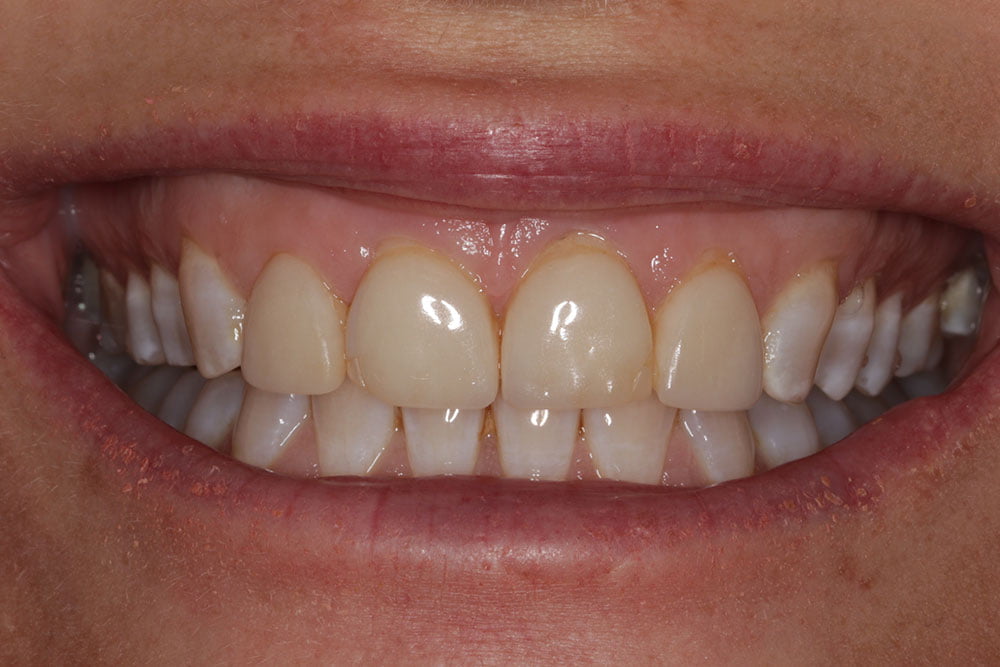
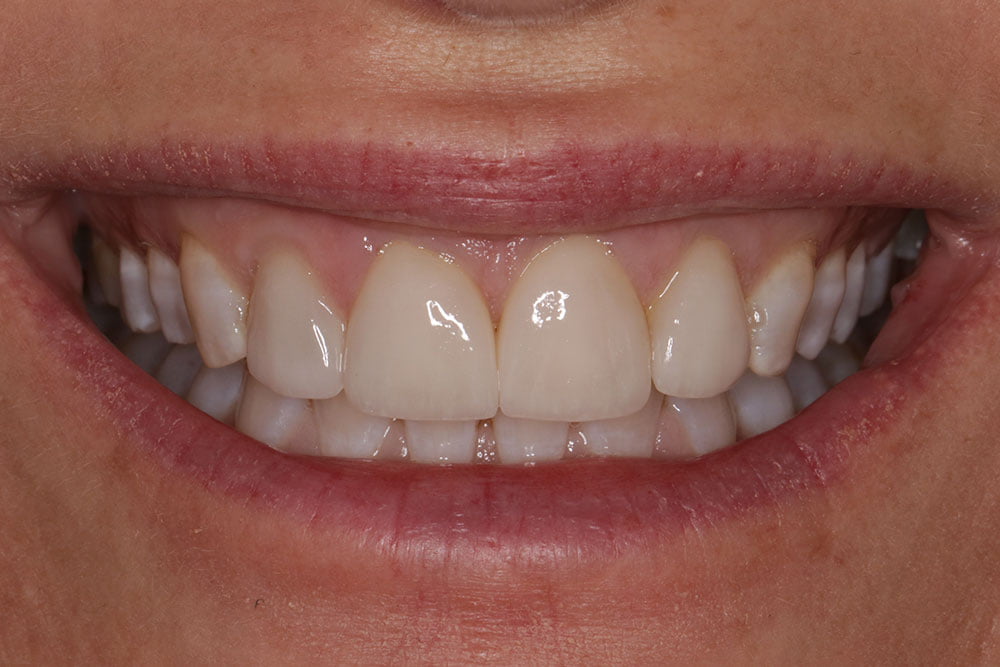
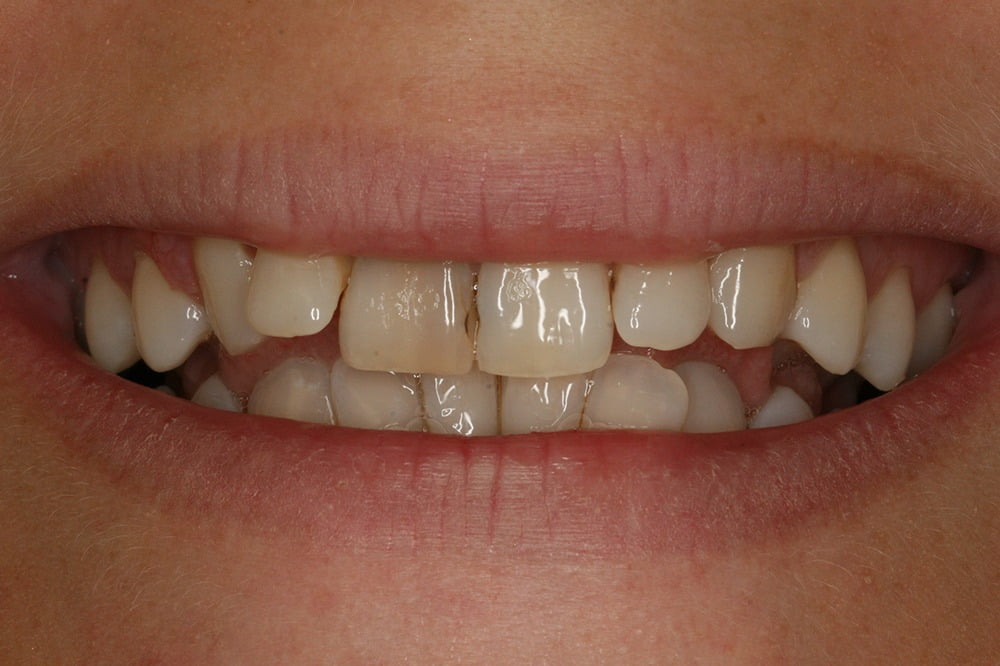
Veneers Before and After: What Can Change?
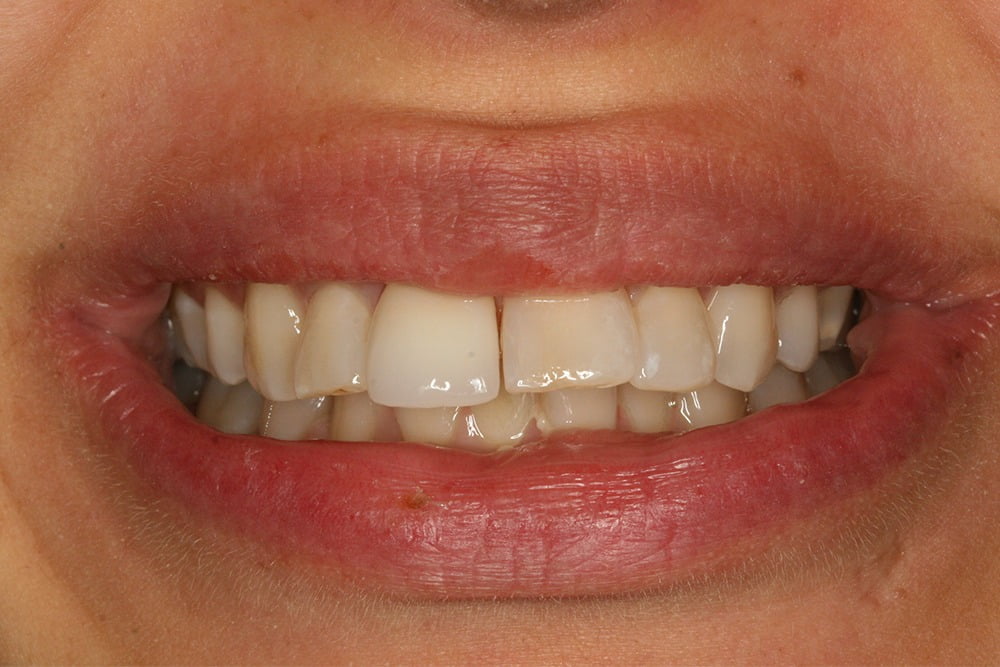
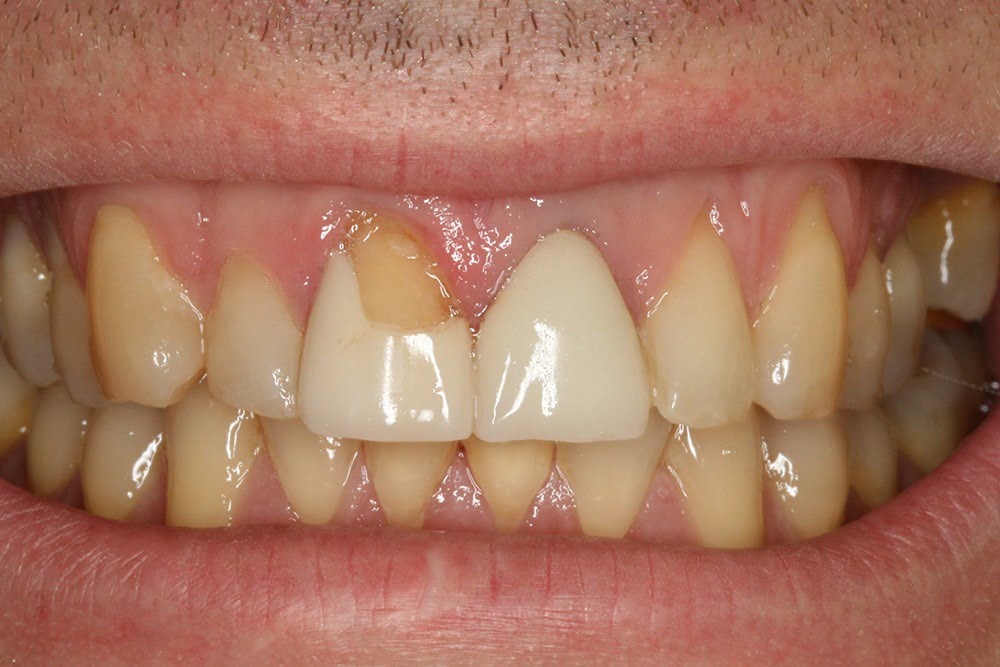
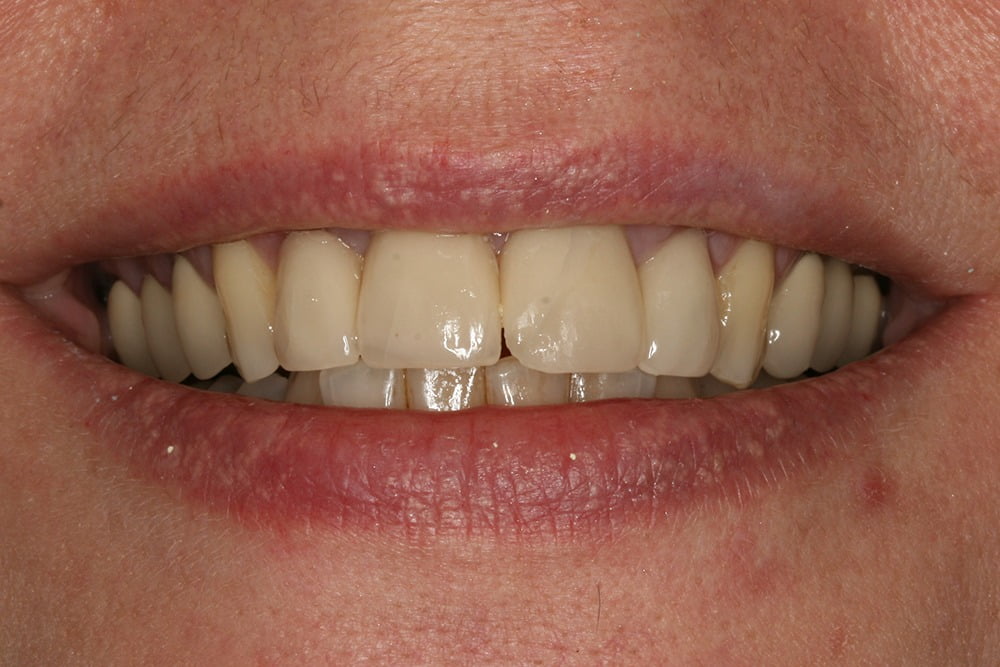
The biggest changes visible in veneer before-and-after photographs may include improvements in tooth shape, apparent alignment, colour, proportions and symmetry.
When veneers are being used for mildly crooked teeth, the dentist can alter the visible contours so that teeth that previously looked uneven appear more consistent with the surrounding smile.
However, before-and-after photographs show what was achieved for individual patients. They should not be interpreted as a guarantee that another person can achieve the same result without different treatment or different levels of tooth preparation.
Real Crooked Teeth Veneers Before and After
The cases below show examples of cosmetic dental treatment carried out at Glow Dental. Look at changes in tooth position, visible symmetry, tooth proportions and overall smile appearance rather than expecting every set of teeth to be treated in exactly the same way.
Case 2
Case 3
Case 4
Case 5
Case 6
Case 7
Case 8
Frequently Asked Questions About Veneers for Crooked Teeth
Can veneers make crooked teeth look straight?
Yes, veneers can disguise selected mild irregularities by changing the visible shape and contours of the teeth. They do not physically move the tooth or root into a new position.
How crooked is too crooked for veneers?
There is no specific degree that applies to everyone. The key question is whether an acceptable result can be achieved while preserving a reasonable amount of healthy enamel and maintaining a healthy bite. Significant crowding or rotation often favours orthodontic treatment.
Can veneers fix overlapping teeth?
Mild overlapping may sometimes be disguised, but substantial overlap can require excessive tooth preparation. Invisalign or fixed orthodontics may provide a more conservative solution.
Can veneers close gaps between teeth?
Yes, selected small spaces can be closed by increasing the width of neighbouring teeth with veneers. The final tooth proportions need to remain natural. Composite bonding is another conservative option for many small gaps.
Do veneers straighten your bite?
No. Veneers can modify the visible tooth surfaces and sometimes adjust limited contacts, but they are not a substitute for orthodontic treatment when a genuine malocclusion needs correction.
Are veneers quicker than Invisalign?
Veneer treatment usually requires considerably less time than orthodontically moving teeth. However, the treatments achieve different things. Faster treatment is not automatically better if achieving the veneer result requires unnecessary removal of healthy enamel.
Are veneers reversible?
If enamel has been removed, treatment should generally be regarded as irreversible because the prepared tooth will continue to need a restoration. Genuine no-preparation cases are different but are only suitable for selected tooth positions and smile designs.
Do veneers stain?
Porcelain is relatively resistant to external staining compared with natural teeth and composite resin. The natural teeth around veneers can still change colour, and plaque or surface deposits can accumulate around restoration margins.
Can veneers be whitened?
Porcelain veneers do not respond predictably to peroxide whitening in the way natural teeth do. If whitening and veneers are both planned, the natural teeth are often whitened first so the porcelain can be matched afterwards.
Should I get bonding or veneers for slightly crooked teeth?
For relatively small cosmetic changes, composite bonding may provide a more conservative and repairable approach. Porcelain veneers may be considered when larger changes in shape, colour or surface appearance are required. The choice depends on the individual teeth and desired result.
Should I get Invisalign before veneers?
If substantial tooth preparation would otherwise be necessary, orthodontics first can be an excellent option. Moving teeth into better positions may allow thinner veneers, preserve more enamel or eliminate the need for veneers on some teeth altogether.
Porcelain Veneers at Glow Dental
Glow Dental provides porcelain veneers in Battersea as part of its wider cosmetic dentistry service.
Because veneers are not the only way to improve crooked or uneven teeth, treatment planning can also consider Invisalign, specialist orthodontics, composite bonding and professional whitening.
Glow Dental also uses Digital Smile Design for selected cosmetic cases to help plan tooth shape and smile proportions before treatment.
If you are considering veneers for crooked teeth, the first step is understanding how much preparation would be required and whether moving the natural teeth first would provide a more conservative result.
New patients can view our current fees, explore our wider cosmetic dentistry treatments or contact Glow Dental to arrange a cosmetic consultation.
Conclusion: Are Veneers a Good Choice for Crooked Teeth?
Veneers can create a dramatic cosmetic improvement for selected mildly crooked or uneven teeth, but they should not be treated as a substitute for orthodontics in every case.
The most conservative treatment is usually the one that achieves the desired result while preserving as much healthy natural tooth structure as possible. For mild irregularities this may be composite bonding or veneers. For more significant tooth-position problems, Invisalign or specialist orthodontics may be preferable, sometimes followed by whitening or minimal restorative treatment.
A well-planned veneer result should therefore begin with diagnosis rather than simply choosing the fastest way to make crooked teeth look straight.
Written by:
Glow Dental
Published:
Last updated: