
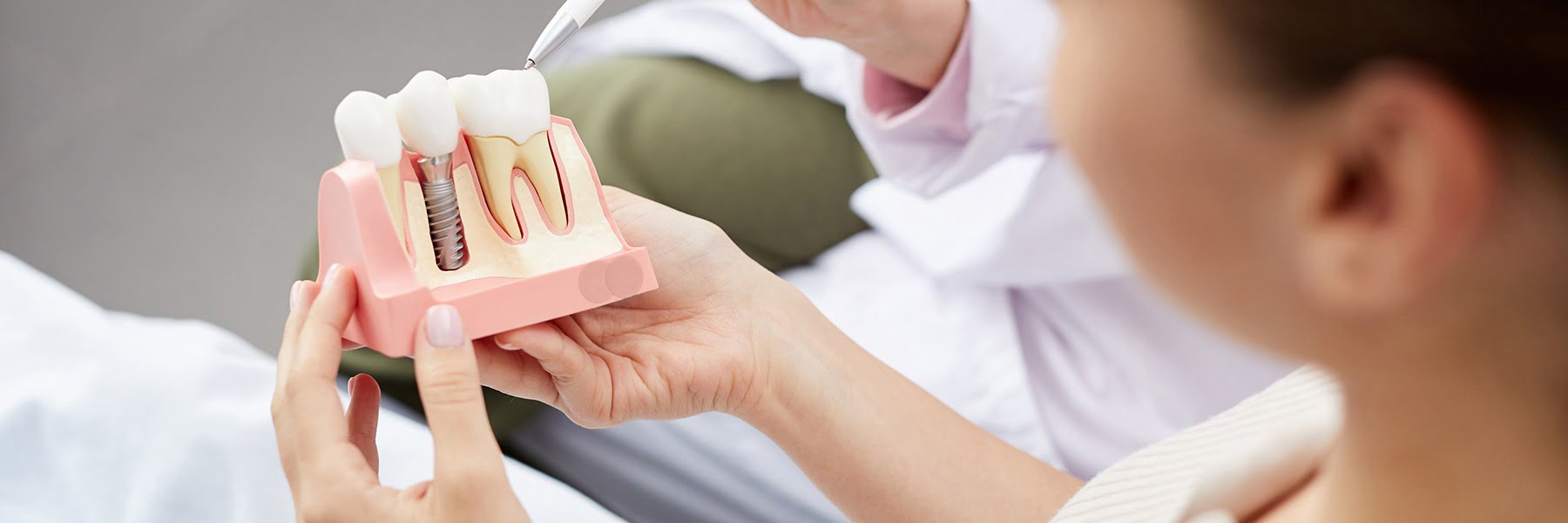
A dental implant does not look like a complete tooth when it is first placed. The actual implant is a small, screw-shaped fixture that sits inside the jawbone and replaces the root of a missing tooth. Once treatment is complete, it supports a natural-looking crown, bridge or denture.
For a single missing tooth, the finished restoration is designed so that the part you see above the gum looks like a natural tooth. The implant itself remains hidden inside the jawbone.
So, what does a dental implant actually look like at each stage? Below, we explain the different components, what may be visible during healing and what you can expect your final replacement tooth to look like.
What Does a Dental Implant Look Like?
The dental implant itself usually looks like a small threaded metal screw. Most dental implants are made from titanium or titanium alloy and are designed to be placed securely within the jawbone.
You will not normally see this part once treatment is complete. It acts as an artificial tooth root underneath the gum and provides support for the replacement tooth above.
The NHS describes a dental implant as a titanium screw placed into the jawbone that can support a crown, bridge or denture.
If you are considering replacing missing teeth, you can learn more about dental implants at Glow Dental and how treatment is planned at our Battersea practice.
What Are the Different Parts of a Dental Implant?
A single implant-supported tooth is commonly described as having three main components:
1. The Dental Implant Fixture
The implant fixture is the part placed into the jawbone. It is usually cylindrical or slightly tapered and has a threaded, screw-like surface.
Its purpose is to replace the root of the missing tooth and create a stable foundation for the new restoration.
After placement, bone gradually heals around the surface of the implant. This biological process is known as osseointegration.
Once the implant has successfully integrated with the jawbone, it can support the replacement tooth or teeth.
2. The Abutment
The abutment is the connector between the implant inside the jaw and the replacement tooth above it.
Depending on the implant system and restoration, an abutment can be made from materials such as titanium or tooth-coloured ceramic.
When the final crown is fitted, the abutment is normally covered by the restoration and surrounding gum tissue, so patients generally do not see it when they smile.
3. The Implant Crown
The crown is the part that replaces the visible portion of a missing tooth.
It is carefully designed to match surrounding teeth in areas such as:
- Colour
- Shape
- Width
- Length
- Surface texture
- Position within the smile
The aim is not simply to produce a white tooth. A successful implant crown should fit naturally with the proportions and character of the neighbouring teeth.
Is the Implant Screw Visible in Your Mouth?
Normally, no.
Once the dental implant has been restored, the implant fixture itself remains inside the jawbone and should not be visible when you smile or speak.
Exactly what you see during the healing period depends on the surgical technique used.
Some implants are placed using a one-stage approach, where a small healing component extends through the gum while the implant heals.
Others are placed beneath the gum during healing. In this situation, the implant is completely covered and later exposed during a small second procedure before the restorative stage begins.
NHS implant guidance confirms that some implants remain visible through the gum during healing while others are buried underneath it until a later stage.
What Does a Dental Implant Look Like Immediately After Surgery?
Immediately after implant placement, you will not normally see anything resembling a finished tooth unless a temporary replacement has also been provided.
Depending on your treatment plan, you might see:
- A small metal healing cap emerging through the gum
- Stitches around the implant site
- Healing gum tissue covering the implant completely
- A temporary replacement tooth
Some swelling, bruising or tenderness can occur following implant surgery and normally settles as the tissues heal.
At Glow Dental, we can provide a temporary replacement where appropriate while the implant heals, so patients do not necessarily have to remain with a visible gap throughout the healing period.
What Is the Small Metal Piece You Can See During Healing?
If you notice a small round metal component at gum level following implant surgery, this may be a healing abutment or healing cap.
Its role is to help the gum heal around the implant and create access for the later restorative stage.
This is temporary and should not be confused with the finished appearance of the dental implant.
Once healing has progressed sufficiently, the healing component can be replaced as part of the process of fitting the final crown, bridge or denture.
How Long Before a Dental Implant Looks Like a Real Tooth?
The timeline varies from patient to patient.
After an implant is placed, it normally needs time to integrate with the surrounding bone before the final restoration can be fitted. NHS implant guidance explains that patients will often wait at least several months before the implant is ready to support the final replacement tooth.
The treatment process may involve:
- Consultation and planning
- Implant placement
- Healing and osseointegration
- Scans or impressions for the replacement tooth
- Temporary restoration where appropriate
- Fitting the final crown, bridge or denture
The exact sequence can be different if you require an extraction, bone graft, sinus lift or other preparatory treatment.
What Does a Dental Implant Look Like Under the Gum?
Underneath the gum, a dental implant looks quite different from a natural tooth.
A natural tooth has a biological root surrounded by a periodontal ligament. A dental implant instead has a manufactured fixture that makes direct contact with the surrounding jawbone once it has integrated.
Despite that structural difference, both provide support for the visible tooth above the gum.
The implant is positioned so that the replacement crown can emerge through the gum in a natural-looking position.
What Does a Dental Implant Look Like on an X-Ray?
Dental implants are usually easy to identify on dental X-rays because the titanium fixture is highly visible.
On an X-ray, a single implant generally appears as a bright, screw-like structure extending into the jawbone. The dentist can assess the surrounding bone and the position of the implant as part of ongoing monitoring.
X-rays and 3D imaging are also important before treatment because the dentist needs to assess factors such as:
- Available bone height and width
- The location of nearby teeth
- Nerves and other anatomical structures
- The maxillary sinus in the upper jaw
- The proposed position and angle of the implant
Glow Dental uses digital imaging, 3D scanning and CT technology to support detailed diagnosis and implant planning.
What Does a Finished Dental Implant Look Like?
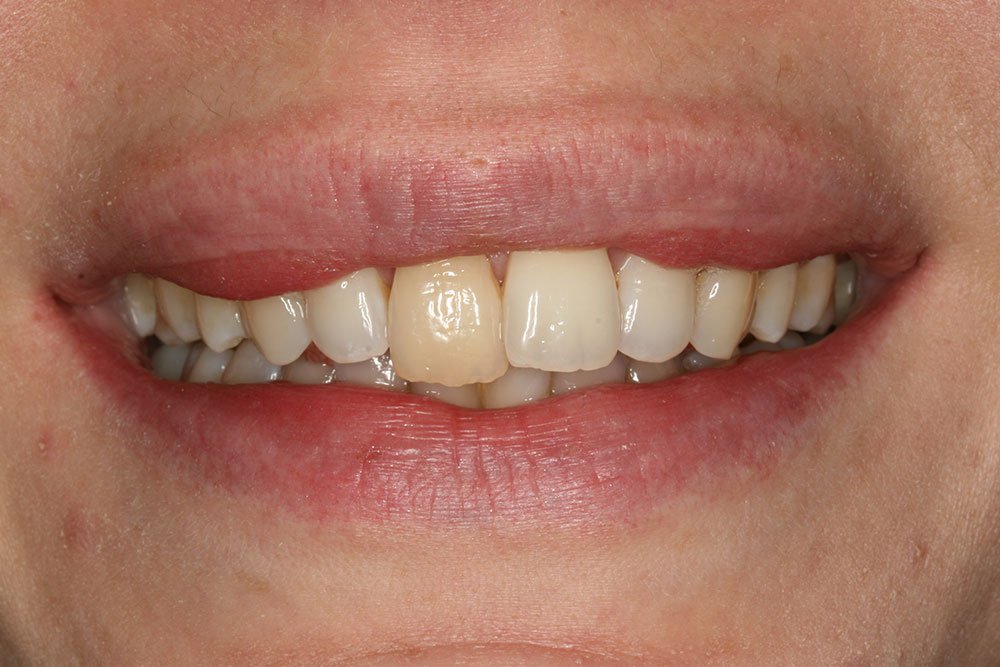
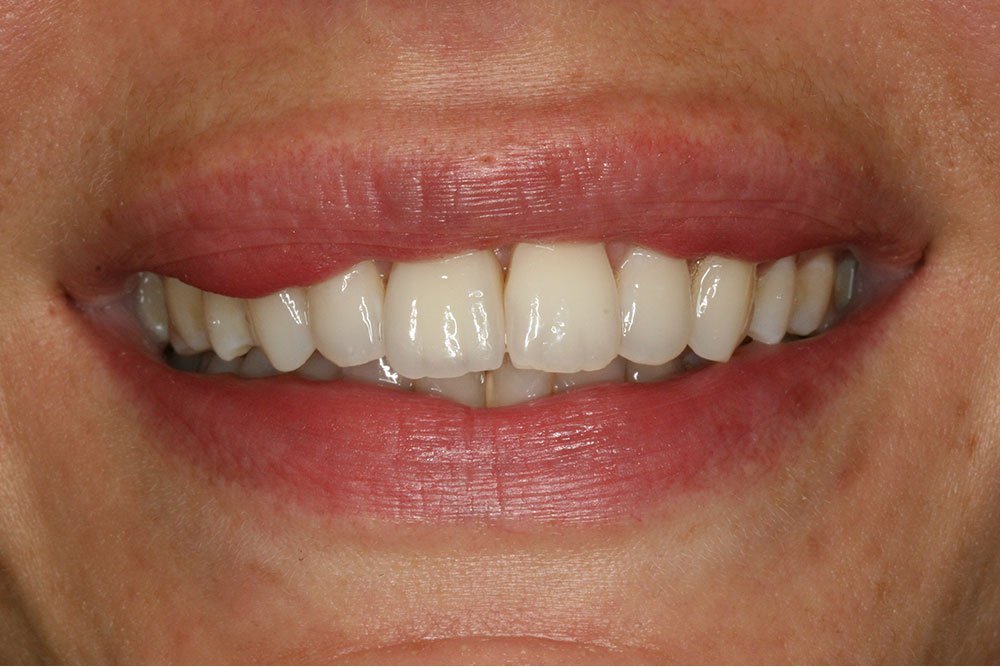
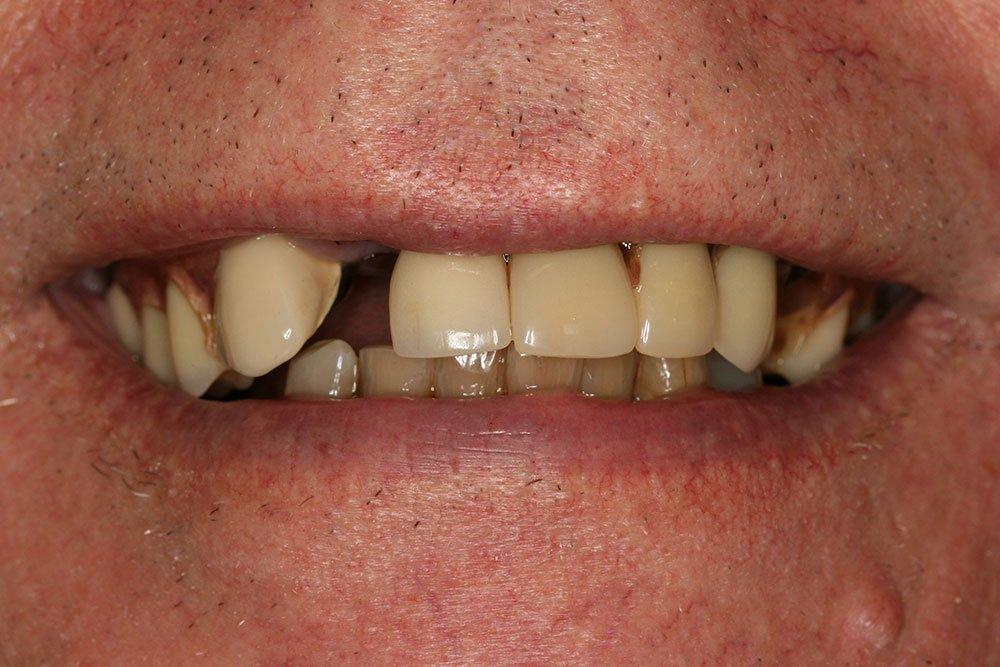
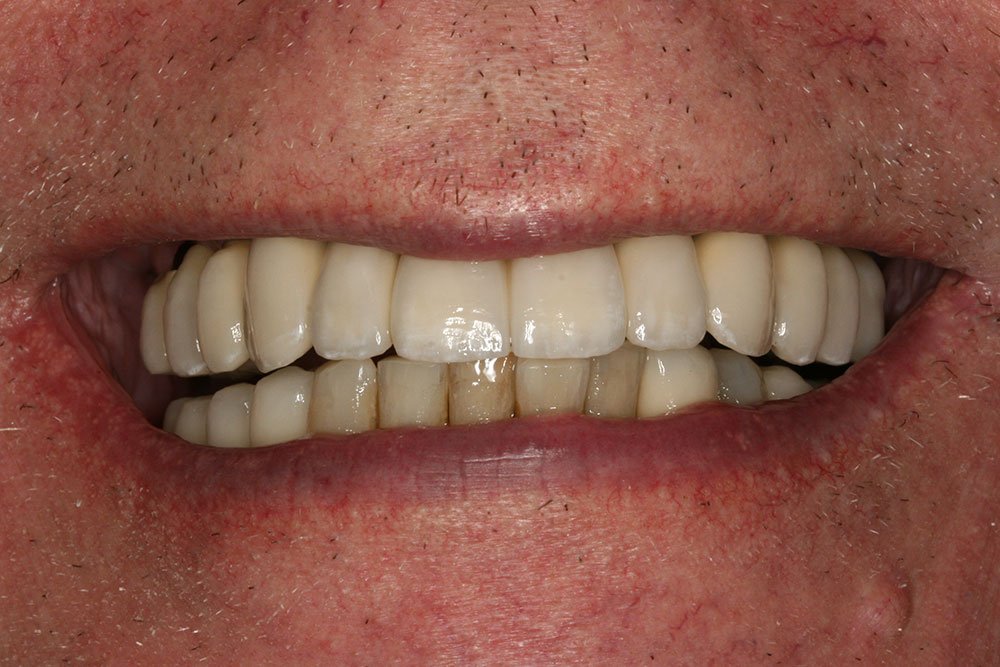
Once treatment is complete, a well-designed single dental implant should resemble a natural tooth emerging from the gum.
You should primarily see the ceramic replacement tooth rather than the implant components underneath.
A natural-looking result depends on much more than simply matching the colour of the crown. The dentist and dental technician also consider:
- The contour of the gum around the implant
- The height and width of the crown
- The shape of neighbouring teeth
- The position of the implant
- The amount of available bone
- The translucency and texture of the ceramic
- The way the tooth reflects light
- The patient’s smile line
These details are particularly important when replacing a missing front tooth, where the gum line and crown are clearly visible when smiling.
Do Dental Implants Look Natural?
They can look extremely natural when treatment is carefully planned and there is healthy bone and gum tissue around the implant.
Rather than promising that an implant is completely indistinguishable in every case, it is more accurate to say that modern implant restorations can be designed to blend very closely with neighbouring natural teeth.
The final appearance depends on factors including the position of the original missing tooth, the amount of bone and gum tissue, implant placement, the materials used and the skill of the dental technician creating the restoration.
Glow Dental uses digital planning and custom-made restorations to help achieve a natural result for individual patients.
What Makes a Front-Tooth Implant Look Natural?
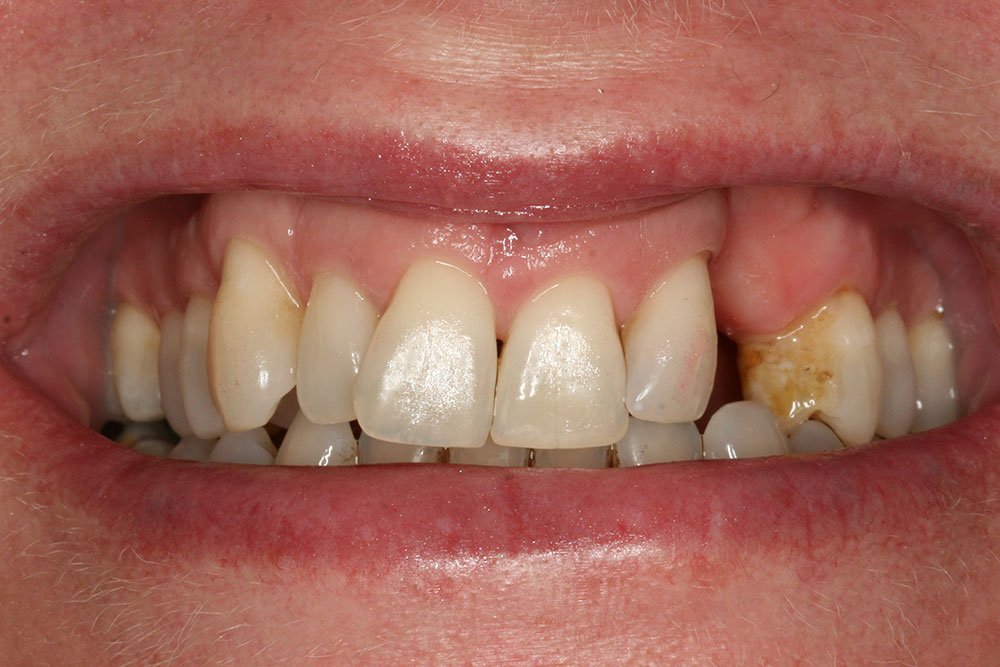
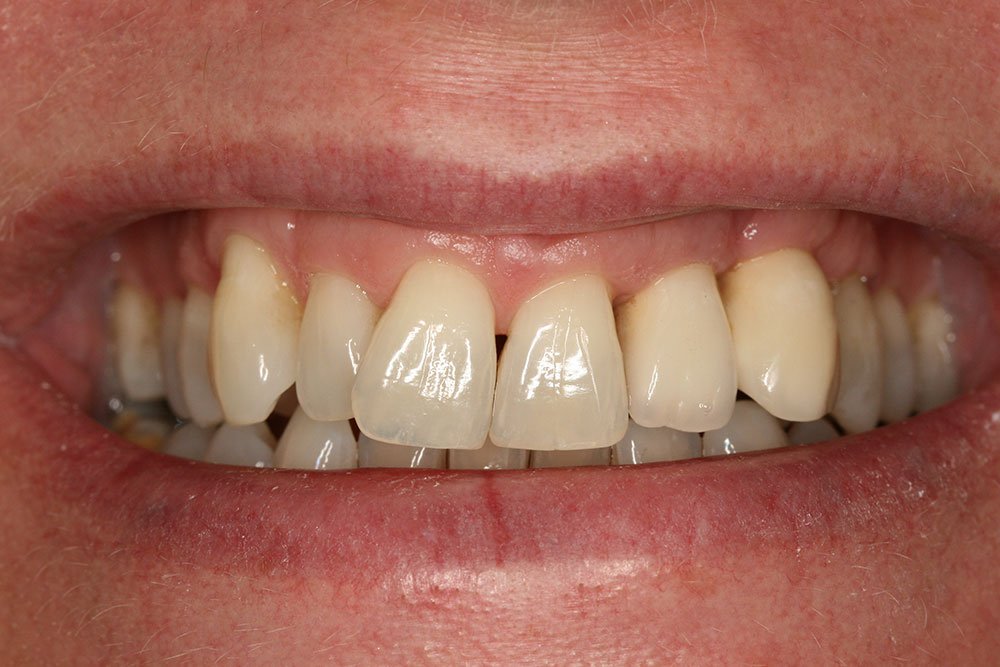
Replacing a front tooth can be one of the most aesthetically demanding forms of implant dentistry.
It is not enough for the crown itself to look realistic. The gum surrounding the implant also needs to frame the tooth naturally.
Important considerations include:
- The amount and position of bone
- The thickness and health of the gum
- The height of the gum line
- The shape of the temporary and final crowns
- The colour and translucency of the ceramic
- The position of the neighbouring teeth
Temporary implant crowns can sometimes be used during treatment to help develop and support the shape of the gum before the final restoration is made.
NHS restorative implant guidance notes that temporary restorations may be used to help shape the gum and assess the form of the replacement before the definitive crown or bridge is produced.
Can You See Metal Around a Dental Implant?
In a well-planned and healthy implant restoration, metal should not normally be conspicuous when you smile.
However, the appearance can change if the gum around an implant recedes significantly over time. Depending on the restoration and implant position, this can sometimes expose part of an abutment or implant surface.
This is one reason healthy gums and careful long-term implant maintenance are so important.
Regular appointments with a dental hygienist can help patients maintain effective cleaning around implants, while specialist periodontal care is available where more complex gum problems need assessment.
What if There Is Not Enough Gum or Bone for a Natural-Looking Implant?
The shape of the gum and jawbone has a major influence on the appearance of an implant.
After a tooth has been lost, the bone that previously supported it can gradually reduce in volume. Gum disease can also result in loss of supporting bone.
If there is insufficient bone for predictable implant placement, bone grafting may sometimes be recommended. For implants towards the back of the upper jaw, a sinus lift may occasionally be required to increase the available bone.
Glow Dental assesses bone volume during implant planning and can incorporate bone grafting or sinus-lift procedures into treatment where appropriate.
Not everyone needs a graft. NHS implant information similarly explains that bone grafting is only required when there is insufficient jawbone to support the proposed implant.
Does Every Dental Implant Have a Crown?
No. A dental implant is essentially an artificial support, so what sits on top depends on how many teeth are missing.
Single-Tooth Implant
One implant can support a single crown to replace one missing tooth.
Implant-Supported Bridge
If several adjacent teeth are missing, implants may support a fixed bridge containing several replacement teeth. It is not always necessary to place one implant for every missing tooth.
You can read more about conventional crowns and bridges and discuss with your dentist how these compare with implant-supported options.
Implant-Supported Denture
Implants can also be used to stabilise a removable denture. Attachments connect the denture to implants in the jaw, giving it additional retention compared with a conventional removable denture.
NHS guidance confirms that implants can be used to support individual crowns, fixed bridges and dentures.
Glow Dental also provides conventional dentures, allowing different options for replacing missing teeth to be discussed during your consultation.
Is an Implant Crown Screwed in or Cemented?
Implant crowns and bridges can be attached in different ways.
Some are screw-retained, meaning the restoration is secured to the implant with a small screw. A tiny access opening in the crown is then sealed with tooth-coloured material.
Others may be cement-retained onto an abutment.
The most suitable design depends on the implant position, bite, aesthetic requirements and clinical circumstances.
From the patient’s perspective, both designs can be made to look like a natural tooth when properly planned.
Can Dental Implants Be Whiter Than Your Natural Teeth?
Yes, the colour of an implant crown can be selected during the restorative stage, but ideally the shade should be planned in relation to the rest of your smile.
If you are considering professional teeth whitening, it is often sensible to discuss this before the final implant crown is made.
Natural teeth can be whitened, but the ceramic or other restorative material used for an implant crown will not subsequently respond to whitening treatment in the same way.
Planning the final shade in advance can therefore help produce a more harmonious result.
Does a Dental Implant Feel Like a Natural Tooth?
An implant-supported crown is fixed in position, so in everyday use it can feel much more like a natural tooth than a removable replacement.
However, an implant is not biologically identical to a natural tooth. A natural root is surrounded by a periodontal ligament containing specialised sensory structures, while a dental implant becomes integrated directly with the jawbone.
Most patients adapt quickly and use implant-supported teeth normally for eating and speaking, but the sensation is not technically identical to that of a natural tooth.
How Do Dental Implants Compare With Bridges and Dentures?
There is no single replacement option that is best for every patient.
A dental implant replaces the missing tooth without requiring support from neighbouring teeth. Cambridge University Hospitals notes that one advantage of implants is that a missing tooth can potentially be replaced without preparing the adjacent teeth.
A conventional bridge normally uses neighbouring teeth for support, while a denture is removable.
The right solution depends on:
- The number and position of missing teeth
- Your bone and gum health
- The condition of neighbouring teeth
- Your bite
- Your general health
- Your preferences
- The complexity and cost of treatment
What Does an Implant Look Like Years Later?
A well-maintained dental implant should continue to look natural, but implants and their restorations still need ongoing care.
The ceramic crown can experience wear or damage over time, while the gum and bone surrounding the implant need to remain healthy.
Daily cleaning and professional maintenance are important because plaque-related inflammation can affect the tissues surrounding dental implants just as it affects the tissues around natural teeth.
Glow Dental recommends maintaining excellent oral hygiene and regular professional care around implants.
Frequently Asked Questions About What Dental Implants Look Like
Do dental implants look like real teeth?
The finished restoration can look very similar to a natural tooth. The visible crown is custom-made to blend with neighbouring teeth, while the implant fixture itself remains hidden inside the jaw.
Will people be able to tell that I have a dental implant?
In many well-planned cases it can be difficult to distinguish an implant crown from neighbouring natural teeth during normal conversation and smiling. The final result depends on the crown, implant position and the condition and shape of the surrounding gum tissue.
What does the implant screw look like?
The implant usually looks like a small threaded metal screw or tapered cylinder. It is placed in the jawbone and replaces the root portion of the missing tooth.
Can you see the implant screw through the gum?
Normally, no. The implant fixture is contained within the jawbone. During healing you may see a small healing abutment, depending on the technique used.
What does a healing implant look like?
It may look like a small round metal cap emerging from the gum, or the implant may be completely covered by gum tissue. Both approaches can be used depending on the treatment plan.
Why can I see a small hole in my implant crown?
If the restoration is screw-retained, there may be a small access channel through which the retaining screw is tightened. This is normally filled with a tooth-coloured material once the crown is secured.
Can an implant crown develop a dark line around the gum?
It is not expected as part of a healthy result, but changes to the gum position can occasionally reveal underlying restorative or implant components. Gum health, tissue thickness and implant positioning are therefore important parts of treatment planning and long-term maintenance.
Can an implant crown be whitened?
No. Whitening treatments alter the colour of natural teeth but do not bleach implant crowns, veneers, crowns or fillings. If you plan to whiten your natural teeth, discuss this before the final implant crown is colour-matched.
Are all dental implants made from titanium?
Titanium and titanium alloys are the materials most commonly associated with dental implants, although other implant materials and systems also exist. The appropriate system is selected according to the individual clinical situation.
See What Dental Implants Can Look Like
The easiest way to understand what a finished implant can look like is to see genuine treatment results rather than illustrations alone.
Visit the Glow Dental before-and-after implant gallery to see examples of patients treated with dental implants at the practice.
Considering a Dental Implant in Battersea?
Dental implants can replace a single missing tooth, several missing teeth or provide support for a larger bridge or denture. According to the NHS, an implant is a fixed tooth-replacement option in which a titanium fixture in the jaw supports a crown, bridge or denture.
At Glow Dental in Battersea, implant treatment is digitally planned using 3D scanning and guided implant techniques. The final restoration is custom-made according to your mouth, neighbouring teeth and aesthetic requirements.
If you are interested in treatment, you can find more information about dental implants at Glow Dental, read our guide to dental implant costs, or contact Glow Dental in Battersea to arrange an assessment.
Written by:
Glow Dental
Published:
Last updated: