
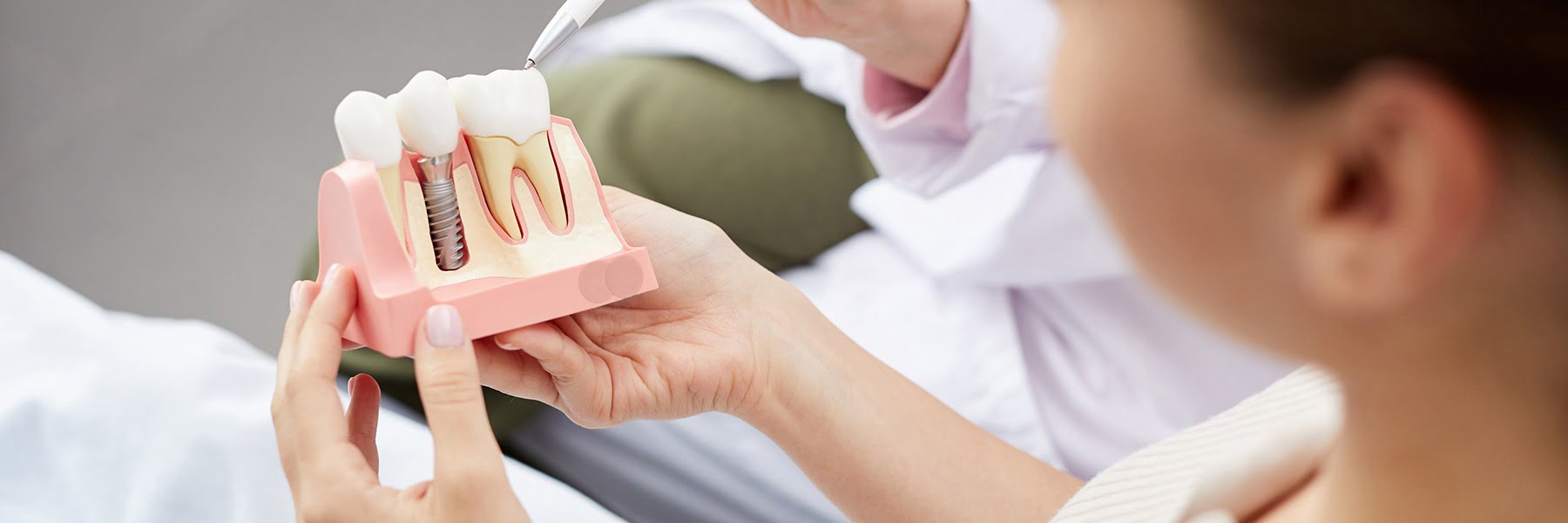
Dental implants are designed as a long-term way to replace missing teeth, but does that mean they last forever?
No dental implant can be guaranteed to last for life. However, modern implants have excellent long-term survival rates, and many remain healthy and functional for decades when they are carefully planned, successfully integrated with the jawbone and properly maintained.
It is also important to distinguish between the implant fixture inside the bone and the crown, bridge, denture, abutment and screws attached to it. The implant itself may remain stable for many years while one of the restorative components eventually needs maintenance, repair or replacement.
Dental implants can also be removed if necessary, although removing a fully integrated implant is not something dentists do routinely. Below, we explain how long implants can last, why they sometimes fail, what happens if a screw becomes loose and when implant removal may be necessary.
Do Dental Implants Last Forever?
Dental implants are intended to be long-term restorations, but they cannot be described as guaranteed lifetime treatments.
Long-term research is reassuring. A systematic review examining single dental implants followed for at least 10 years reported implant survival of approximately 95%.
However, the evidence becomes more limited as follow-up extends beyond 10 or 15 years. A 2024 meta-analysis examining studies with approximately 20 years of follow-up found that implant survival remained high but was lower than short-term figures and varied considerably between studies.
The practical message is therefore:
- Most implants perform very well over the long term.
- Many can remain functional for decades.
- Some patients may keep an implant for the rest of their lives.
- There is no guarantee that every implant will last forever.
- Long-term maintenance continues to matter even after the implant has successfully healed.
NHS implant guidance similarly describes dental implants as long-lasting replacements for tooth roots when they are properly cared for.
Dental Implant Survival vs Dental Implant Success
You may see implant clinics quoting very high “success rates”, but survival and success do not necessarily mean exactly the same thing.
Implant survival generally means that the implant is still present and functioning.
Implant success can use stricter criteria and may also take into account factors such as:
- The health of the surrounding gum and bone
- Absence of significant inflammation
- Absence of unacceptable bone loss
- Comfort
- Stability
- Function
- The condition of the crown or other restoration
This distinction explains why two studies can report slightly different figures even when both are looking at long-term implant treatment.
Which Part of a Dental Implant Can Last the Longest?
A single implant tooth usually involves several separate components.
The Implant Fixture
This is the screw-shaped component placed inside the jawbone. It is usually made from titanium or titanium alloy and becomes anchored within the bone through a process called osseointegration.
If integration is successful and the surrounding tissues remain healthy, the fixture can potentially remain in place for many years or decades.
The Abutment and Retaining Screw
The abutment connects the implant fixture to the replacement tooth. Depending on the system, small screws may be used to secure the components together.
These parts can occasionally loosen, wear or require replacement even when the underlying implant remains healthy.
The Implant Crown
The crown is the visible replacement tooth.
It is exposed to years of biting and chewing, so it should not automatically be expected to last exactly as long as the implant fixture underneath.
Long-term research into single implant crowns has shown that some require repair or replacement even when the underlying implant remains successfully integrated.
Rather than assuming an implant crown will need replacement at an arbitrary “10–15 year” point, it is more accurate to say that its lifespan varies according to the material, bite, position in the mouth, maintenance and individual patient.
You can read more about these individual components in our guide to what a dental implant looks like.
What Determines How Long a Dental Implant Lasts?
There is no single factor that determines implant lifespan. Long-term outcomes result from a combination of the patient’s health, oral hygiene, implant positioning, surrounding bone and gum tissue, bite and ongoing professional maintenance.
1. Oral Hygiene
Dental implants cannot develop tooth decay in the way natural teeth can, but the tissues surrounding them can become inflamed.
Dental plaque accumulating around an implant can lead to peri-implant mucositis, where the gum surrounding the implant becomes inflamed.
In susceptible patients, inflammation can progress to peri-implantitis, which involves loss of the supporting bone around the implant.
Research identifies poor plaque control and lack of regular maintenance as important risk indicators for peri-implantitis.
Read more in our guide: Can Dental Implants Get Infected?
2. Previous Gum Disease
Patients with a history of severe periodontitis require particularly careful long-term maintenance.
A history of serious gum disease is recognised as an important risk indicator for peri-implantitis, particularly when plaque control and professional maintenance are inadequate.
Glow Dental provides specialist periodontal care for patients requiring more advanced management of gum and implant-supporting tissues.
3. Smoking
Smoking can interfere with healing and is associated with poorer outcomes and complications following implant treatment.
NHS implant guidance strongly recommends stopping smoking before implant treatment and remaining a non-smoker afterwards where possible.
If you smoke, our smoking cessation guidance explains how tobacco can affect your gums, bone and oral health.
4. The Amount and Quality of Bone
Dental implants need adequate healthy bone around them for support.
Bone can be lost because of previous gum disease, infection or the natural changes that occur after a tooth is removed.
If insufficient bone is available before treatment, bone grafting may sometimes be required to create a more suitable foundation for the implant.
5. Your Bite and Teeth Grinding
Implants are strong, but neither implants nor their crowns are indestructible.
Grinding or clenching can place substantial forces on the implant restoration and may contribute to mechanical complications such as:
- Chipping of the crown
- Screw loosening
- Damage to restorative components
- In rare cases, fracture of implant components
If significant grinding is identified, your dentist may recommend a custom night guard to protect the implant and other teeth.
6. General Health
Your medical history can influence treatment planning and healing.
Conditions such as poorly controlled diabetes, immune problems and certain medications may affect whether implant treatment is appropriate or require additional precautions.
This does not mean that having a medical condition automatically prevents you from having an implant. Your dentist will assess your individual medical history before treatment.
7. Implant Position and Treatment Planning
The position, depth and angle of the implant can influence both function and long-term maintainability.
At Glow Dental, implant treatment is planned using modern digital imaging and 3D scanning to help assess the available bone and surrounding anatomy before treatment.
Can a Dental Implant Fail Soon After Placement?
Yes. Implant complications are often divided into early failure and late failure.
Early failure occurs before or around the time the implant is expected to integrate successfully with the jawbone.
Sometimes an implant simply does not achieve stable osseointegration.
Possible contributing factors can include:
- Poor healing
- Infection
- Inadequate bone support
- Excessive movement during healing
- Smoking
- Certain medical factors
An implant that fails to integrate may become mobile and normally cannot be used to support the final restoration.
Can a Dental Implant Fail After Many Years?
Yes. An implant that has functioned successfully for years can still develop a problem later.
Late complications may include:
- Peri-implantitis and progressive bone loss
- Mechanical complications
- Implant fracture
- Damage to the crown or bridge
- Screw loosening
- Changes in the surrounding gum and bone
This is why implant aftercare should not stop once the crown has been fitted.
If you notice movement, bleeding, swelling or discomfort around an established implant, arrange an assessment promptly. Our guide to loose and failing dental implants explains the warning signs in more detail.
What Are the Signs of a Dental Implant Problem?
Contact your dentist if you notice:
- An implant or implant crown that feels loose
- New pain around an implant that had previously been comfortable
- Bleeding when cleaning around the implant
- Persistent redness or swelling
- Pus or an unpleasant taste around the implant
- The gum receding around the restoration
- Difficulty biting or chewing comfortably
- Chipping or fracture of the implant crown
These symptoms do not necessarily mean that the implant itself has failed. A loose crown or screw, for example, may sometimes be repaired while leaving the implant fixture untouched.
Can a Dental Implant Be Removed?
Yes. A dental implant can be removed if there is a clinical reason to do so.
However, a healthy, stable implant is designed to remain integrated with the jawbone, so dentists do not routinely remove successful implants.
Removal may be considered when an implant:
- Fails to integrate with the jawbone
- Is mobile
- Has suffered severe supporting bone loss
- Has advanced peri-implantitis that cannot predictably be controlled
- Has fractured
- Cannot support a maintainable restoration
- Has been positioned in a way that creates serious functional or restorative problems
More detail is available in our dedicated guide: Can Dental Implants Be Removed?
Is Dental Implant Removal Straightforward?
Sometimes — but not in every case.
An implant that has never integrated properly may be relatively simple to remove because it is already loose.
A healthy implant that has become firmly osseointegrated is different. Bone is closely attached to the implant surface, so removal needs to be carefully planned to preserve as much surrounding bone as possible.
Several implant-removal techniques are available, including:
- Reverse-torque techniques
- Specialised implant-removal systems
- Trephine instruments
- Surgical burs
- Other specialist surgical techniques in selected cases
A systematic review of dental implant removal techniques found that reverse torque is often preferred where possible because it can be relatively conservative of the surrounding bone.
The appropriate technique depends on factors such as the implant’s position, integration, design, surrounding bone and reason for removal.
Does Removing a Dental Implant Hurt?
Implant removal is normally performed with local anaesthetic, so the aim is for you not to experience pain during the procedure itself.
Once the anaesthetic wears off, some patients experience:
- Soreness
- Swelling
- Bruising
- Tenderness around the surgical site
The amount of discomfort depends partly on how complex the removal was and whether additional surgical treatment was required.
It is therefore better to say that implant removal can usually be carried out comfortably under anaesthetic rather than promising that it is always a minor or painless procedure.
Can a New Implant Be Placed After One Is Removed?
Often, but not always immediately.
The first priority is to determine why the original implant failed.
If the problem was caused by infection, bone loss, smoking, grinding or another modifiable factor, this should be addressed before simply replacing the implant.
Depending on the situation:
- A replacement implant may occasionally be placed at the same appointment.
- The area may need time to heal first.
- Bone grafting may be required if substantial bone has been lost.
- An alternative tooth-replacement option may sometimes be more appropriate.
A 2024 review found that replacement implants can be successful, but outcomes are less predictable than for a first implant, reinforcing the importance of identifying and controlling the cause of the original failure.
Can the Dental Implant Screw Be Removed?
Yes — but it is helpful to clarify what is meant by the “implant screw”.
Patients sometimes use this term for several different components:
- The implant fixture inside the jawbone
- The abutment screw connecting components
- A screw securing a screw-retained crown or bridge
- A temporary healing screw or healing abutment
The small restorative screws can usually be removed or replaced without removing the implant fixture from the bone.
What Happens if an Implant Screw Becomes Loose?
A loose screw does not automatically mean that the dental implant has failed.
Sometimes only the crown, abutment or retaining screw has loosened while the implant fixture remains securely integrated with the jawbone.
Your dentist will normally assess:
- Which component is moving
- Whether the implant fixture itself is stable
- Whether the screw has fractured
- The condition of the crown or bridge
- The way your teeth meet
- Whether grinding or excessive bite forces may have contributed
The solution might involve tightening or replacing a screw, repairing the restoration or replacing the crown.
Do not continue chewing normally on a loose implant crown and do not attempt to tighten anything yourself. Movement can damage components and make a relatively simple repair more complicated.
What if the Actual Dental Implant Is Moving?
A successfully integrated implant fixture should not move independently within the bone.
If the actual implant — rather than just the crown — is mobile, it needs prompt professional assessment.
Mobility may indicate that the implant has failed to integrate or has lost enough supporting bone that it is no longer stable.
Can Peri-Implantitis Be Treated Without Removing the Implant?
Sometimes.
Peri-implantitis does not automatically mean that the implant needs to be removed.
Treatment depends on:
- The amount and pattern of bone loss
- Whether the implant remains stable
- The position and design of the implant
- How easy the area is to clean
- The severity of inflammation
- The patient’s overall risk factors
Earlier disease is generally preferable to treat before extensive bone destruction has occurred.
At Glow Dental, our periodontal team can assess the tissues supporting both natural teeth and dental implants.
How Can You Help Your Dental Implant Last Longer?
Having an implant does not mean that the replacement tooth can simply be forgotten about.
NHS guidance stresses the importance of long-term implant maintenance and regular professional checks.
Brush Thoroughly Twice a Day
Clean the implant crown and surrounding gum carefully every day to prevent plaque accumulation.
Clean Between Your Teeth and Implants
Depending on the implant restoration, your dental team may recommend:
- Interdental brushes
- Floss designed for implants or bridges
- Superfloss
- Other specialised cleaning aids
The best method depends on the shape and accessibility of your particular implant restoration.
Attend Hygienist Appointments
Professional maintenance helps monitor the gum tissues and remove deposits from areas that may be difficult to clean at home.
Our dental hygienists in Battersea can advise you on cleaning techniques appropriate for your implants.
Keep Up With Dental Examinations
Regular dental examinations allow the dentist to assess the implant, crown, bite, gums and surrounding tissues.
Avoid Smoking
Stopping smoking can reduce oral-health risks and improve the conditions required for healthy implant tissues.
Protect Implants if You Grind Your Teeth
If you clench or grind significantly, your dentist may recommend a protective appliance to reduce excessive mechanical forces.
Do Not Ignore Bleeding or Movement
Implant problems are generally easier to manage when they are identified early.
Do Dental Implants Need More Maintenance Than Natural Teeth?
Implants do not get cavities, but this does not make them maintenance-free.
The surrounding gums and bone remain living tissues and can be affected by plaque-related inflammation.
The crown, bridge, screws and other prosthetic components can also experience wear over time.
Long-term implant care therefore involves maintaining both:
- Biological health — healthy gums and supporting bone
- Mechanical health — a stable implant restoration, screws and bite
Frequently Asked Questions
How long do dental implants usually last?
There is no fixed expiry date. Long-term research shows excellent implant survival at 10 years, and many implants function for considerably longer. However, survival gradually reduces with longer follow-up, so no dentist can guarantee that an implant will last for life.
Can an implant last 20 or 30 years?
Yes, individual dental implants can remain functional for 20 years or longer. However, the quality of scientific evidence becomes more limited over very long follow-up periods, and the result for an individual patient depends on oral hygiene, gum and bone health, smoking, bite forces and maintenance.
Does the implant crown last as long as the implant?
Not necessarily. The implant fixture may remain integrated while the crown or other prosthetic components eventually require repair or replacement.
Can dental implants fail after many years?
Yes. Late problems can include peri-implantitis, bone loss and mechanical complications even after many years of successful function.
Can a loose dental implant be tightened?
It depends on what is loose. A retaining screw or crown can sometimes be tightened or replaced. A genuinely mobile implant fixture inside the bone is a different problem and requires prompt assessment.
Does implant removal hurt?
Local anaesthetic is normally used so that the procedure itself is comfortable. Some soreness, swelling or tenderness may occur afterwards, particularly following a more complex removal.
Can a removed dental implant be replaced?
Often, yes. However, the reason for the original failure needs to be identified first. Healing, treatment of infection or bone grafting may sometimes be necessary before another implant is considered.
Can an implant crown be replaced without removing the implant?
Yes. If the implant fixture remains healthy and stable, a worn, chipped or damaged crown can often be repaired or replaced independently.
Can dental implants get cavities?
No. The implant and ceramic crown cannot develop tooth decay. However, plaque can still cause inflammation and disease in the gum and bone surrounding the implant.
Dental Implants Are Long-Term — Not Maintenance-Free
Dental implants are one of the most predictable long-term options for replacing missing teeth, but “permanent” should not be interpreted as “guaranteed to last forever”.
A well-planned implant that integrates successfully and is surrounded by healthy bone and gums may remain functional for decades. However, the crown, screws and other components can require maintenance, and the tissues surrounding the implant need lifelong care.
If a problem develops, it does not automatically mean that the entire implant must be removed. A loose screw, damaged crown or early inflammation may often be treated while retaining the implant itself.
If an implant does need removal, treatment is planned according to the reason for failure and the amount of healthy bone remaining. Replacement with another implant may be possible, but this should only be considered after addressing the underlying cause.
If you are considering implant treatment, you can learn more about dental implants at Glow Dental, view our before-and-after dental implant gallery, or read our guide to dental implant costs.
If you already have an implant and have noticed movement, bleeding, swelling or discomfort, arrange an assessment rather than waiting for the problem to settle by itself.
Contact Glow Dental in Battersea to book an implant consultation or assessment.
Written by:
Glow Dental
Published:
Last updated: