
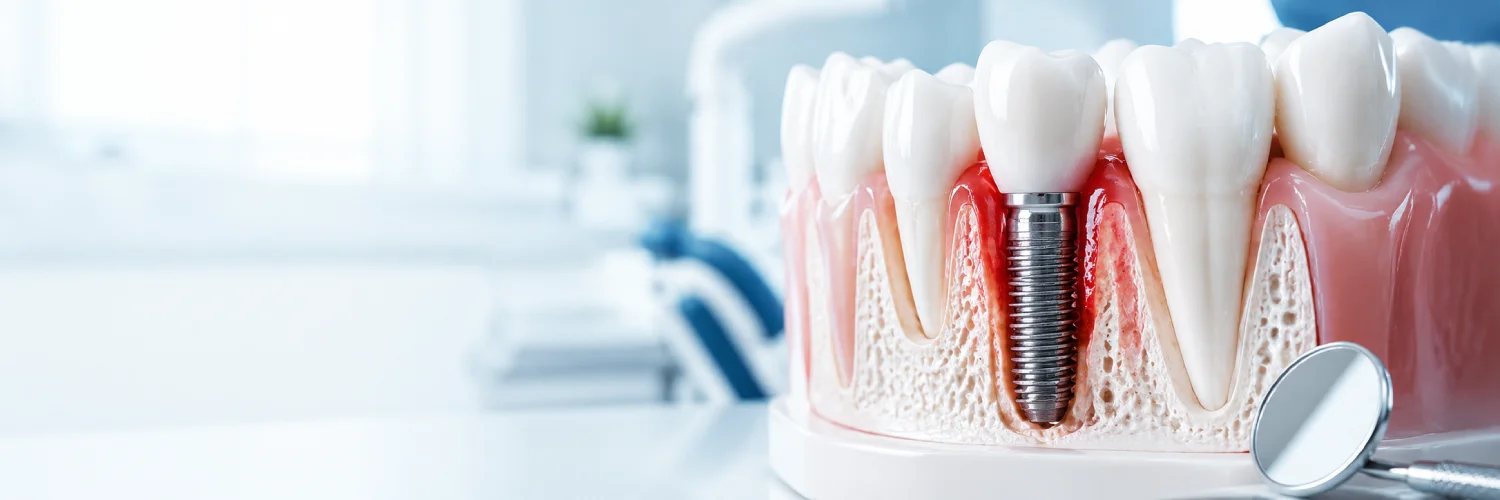
If you are considering dental implants or already have one, you may be wondering, “Can dental implants get infected?” Yes. The gum and bone surrounding a dental implant can develop inflammation caused by bacterial plaque.
The early stage is known as peri-implant mucositis, which affects the soft gum tissue around the implant. A more advanced condition, known as peri-implantitis, also involves loss of the bone supporting the implant.
Early assessment is important because inflammation is usually easier to manage before significant bone loss occurs. With effective oral hygiene, regular professional maintenance and appropriate aftercare, dental implants can remain healthy and function successfully for many years.
What Causes Inflammation or Infection Around a Dental Implant?
The most common cause is the build-up of dental plaque around the implant. Plaque contains bacteria that can irritate the surrounding gum tissue. If the inflammation is not controlled, it may eventually affect the bone supporting the implant.
Factors that may increase the risk of problems around dental implants include:
- Poor oral hygiene.
- Difficulty cleaning around the implant crown, bridge or denture.
- Smoking or tobacco use.
- A history of gum disease.
- Poorly controlled diabetes.
- Irregular dental and hygiene appointments.
- Excess cement remaining below the gum after a crown has been fitted.
- A restoration that makes the implant difficult to clean.
- Grinding or clenching, which may place additional pressure on the implant restoration.
Some of these factors can be reduced through improved cleaning, professional maintenance, smoking cessation and appropriate management of general health conditions.
What Is Peri-Implant Mucositis?
Peri-implant mucositis is inflammation limited to the soft gum tissue surrounding a dental implant. It is similar in some ways to gingivitis around natural teeth.
Possible signs include redness, swelling and bleeding when the area is examined or cleaned. At this stage, there is no additional loss of the bone supporting the implant.
Peri-implant mucositis can often be controlled with professional cleaning, improved oral hygiene and correction of factors that make the implant difficult to maintain. It is considered a potential precursor to peri-implantitis, but it does not inevitably progress when the inflammation is treated and plaque control improves.
What Is Peri-Implantitis?
Peri-implantitis is a more advanced inflammatory condition affecting both the gum and the supporting bone around a dental implant.
As the disease progresses, the implant may lose some of its bone support. In advanced cases, the implant can become unstable and may eventually need to be removed.
Peri-implantitis may develop without obvious pain and can sometimes progress more quickly than gum disease around natural teeth. Regular clinical examinations and, where appropriate, dental X-rays are therefore important for monitoring the health of the tissues around an implant.
Can a Dental Implant Become Infected Shortly After Surgery?
Infection can occasionally develop during the early healing period following implant placement.
Some discomfort, swelling and tenderness are normal after dental implant surgery. However, these symptoms should generally begin to improve as healing progresses.
Contact your dentist if you experience:
- Pain or swelling that becomes worse rather than better.
- Pus or discharge from the surgical area.
- A persistent unpleasant taste or smell.
- Fever or feeling generally unwell.
- Difficulty opening your mouth.
- Bleeding that does not settle.
- Movement of the implant or temporary restoration.
These symptoms do not always mean that an infection is present, but they require prompt professional assessment.
What Are the Signs of a Problem Around a Dental Implant?
Contact your dentist if you notice any of the following:
- Red, swollen or tender gums around the implant.
- Bleeding when brushing or cleaning around the implant.
- Pus or discharge from the gum.
- A persistent unpleasant taste or bad breath.
- Pain or discomfort when biting or chewing.
- The gum beginning to recede around the implant.
- Food repeatedly becoming trapped around the restoration.
- The crown, bridge or denture attached to the implant feeling loose.
- The implant itself appearing to move.
A loose crown or bridge does not always mean that the implant is infected. It may be caused by a loose screw, worn component or another mechanical issue. However, it should still be checked promptly.
Movement of the implant itself is more serious and requires urgent professional assessment. You can read more in our guide: Can Dental Implants Fall Out?
Can an Infected Dental Implant Be Saved?
In some cases, yes.
Early treatment can often control inflammation and may help preserve the implant. The likely outcome depends on several factors, including:
- Whether the condition is peri-implant mucositis or peri-implantitis.
- The amount and pattern of bone loss.
- Whether the implant remains stable.
- The design and condition of the implant crown, bridge or denture.
- The patient’s oral hygiene.
- Smoking and general health factors.
- Whether the implant can be cleaned and maintained effectively.
The earlier the problem is diagnosed and managed, the better the opportunity to protect the surrounding tissues and maintain the implant.
How Is an Infected Dental Implant Treated?
Treatment depends on whether the problem involves peri-implant mucositis, peri-implantitis, an early postoperative infection or a mechanical complication affecting the restoration.
Treatment may include:
- Professional removal of plaque and deposits around the implant.
- Personalised oral hygiene instruction.
- Cleaning with implant-safe instruments.
- Management of gum disease elsewhere in the mouth.
- Correction of areas that trap plaque or food.
- Adjustment, repair or replacement of the implant restoration where necessary.
- Non-surgical treatment followed by reassessment.
- Surgical treatment where inflammation and bone loss cannot be controlled non-surgically.
- Antiseptic products or antibiotics in selected cases when clinically appropriate.
Antibiotics and antibacterial mouthwashes are not a substitute for professional cleaning and effective plaque control. They are not required in every case and should only be used when recommended by your dentist or periodontist.
Patients with more advanced gum or bone problems may benefit from assessment through our periodontics service.
Will an Infected Dental Implant Need to Be Removed?
Not necessarily.
Many early inflammatory problems can be managed without removing the implant, particularly when the implant remains stable and there has been limited or no bone loss.
Removal may be considered when:
- The implant has become mobile.
- There is extensive loss of supporting bone.
- The implant has failed to integrate with the jawbone.
- The infection cannot be controlled with other treatment.
- The position or design of the implant makes successful restoration or cleaning impossible.
- The implant is fractured or structurally damaged.
After removal and healing, some patients may be suitable for another implant. Bone grafting or other preparatory treatment may be required before a replacement can be considered.
Further information is available in our guide: Can Dental Implants Be Removed?
How Can You Prevent Problems Around a Dental Implant?
Long-term implant health depends on effective daily cleaning and regular professional monitoring.
To reduce the risk of inflammation:
- Brush your teeth and implant restorations twice a day using fluoride toothpaste.
- Clean between the implant and neighbouring teeth every day.
- Use floss, interdental brushes or other cleaning aids recommended by your dental team.
- Attend regular dental examinations.
- Visit your dental hygienist as advised.
- Follow the aftercare instructions provided following implant surgery.
- Seek advice if the implant becomes difficult to clean.
- Have loose crowns, bridges or dentures checked promptly.
- Avoid smoking or seek support to stop.
- Keep medical conditions such as diabetes appropriately managed.
Cleaning requirements vary according to the type of implant restoration. A single implant crown may require different cleaning techniques from a full-arch bridge or implant-retained denture.
Does Smoking Increase the Risk of Dental Implant Problems?
Smoking can interfere with healing and is associated with a greater risk of gum and bone problems around dental implants.
Patients who smoke should discuss this openly with their dentist before treatment. Reducing or stopping smoking can support healing and improve the long-term outlook for the implant.
More information is available on our smoking cessation and oral health page.
Can a Dental Implant Become Infected Years Later?
Yes. Problems around a dental implant can develop months or years after the implant was placed.
Late inflammation is commonly associated with plaque accumulation, difficulties cleaning around the restoration, previous gum disease, smoking or a lack of regular professional maintenance.
An implant may continue to feel comfortable even when inflammation or bone loss is present. Regular examinations are therefore important throughout the life of the implant, even when there are no obvious symptoms.
Are Problems Around Dental Implants Common?
Dental implants have a strong record of long-term survival, but inflammation around implants is not rare.
Peri-implant mucositis is more common than peri-implantitis and can often be controlled when detected early. Peri-implantitis is more serious because it involves loss of the bone supporting the implant.
Individual risk varies according to oral hygiene, previous gum disease, smoking, general health, restoration design and attendance for regular professional maintenance.
A successful implant should therefore be viewed as a long-term treatment that requires ongoing cleaning, monitoring and maintenance rather than a replacement tooth that can be ignored once treatment is complete.
When Should You Contact a Dentist Urgently?
Arrange prompt professional advice if:
- The implant itself feels mobile.
- You have increasing pain or swelling after implant surgery.
- There is pus or persistent discharge.
- You develop a fever or feel unwell.
- You experience sudden difficulty biting or chewing.
- The implant crown, bridge or denture becomes loose or damaged.
Do not attempt to tighten or adjust an implant restoration yourself.
Why Choose Glow Dental?
At Glow Dental in Battersea, our focus extends beyond placing the implant. We carefully plan implant treatment and provide ongoing advice and maintenance to support the long-term health of the surrounding gum and bone.
If you already have a dental implant, we can assess the implant, the surrounding tissues and the restoration attached to it. Where necessary, we can recommend professional cleaning, periodontal assessment, restorative treatment or further investigation.
Regular reviews allow potential problems to be identified before they become more difficult to manage.
Related Dental Implant Guides
- Can Dental Implants Be Removed?
- Can Dental Implants Fall Out?
- Are Dental Implants Painful?
- How Many Dental Implants Can You Have?
- How Much Do Dental Implants Cost?
Book a Dental Implant Assessment
If you are concerned about an existing implant, have noticed bleeding, swelling or movement, or would like to discuss dental implant treatment, our experienced team is here to help.
Contact Glow Dental to arrange an assessment at our Battersea practice. We will examine the implant and surrounding tissues, discuss any findings and recommend an appropriate treatment or maintenance plan.
Written by:
Glow Dental
Published:
Last updated: