
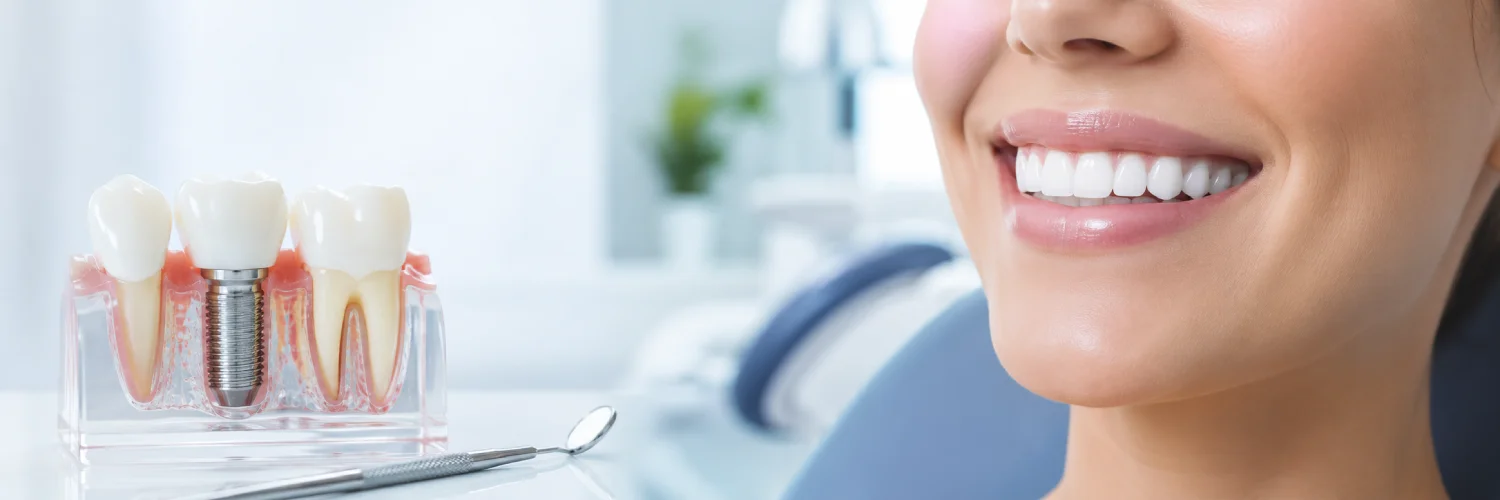
If you are missing one or more teeth, you may be wondering, “How many dental implants can you have?” There is no single maximum number that applies to every patient. The number you may need depends on how many teeth are being replaced, whether the final restoration will be fixed or removable, the condition of your jawbone and how your teeth come together when you bite.
Some patients need only one implant, while others may have several implants supporting a bridge or a complete arch of replacement teeth. The aim is not to place as many implants as possible, but to use the appropriate number to provide a stable, functional and maintainable result.
At Glow Dental, every dental implant treatment is planned around the individual. During your consultation, we will assess your teeth, gums, jawbone and general health before explaining which options may be suitable for you.
Is There a Maximum Number of Dental Implants You Can Have?
There is no universal maximum number of dental implants. A person could potentially have several implants distributed throughout the upper and lower jaws, but the number that can be placed safely depends on the available bone, the position of important anatomical structures and the type of replacement teeth being planned.
More implants do not necessarily produce a better result. Every implant involves surgery and requires sufficient space, healthy surrounding tissues and ongoing cleaning. Your dentist will therefore recommend enough implants to support the proposed restoration without placing unnecessary implants.
Can You Have Just One Dental Implant?
Yes. If you have lost a single tooth, one dental implant may be used to replace it.
The implant is placed in the jawbone and supports a custom-made crown designed to match the surrounding teeth. Unlike a conventional bridge, a single implant normally does not require the neighbouring teeth to be prepared for support.
The most appropriate option will depend on the position of the missing tooth, the available space, your bite and the condition of the adjacent teeth. Your dentist may discuss an implant alongside other options, including dental bridges.
Can Dental Implants Replace Several Teeth?
Yes. Several missing teeth can often be replaced without using one implant for every individual tooth.
For example, two or more implants may be positioned to support an implant-retained bridge. The exact number will depend on:
- The number and location of the missing teeth.
- The length of the gap being restored.
- The strength and volume of the available bone.
- The amount of pressure placed on the area during biting and chewing.
- The design and materials used for the final bridge.
An implant-supported bridge can distribute chewing forces across several implants while replacing a greater number of teeth. However, the design must be carefully planned, particularly when replacing back teeth where chewing forces are usually greater.
Can All Your Teeth Be Replaced with Dental Implants?
Yes. Dental implants can be used to replace a complete upper arch, lower arch or both arches.
It is not normally necessary to place one implant for every missing tooth. A complete fixed bridge may often be supported by four to six carefully positioned implants, although some patients may require a different number.
The most suitable arrangement depends on the amount and distribution of bone, the size of the jaw, the planned restoration and how forces will be distributed when you bite.
The upper and lower jaws must also be assessed separately. Bone volume and quality can differ between them, and structures such as the maxillary sinuses in the upper jaw and nerves in the lower jaw must be considered during planning.
What Is the Difference Between Fixed Teeth and Implant-Retained Dentures?
The number of implants required also depends on whether you want a fixed restoration or a removable one.
Fixed Full-Arch Teeth
A fixed full-arch bridge is attached to the implants and is not removed by the patient. Four to six implants are commonly considered for a complete arch, but the final number depends on the clinical assessment and design of the bridge.
Implant-Retained Dentures
An implant-retained denture remains removable but connects to implants for additional stability. It can be taken out for cleaning while feeling considerably more secure than a conventional denture.
As a general guide:
- Two implants are commonly used to stabilise a complete lower denture.
- Four or more implants may be considered for an upper implant-retained denture.
These are typical examples rather than fixed rules. The required number and position of implants will depend on the individual patient and the design of the denture.
You can also read more about the differences between implant-supported options and traditional removable dentures.
What Determines How Many Dental Implants You Need?
Your dentist will plan the implants around the final replacement teeth rather than deciding on the implant number in isolation. Several factors must be considered.
The Number and Position of Missing Teeth
A single missing tooth may require one implant, while several missing teeth may be restored with an implant-supported bridge. A complete arch normally requires several implants positioned to distribute chewing forces safely.
The Type of Final Restoration
A fixed bridge and a removable implant-retained denture have different support requirements. Your preferences, ability to clean the restoration and long-term maintenance needs should form part of this decision.
Jawbone Volume and Quality
Dental implants require sufficient bone for stability. If bone has reduced following tooth loss, gum disease or a previous infection, additional treatment such as bone grafting or a sinus lift may need to be considered.
Bone loss does not automatically mean that implant treatment is impossible, but it may influence the number, length, diameter or position of the implants.
Gum and Periodontal Health
Healthy gums are important for the long-term stability of dental implants. Active gum disease should normally be assessed and managed before implant treatment begins.
Patients with a history of periodontal problems may also need more frequent professional maintenance. Glow Dental provides specialist assessment and treatment through our periodontics service.
Your Bite and Chewing Forces
The way your upper and lower teeth meet affects the amount and direction of pressure placed on the implants. Your dentist will assess your bite and consider factors such as tooth grinding or clenching when designing the restoration.
Your General Health and Medical History
Your medical history, medication and ability to heal must be considered before implant surgery. Certain medical conditions may require additional precautions or coordination with your doctor.
Smoking
Smoking can interfere with healing and increase the risk of complications around dental implants. Patients who smoke should discuss this openly with their dentist and may be advised to reduce or stop smoking before and after treatment.
Further information is available on our page about smoking and oral health.
Your Ability to Maintain the Implants
Every implant-supported restoration must be cleaned carefully. The design should allow you to brush and clean around the implants, and you will need regular dental and hygiene appointments.
Placing additional implants can sometimes make cleaning more complicated, which is another reason why the treatment should use an appropriate rather than excessive number.
Can Older Adults Have Multiple Dental Implants?
Yes. Age alone does not normally determine whether someone can have dental implants.
Many older adults can be suitable candidates, provided their general health, oral health and jawbone condition allow treatment to be carried out safely. The dentist will also consider whether the patient can maintain the implants and attend the necessary aftercare appointments.
For some older patients, a simpler implant-retained denture may be easier to clean and maintain than a complex fixed restoration. The decision should reflect the patient’s health, preferences and long-term needs rather than age alone.
Will You Need Bone Grafting?
Not everyone needs bone grafting before dental implant treatment.
However, the jawbone naturally changes after a tooth is removed. If there is not enough bone in the required position, grafting may be recommended to create a more suitable foundation for the implant.
Whether grafting is necessary will depend on:
- The amount of bone available.
- The location of the proposed implant.
- How long the tooth has been missing.
- Whether infection or gum disease has previously affected the area.
- The size and position of the planned implant.
In some cases, the implant and bone graft can be placed during the same procedure. In others, the graft may need time to heal before implant placement. Your dentist will explain the recommended sequence after reviewing your scans.
How Does Your Dentist Plan the Number of Implants?
Before treatment begins, your dentist will carry out a comprehensive assessment. This may include:
- A full examination of your teeth and gums.
- Dental X-rays.
- 3D CBCT imaging where clinically appropriate.
- An assessment of your bite.
- Digital scans or impressions of your teeth.
- A review of your medical history and medication.
- A discussion about whether you prefer fixed or removable replacement teeth.
- A review of your expectations, budget and treatment priorities.
The final teeth are planned first so that the implants can be positioned where they will provide appropriate support. This is sometimes described as prosthetically driven implant planning.
Following the assessment, you should receive a personalised treatment plan explaining the proposed number of implants, any additional treatment required, the expected stages and the likely costs.
How Much Does Treatment Cost?
The cost depends on the number of implants, the type of final restoration and whether procedures such as extractions, bone grafting or temporary teeth are needed.
Replacing several teeth does not always mean multiplying the cost of a single implant by the number of missing teeth, because a smaller number of implants may be able to support a bridge.
For more information, read our guide to dental implant costs.
Why Choose Glow Dental?
At Glow Dental in Battersea, every implant case is planned around the patient’s individual clinical needs and long-term oral health.
Whether you are replacing one missing tooth, several teeth or a complete smile, our team will explain the available fixed and removable options and recommend an appropriate number of implants for the planned restoration.
We use detailed assessment, digital imaging and careful restorative planning to help create secure, natural-looking replacement teeth that can be maintained over the long term.
You can also view examples of completed treatment in our patient gallery.
Related Dental Implant Guides
- Are Dental Implants Painful?
- Can Dental Implants Get Infected?
- Can Dental Implants Fall Out?
- Can Dental Implants Be Removed?
- How Much Do Dental Implants Cost?
Book a Dental Implant Consultation
If you are considering dental implants and would like to find out how many you may need, the first step is a detailed clinical assessment.
Contact Glow Dental to arrange a consultation at our Battersea practice. We will assess your teeth, gums and jawbone, explain the available options and provide a personalised treatment plan based on your individual needs.
Written by:
Glow Dental
Published:
Last updated: