
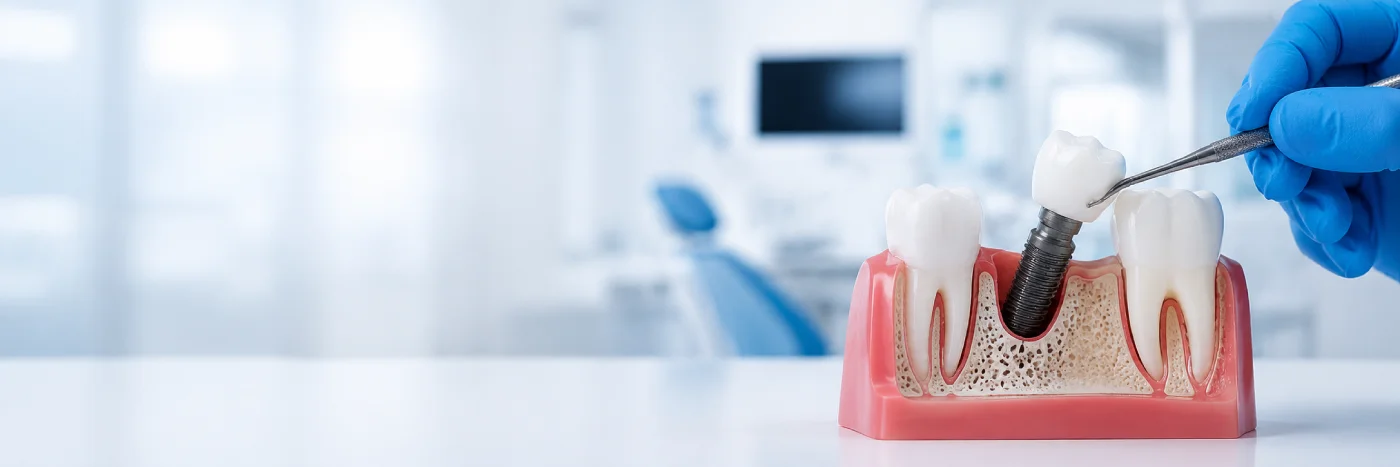
One of the most common concerns patients have before treatment is, “Can dental implants fall out?”
The reassuring answer is that a properly integrated dental implant should remain securely positioned within the jawbone. However, an implant can occasionally become loose or fail, particularly if it does not integrate during healing or later loses support from the surrounding bone.
It is also important to distinguish between the implant itself and the crown, bridge, abutment or screw attached to it. In many cases, when a patient feels movement, it is the restoration above the gum that has loosened rather than the implant within the bone.
Any movement should be assessed promptly, but it does not automatically mean that the entire implant has failed.
Can a Dental Implant Really Fall Out?
A dental implant does not normally fall out without warning. If the implant itself becomes mobile, this usually means that it has not integrated successfully or has lost some of the bone that previously supported it.
In some cases, a loose implant may eventually come out or require professional removal. More commonly, the dentist identifies the movement during an examination and recommends treatment before this happens.
A firmly integrated implant cannot simply be pushed back into place if it becomes loose. The cause must first be identified and the appropriate treatment planned.
How Does a Dental Implant Stay in Place?
A dental implant is a small post, usually manufactured from titanium or a titanium alloy, that is positioned within the jawbone to replace the root of a missing tooth.
During healing, the surrounding bone forms a close connection with the implant surface through a process known as osseointegration. This provides the stability needed to support a crown, bridge or implant-retained denture.
Osseointegration usually takes place over several weeks or months, depending on factors including:
- The position of the implant.
- The quality and quantity of the jawbone.
- The implant’s initial stability.
- The patient’s general and oral health.
- Whether bone grafting has been carried out.
- The type of restoration being planned.
Once integration has taken place, the implant should not move independently within the bone.
Is the Implant Loose or Is It the Crown?
A dental implant restoration usually contains several separate components:
- The implant positioned within the jawbone.
- An abutment or connector attached to the implant.
- A crown, bridge or denture fitted above the gum.
- One or more screws securing the components together.
The visible replacement tooth may move even when the implant itself remains securely integrated.
Possible causes include:
- A loose retaining screw.
- A damaged or worn screw.
- A loose abutment.
- A crown that has become uncemented.
- Damage to the crown, bridge or denture.
These mechanical problems can often be repaired without removing the implant. However, you should avoid chewing on the area and arrange an assessment promptly, as continued movement may damage the restoration or its connecting components.
Can an Implant Become Loose Shortly After Surgery?
Yes. Early implant failure can occur when the implant does not successfully integrate with the jawbone.
This may become apparent during the healing period or when the dentist checks the implant before fitting the final restoration.
Possible contributing factors include:
- Insufficient initial stability.
- Poor bone quality or quantity.
- Movement or excessive pressure during healing.
- Infection or significant inflammation.
- Smoking.
- Some medical conditions or medications.
- Problems affecting healing at the surgical site.
A small amount of soreness after implant surgery can be normal, but increasing pain, swelling, discharge or movement should be reported to the dental practice.
Can a Dental Implant Become Loose Years Later?
Yes. An implant that was initially successful can lose support months or years later.
Late implant failure may be associated with:
- Peri-implantitis and progressive bone loss.
- Difficulty cleaning around the implant restoration.
- A history of gum disease.
- Smoking.
- Excessive or unfavourable biting forces.
- Damage to the implant or restoration.
- Poor implant position or restoration design.
- A lack of regular professional maintenance.
Regular dental examinations are important because bone loss around an implant may develop before the patient experiences obvious pain.
What Is Peri-Implantitis?
Plaque accumulation around an implant can cause inflammation of the surrounding gum. The early condition is known as peri-implant mucositis.
If the inflammation progresses and begins to affect the supporting bone, it is known as peri-implantitis.
Possible signs include:
- Bleeding around the implant.
- Red or swollen gum tissue.
- Pus or persistent discharge.
- An unpleasant taste or smell.
- Gum recession.
- Increasing pocket depth around the implant.
- Bone loss visible on dental X-rays.
- Movement in advanced cases.
Peri-implantitis does not always cause pain. Professional monitoring is therefore important even when an implant feels comfortable.
Read more in our guide: Can Dental Implants Get Infected?
Can Smoking Make a Dental Implant Loose?
Smoking is associated with an increased risk of implant failure and peri-implant disease.
It can interfere with healing, affect the tissues around the implant and make long-term inflammation more difficult to control.
Patients who smoke should discuss this openly with their dentist before implant treatment. Reducing or stopping smoking can support healing and improve the long-term outlook for the implant.
Further advice is available on our smoking cessation and oral health page.
Can Diabetes Affect Dental Implant Success?
Having diabetes does not automatically mean that dental implants are unsuitable.
However, poorly controlled blood glucose may affect healing and is associated with a higher risk of inflammation around implants. Your dentist will consider the stability of your condition, your medical care and any additional risk factors before recommending treatment.
Patients should provide an accurate medical history and inform their dental team of any changes to their health or medication.
Can Teeth Grinding Damage a Dental Implant?
Grinding or clenching can place additional force on implant crowns, bridges, screws and other components.
This does not necessarily mean that grinding alone will cause the implant to fall out, but excessive forces may contribute to mechanical complications such as:
- Loose or fractured screws.
- Damage to the crown or bridge.
- Wear of the implant restoration.
- Unfavourable pressure on the implant and surrounding bone.
Your dentist may assess your bite and recommend adjustments or a custom-made night guard where appropriate.
Does Insufficient Bone Increase the Risk?
Dental implants require enough healthy bone to provide support and stability.
Bone may be reduced following:
- Long-term tooth loss.
- Advanced gum disease.
- Infection.
- Trauma.
- Previous implant failure.
Dental X-rays and, where clinically appropriate, 3D CBCT imaging can help the dentist assess the available bone.
Bone grafting may be recommended before or during implant placement when additional support is required. The need for grafting depends on the individual site and treatment plan.
Can an Implant Fracture?
Fracture of the implant body within the jawbone is uncommon, but it can occur.
Possible contributing factors include severe mechanical stress, an unfavourable bite, insufficient implant support, damage to connecting components or long-term material fatigue.
A fractured crown, bridge, abutment or screw does not necessarily mean that the implant itself has fractured. The dentist may need to remove the restoration and take X-rays before confirming which component is affected.
If the implant body has fractured, removal may be necessary.
What Are the Warning Signs of Implant Failure?
Arrange an assessment if you notice:
- The implant or replacement tooth moving.
- New or increasing pain after the area has healed.
- Persistent swelling, redness or tenderness.
- Bleeding when brushing or cleaning around the implant.
- Pus or persistent discharge.
- An unpleasant taste or smell.
- Gum recession around the implant.
- Food repeatedly becoming trapped around the restoration.
- A sudden change in your bite.
- Difficulty chewing comfortably.
A loose restoration is often easier to treat than a mobile implant, but it is not possible to tell the difference reliably without a professional examination.
What Should You Do if Part of the Implant Comes Out?
If a crown, screw, healing cap or another component comes out:
- Keep the component in a clean, secure container.
- Do not attempt to screw or push it back into place.
- Avoid chewing on the affected side.
- Keep the area clean without applying excessive pressure.
- Contact your dentist as soon as possible.
If you believe the implant itself has come out, keep it safe and contact the practice promptly. Do not attempt to place it back into the gum or socket.
How Will the Dentist Assess a Loose Implant?
The dentist will first determine which component is moving.
The assessment may include:
- Examining the implant and surrounding gum.
- Checking the crown, bridge, abutment and screws.
- Assessing the way your teeth meet.
- Checking for bleeding, swelling or discharge.
- Taking dental X-rays.
- Comparing current bone levels with previous records.
- Using 3D imaging where clinically necessary.
The findings will determine whether the restoration can be repaired, whether inflammation requires treatment or whether the implant has lost its stability.
Can a Loose Dental Implant Be Saved?
A loose crown, bridge, abutment or screw can often be repaired while retaining the implant.
If the implant itself is moving within the jawbone, it has usually lost or failed to develop adequate bone integration. A mobile implant generally cannot be restored simply by tightening it.
The dentist may recommend removing the implant where:
- It has failed to integrate.
- It has become mobile.
- There is extensive supporting bone loss.
- Peri-implant disease cannot be controlled.
- The implant body is fractured.
- Its position prevents successful restoration or cleaning.
More information is available in our guide: Can Dental Implants Be Removed?
Can a Failed Implant Be Replaced?
In many cases, another implant may be considered after a failed implant has been removed.
Before planning replacement, the dentist will investigate why the original implant failed. Factors such as smoking, gum disease, bite pressure, insufficient bone, implant position or difficulty cleaning the restoration may need to be addressed.
A replacement implant may sometimes be placed at the same appointment. In other situations, the area must heal first, particularly where there is infection, inflammation, significant bone loss or a need for bone grafting.
Although replacement can be successful, treatment at a site where an implant has already failed may be less predictable than the first implant placement. Careful planning and control of modifiable risk factors are therefore important.
How Long Do Dental Implants Last?
Dental implants have a strong record of long-term survival, but no implant can be guaranteed to last for life.
The outcome depends on factors including:
- The patient’s oral and general health.
- Implant position and treatment planning.
- The condition of the surrounding bone and gum.
- The design of the crown, bridge or denture.
- Daily oral hygiene.
- Smoking.
- Biting and grinding forces.
- Regular professional maintenance.
The implant body and the restoration above it should also be considered separately. The implant may remain integrated while the crown, bridge, screw or denture requires maintenance, repair or replacement over time.
How Can You Reduce the Risk of Implant Failure?
Not every complication can be prevented, but the risk of many problems can be reduced.
To support the long-term health of your implant:
- Brush your teeth and implant restorations twice a day.
- Clean around the implant daily using the aids recommended by your dental team.
- Attend regular dental examinations.
- Visit your dental hygienist as advised.
- Seek advice if the implant becomes difficult to clean.
- Have bleeding, swelling or movement checked promptly.
- Discuss smoking with your dental team.
- Inform the practice of changes to your medical history or medication.
- Discuss grinding or clenching with your dentist.
- Follow the aftercare instructions provided after implant treatment.
Patients with a history of gum disease may require additional monitoring and maintenance through our periodontics service.
Why Choose Glow Dental?
At Glow Dental in Battersea, implant treatment is carefully planned around your oral health, medical history, available bone and long-term maintenance needs.
We use modern diagnostic technology to assess the jawbone, neighbouring teeth and proposed implant position. We also consider how the final crown, bridge or denture will function, look and be cleaned.
If you are concerned about an existing implant, we can assess whether the movement involves the implant itself or one of the restoration components. Where appropriate, we can recommend restorative repair, hygiene treatment, periodontal care, further imaging or implant removal.
Related Dental Implant Guides
- Can Dental Implants Get Infected?
- Can Dental Implants Be Removed?
- Can Dental Implants Cause Cancer?
- Are Dental Implants Painful?
- How Many Dental Implants Can You Have?
- How Much Do Dental Implants Cost?
Book a Dental Implant Assessment
If your implant or replacement tooth feels loose, has become uncomfortable or you have noticed bleeding or swelling around it, arrange an assessment rather than waiting for the problem to become worse.
Contact Glow Dental to book a dental implant assessment at our Battersea practice. We will identify which component is affected, explain whether the implant can be retained and recommend the most appropriate next steps.
Written by:
Glow Dental
Published:
Last updated: