
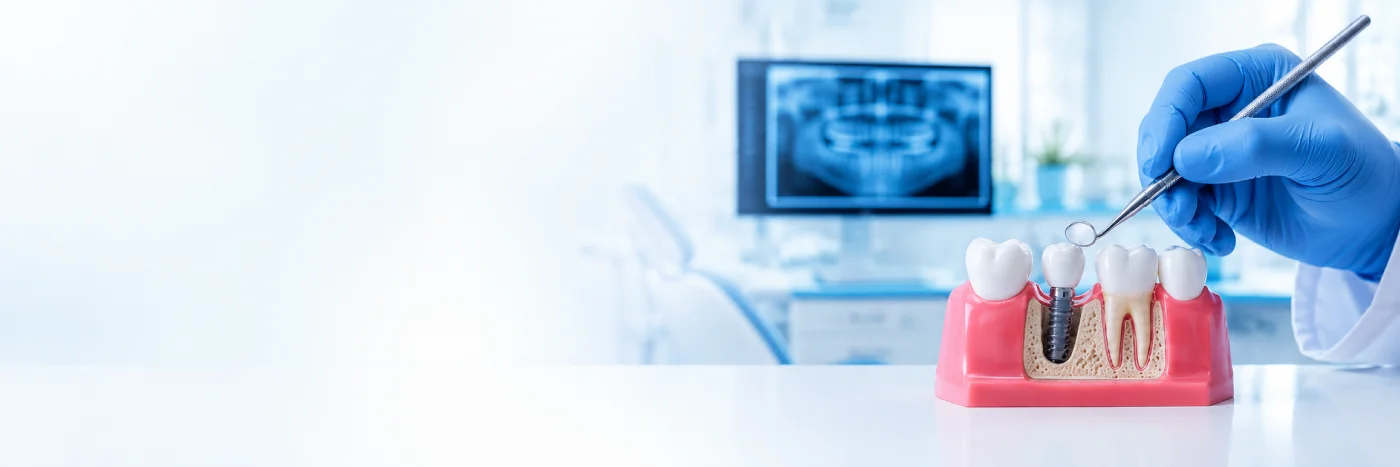
If you are considering dental implant treatment, you may have come across information online asking, “Can dental implants cause cancer?”
The reassuring answer is that current scientific evidence has not established that dental implants cause oral cancer. Dental implants have been used for several decades and are widely accepted as a predictable treatment for replacing missing teeth.
There have been rare reports of oral cancer developing close to dental implants. However, finding cancer beside an implant does not mean that the implant caused it. Many reported cases involved patients who already had recognised risk factors, a previous history of oral cancer or changes to the lining of the mouth that existed before implant treatment.
The important message is not that dental implants cause cancer, but that any persistent or unusual change around an implant should be professionally assessed rather than automatically assumed to be a routine implant infection.
Why Do People Ask Whether Dental Implants Cause Cancer?
Dental implants are positioned within the jawbone and may remain there for many years. It is therefore understandable that some patients question whether the implant material or long-term inflammation around an implant could affect their health.
Online discussions may also refer to isolated case reports in which oral cancer was diagnosed close to an implant. Case reports are useful for alerting clinicians to unusual conditions, but they cannot demonstrate that the implant caused the cancer.
Researchers reviewing these cases have not established a direct cause-and-effect relationship between dental implants and oral cancer.
Can Oral Cancer Develop Near a Dental Implant?
Yes, oral cancer can occasionally develop in tissue close to a dental implant, just as it can develop elsewhere in the mouth.
The most common form of oral cancer is oral squamous cell carcinoma, which begins in the cells lining the mouth. Its presence beside an implant does not necessarily mean that the implant contributed to its development.
Published reports indicate that many patients diagnosed with cancer around an implant had previous oral cancer, potentially malignant oral disorders or other recognised risk factors.
This is particularly important because oral cancer around an implant can sometimes resemble peri-implant inflammation or infection. Prompt investigation is therefore needed when an area does not respond as expected to conventional treatment.
What Are Dental Implants Made From?
Most dental implants are manufactured from titanium or a titanium alloy.
Titanium is used because it is:
- Strong and lightweight.
- Resistant to corrosion.
- Generally well tolerated by the body.
- Capable of integrating closely with the jawbone.
The process through which bone heals against the implant surface is known as osseointegration. It provides the stability required for the implant to support a crown, bridge or implant-retained denture.
Titanium and titanium alloys are also used in other medical devices, including orthopaedic plates, screws and joint replacements.
Is Titanium in Dental Implants Linked to Cancer?
There is currently no established evidence that standard titanium dental implants cause oral cancer.
Laboratory research, reports involving titanium particles and studies of other forms of titanium exposure should not automatically be interpreted as evidence that a titanium implant positioned within the jaw causes cancer in patients.
Research into dental materials and their interaction with the surrounding tissues continues. Based on current clinical evidence, titanium remains the most widely used and extensively researched dental implant material.
Can Inflammation Around an Implant Cause Cancer?
Plaque accumulation around a dental implant can cause inflammation of the surrounding gum. The early condition is known as peri-implant mucositis.
If inflammation progresses and begins to affect the supporting bone, the condition is known as peri-implantitis.
Peri-implant disease is not cancer. However, persistent inflammation, unexplained tissue changes or rapid bone loss should be professionally investigated.
Some oral cancers developing close to implants have initially been mistaken for peri-implantitis because both conditions may produce symptoms such as:
- Bleeding.
- Swelling.
- Discomfort.
- Gum changes.
- Bone loss visible on an X-ray.
- Movement of the implant or restoration.
If a suspected implant infection does not improve after appropriate treatment, your dentist may recommend further investigation or referral.
Can Dental Implants Delay the Diagnosis of Oral Cancer?
Dental implants do not directly prevent oral cancer from being diagnosed. However, symptoms beside an implant may initially be attributed to more common problems such as plaque-related inflammation, a loose component or peri-implantitis.
Further assessment may be required where there is:
- An ulcer that does not heal.
- An unexplained lump or thickening.
- Persistent bleeding or discharge.
- Unusual red or white tissue changes.
- Rapid or unexplained bone loss.
- Persistent pain or altered sensation.
- Swelling that continues despite treatment.
- A lesion that looks unusual or continues to enlarge.
A biopsy may be recommended when the appearance or behaviour of the tissue cannot be explained through a routine clinical examination.
Who May Need Closer Monitoring?
Some patients may require particularly careful assessment before and after dental implant treatment.
This includes people with:
- A previous diagnosis of oral cancer.
- A history of potentially malignant oral disorders.
- Previous radiotherapy to the head or neck.
- Persistent or unexplained changes to the lining of the mouth.
- A significant history of tobacco use.
- Implants placed in an area previously treated for oral cancer.
Having one of these factors does not necessarily mean that implant treatment is unsuitable. It means that treatment planning, risk assessment and long-term monitoring may need to be more detailed.
Can the Body Reject a Dental Implant?
A dental implant is not normally rejected in the same way as a transplanted organ.
An implant can nevertheless fail if it does not successfully integrate with the jawbone or if it later loses support.
Possible reasons include:
- Failure to integrate during healing.
- Peri-implantitis and progressive bone loss.
- Smoking.
- Uncontrolled gum disease.
- Excessive biting or grinding forces.
- Difficulty cleaning the implant restoration.
- Some medical conditions or medications.
- Poor implant position or restoration design.
Implant failure is different from cancer. A loose implant should still be assessed promptly so that the cause can be identified.
Further information is available in our guides: Can Dental Implants Fall Out? and Can Dental Implants Be Removed?
What About Titanium Sensitivity or Allergy?
Adverse reactions to titanium appear to be uncommon, but concerns about sensitivity should be discussed with your dentist.
Symptoms around an implant are more commonly associated with plaque-related inflammation, infection, healing problems or mechanical complications than with an allergy to the implant material.
Your dentist will review your medical history, previous reactions to metals and any relevant symptoms before recommending treatment.
Are Ceramic Dental Implants Safer?
Some dental implants are manufactured from zirconia, a ceramic material. Zirconia implants may be considered for selected patients seeking a metal-free option or where there are particular clinical or aesthetic requirements.
There is no evidence that patients generally need to choose a ceramic implant to avoid cancer.
Titanium implants have a longer and more extensive history of clinical use, while zirconia implants have different handling, design and restoration considerations. The best option depends on the individual clinical situation rather than fear of cancer.
How Safe Is Dental Implant Treatment?
Dental implant treatment is generally considered predictable when it is appropriately planned, performed and maintained.
Before recommending implants, your dentist should assess:
- Your general and oral health.
- Your medical history and medication.
- The health of your gums.
- The amount and quality of available bone.
- Your bite and any history of teeth grinding.
- Smoking and other relevant risk factors.
- Your ability to clean the proposed restoration.
- Whether an implant is the most appropriate treatment option.
Dental X-rays and, where clinically appropriate, 3D CBCT imaging may be used to assess the jaw and plan the position of the implant.
How Can You Keep a Dental Implant Healthy?
Long-term implant care is important even when the implant feels completely comfortable.
To support implant health:
- Brush the teeth and implant restorations twice a day.
- Clean around the implant every day using the aids recommended by your dental team.
- Attend regular dental examinations.
- Visit your dental hygienist as advised.
- Seek advice if the implant becomes difficult to clean.
- Have bleeding, swelling or movement checked promptly.
- Discuss teeth grinding or clenching with your dentist.
- Avoid smoking or seek professional help to stop.
Patients with a history of gum disease may require additional maintenance through our periodontics service.
Further advice is available on our smoking cessation and oral health page.
When Should You Contact a Dentist?
Arrange an assessment if you notice:
- An ulcer or sore area that does not heal.
- A new lump, swelling or thickened area.
- Persistent bleeding around an implant.
- Red or white changes to the gum or lining of the mouth.
- Pus or persistent discharge.
- Increasing pain.
- Numbness, tingling or altered sensation.
- Rapid gum recession or unexplained bone loss.
- Movement of the implant or attached restoration.
- Symptoms that continue despite professional treatment.
Most symptoms around implants are caused by dental or peri-implant conditions rather than cancer. However, persistent or unexplained changes should always be examined promptly.
Why Choose Glow Dental?
At Glow Dental in Battersea, dental implant treatment is carefully planned around your oral health, medical history and long-term treatment needs.
We use established implant systems and modern diagnostic technology to assess the jawbone, surrounding teeth and proposed implant position.
If you already have an implant and are concerned about pain, swelling, bleeding or another change, we can assess both the implant and the surrounding tissues. Where appropriate, we can recommend hygiene treatment, periodontal care, restorative repair, further imaging or specialist investigation.
Related Dental Implant Guides
- Can Dental Implants Get Infected?
- Can Dental Implants Be Removed?
- Can Dental Implants Fall Out?
- Are Dental Implants Painful?
- How Many Dental Implants Can You Have?
Book a Dental Implant Assessment
If you are concerned about dental implant safety, have noticed an unusual change around an existing implant or would like to discuss whether implants are right for you, our experienced team is here to help.
Contact Glow Dental to arrange an assessment at our Battersea practice. We will examine your oral health, discuss your concerns and explain the most appropriate next steps.
Written by:
Glow Dental
Published:
Last updated: