
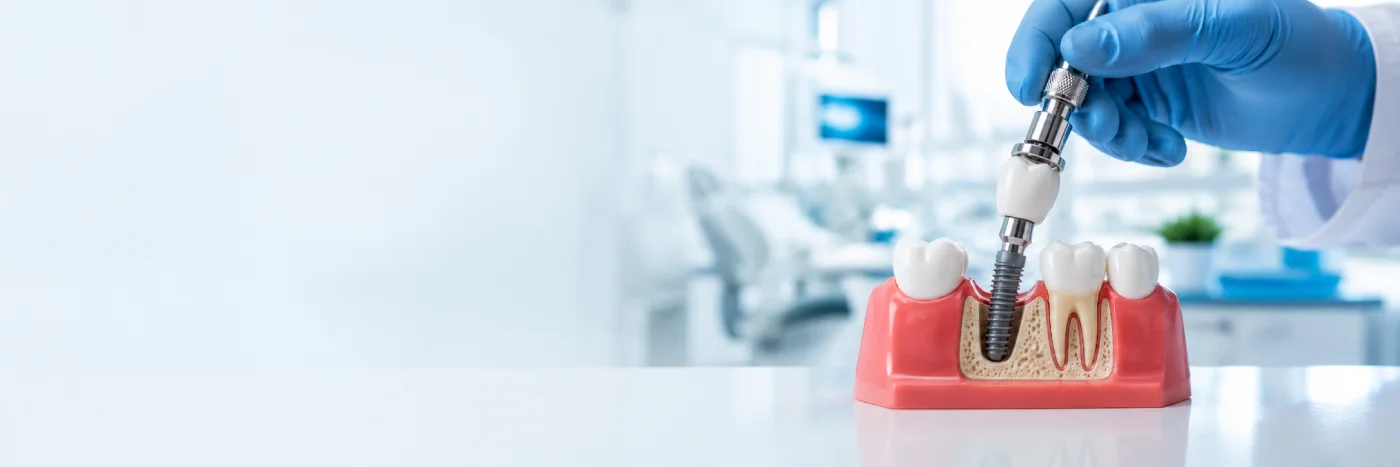
If you already have a dental implant or are considering treatment, you may be wondering, “Can dental implants be removed?” Yes, a dental implant can be removed when necessary, although implants are designed to provide a long-term replacement for missing teeth and removal is not usually required.
If a problem develops, your dentist will first determine whether it involves the implant itself, the surrounding gum and bone, or the crown, bridge or denture attached to it. Many problems can be treated without removing the implant.
Where removal is necessary, the procedure is carefully planned to preserve as much healthy bone and gum tissue as possible and to keep future treatment options open.
Are Dental Implants Intended to Be Permanent?
Dental implants are designed to remain securely positioned within the jawbone for many years.
After an implant is placed, the surrounding bone heals against its surface through a process known as osseointegration. Once the implant has integrated successfully, it can provide a stable foundation for a crown, bridge or implant-retained denture.
Many implants continue to function for decades, but their long-term health depends on effective daily cleaning, regular professional maintenance and monitoring of the surrounding gum and bone.
Although an implant cannot develop tooth decay, the tissues around it can still become inflamed or lose bone support.
Why Might a Dental Implant Need to Be Removed?
Implant removal may be considered when the implant cannot be restored, maintained or kept healthy through other treatment. Possible reasons include the following.
Failure to Integrate With the Jawbone
Occasionally, an implant does not successfully integrate with the surrounding bone during the initial healing period.
The implant may remain mobile, become painful when pressure is applied or fail to develop the stability required to support a replacement tooth. When this happens, removal may be recommended before another treatment plan is considered.
Advanced Peri-Implantitis
Peri-implantitis is an inflammatory condition involving the gum and supporting bone around a dental implant.
Early inflammation may sometimes be controlled through professional cleaning, improved oral hygiene and appropriate periodontal treatment. However, removal may be considered if extensive bone has been lost, the implant has become mobile or the inflammation cannot be controlled.
Read more about the signs and management of this condition in our guide: Can Dental Implants Get Infected?
A Fractured Implant
Fracture of the implant body positioned within the bone is uncommon, but it can occur.
Possible contributing factors include excessive biting forces, insufficient implant support, long-term mechanical stress or severe trauma. A fractured implant normally cannot be repaired within the jawbone and may need to be removed.
Poor Implant Position
An implant may occasionally be positioned in a way that makes it difficult to restore, clean or maintain.
Poor positioning may affect:
- The appearance of the final crown or bridge.
- The way the replacement teeth meet when biting.
- The ability to clean around the implant.
- The health of the surrounding gum.
- The design and long-term stability of the restoration.
If the problem cannot be corrected by changing the crown, bridge or other restorative components, removing and repositioning the implant may be considered.
Persistent Pain, Numbness or Other Symptoms
Persistent symptoms after the expected healing period require careful investigation.
Possible causes include inflammation, excessive bite pressure, a loose restoration, damage to a neighbouring structure or an implant positioned too close to a nerve.
Removal is not automatically required. Your dentist will first assess the source of the symptoms and consider whether another form of treatment could resolve the problem.
Damage to Nearby Structures
In rare cases, the position of an implant may affect a neighbouring tooth, nerve, sinus or another anatomical structure.
The appropriate treatment will depend on the location of the implant, the symptoms and the findings from clinical examination and imaging.
Is the Implant Loose or Is It the Crown?
A dental implant restoration is made up of several components:
- The implant positioned within the jawbone.
- An abutment or connector attached to the implant.
- A crown, bridge or denture fitted above the gum.
- One or more screws securing the components together.
Movement of the visible replacement tooth does not necessarily mean that the implant itself has failed.
A loose crown, bridge, abutment or screw can often be tightened, repaired or replaced while the implant remains securely integrated in the bone.
Movement of the implant itself is more serious and requires prompt assessment. Read more in our guide: Can Dental Implants Fall Out?
How Will the Dentist Assess the Implant?
Before recommending removal, your dentist will assess both the implant and the restoration attached to it.
The examination may include:
- Checking whether the implant or only the restoration is moving.
- Examining the surrounding gum for bleeding, swelling or discharge.
- Assessing the way the teeth meet when you bite.
- Checking whether the implant can be cleaned effectively.
- Taking dental X-rays.
- Using 3D CBCT imaging where clinically appropriate.
- Reviewing your medical history and medication.
- Considering smoking, teeth grinding and previous gum disease.
This assessment helps determine whether the implant can be retained, whether the restoration can be repaired or whether removal is the most predictable option.
How Is a Dental Implant Removed?
The complexity of implant removal depends on why the implant is being removed, how firmly it is integrated with the bone and its position within the jaw.
A loose implant that has not integrated successfully may be relatively simple to remove. A fully integrated, fractured or poorly positioned implant may require a more involved surgical procedure.
Where possible, the dentist will use a conservative technique intended to minimise damage to the surrounding bone.
Reverse Torque Removal
In suitable cases, a specialised instrument can apply controlled force in the opposite direction to the original implant placement. This may allow the implant to loosen from the bone while preserving much of the surrounding tissue.
Surgical Removal
If reverse torque is not appropriate or does not successfully release the implant, a small amount of surrounding bone may need to be carefully removed.
The dentist may use specialised burs, trephine instruments or other surgical techniques depending on the implant’s position and condition.
The chosen method will be based on preserving healthy tissue, protecting nearby structures and considering whether a replacement implant may be planned.
Is Dental Implant Removal Painful?
Dental implant removal is normally carried out under local anaesthetic, so you should not feel sharp pain during the procedure. You may still be aware of pressure, vibration or movement.
The experience and recovery vary according to:
- How firmly the implant is integrated.
- The removal technique required.
- The amount of surrounding inflammation or bone loss.
- Whether bone grafting is carried out.
- Whether another implant is placed at the same appointment.
Soreness, swelling or bruising can occur afterwards. Your dental team will provide individual aftercare instructions and advice on suitable pain relief.
Contact the practice if pain or swelling becomes worse rather than better, if bleeding does not settle or if you develop a fever, discharge or another unexpected symptom.
What Happens After the Implant Is Removed?
After removal, the area is carefully cleaned and assessed.
The next step will depend on:
- Why the original implant failed.
- Whether infection or inflammation is present.
- The amount of healthy bone remaining.
- The condition of the surrounding gum.
- Whether a replacement implant is planned.
The socket may be allowed to heal naturally, filled with bone grafting material or prepared for a replacement implant where clinically appropriate.
Can a Replacement Implant Be Placed Immediately?
In selected cases, a new implant may be placed during the same appointment as the removal.
Immediate replacement may be considered when:
- There is enough healthy bone to support the new implant.
- Good initial stability can be achieved.
- The area can be cleaned effectively.
- There is no uncontrolled infection.
- The replacement implant can be positioned more favourably.
Immediate replacement is not suitable for every patient. If there is extensive bone loss, active infection, significant inflammation or insufficient stability, the area may need to heal before another implant is placed.
Can a New Implant Be Placed After Healing?
In many cases, a replacement implant can be considered after the area has healed.
Before recommending another implant, your dentist will investigate why the original treatment failed. Factors such as gum disease, smoking, teeth grinding, bite pressure, implant position and difficulty cleaning the restoration may need to be addressed first.
A replacement implant may be possible, but treatment in a site where an implant has previously failed can be less predictable than initial implant placement. Careful planning and control of modifiable risk factors are therefore important.
Will Bone Grafting Be Required?
Bone grafting is not always necessary after implant removal.
It may be recommended when:
- Bone has been lost because of peri-implantitis.
- Some bone must be removed during the procedure.
- The implant has damaged or widened the surrounding area.
- A future implant requires additional bone support.
The graft may sometimes be placed at the time of removal. In other cases, the area is allowed to heal before grafting or further implant treatment is carried out.
How Long Does Healing Take After Removal?
Healing time varies from one patient to another.
The gum may begin to heal within a few weeks, while changes within the bone can continue for several months. More time may be required where there has been substantial bone loss, infection or bone grafting.
Your dentist will monitor the area and advise when it is ready for the next stage of treatment.
What Are the Alternatives to Another Dental Implant?
A replacement implant is not the only way to restore the space.
Depending on the number and position of missing teeth, possible alternatives may include:
- A dental bridge.
- A removable partial or complete denture.
- A different implant-supported bridge or denture design.
- Leaving the space unrestored where clinically appropriate.
Your dentist will explain the advantages, limitations, maintenance requirements and likely costs of each suitable option.
Can the Risk of Implant Removal Be Reduced?
Not every implant complication can be prevented, but the risk of many problems can be reduced through effective oral hygiene, regular professional maintenance and early assessment of any changes.
To support the health of your implant:
- Brush your teeth and implant restorations twice a day.
- Clean around the implant daily using the aids recommended by your dental team.
- Attend regular dental examinations.
- Visit your dental hygienist as advised.
- Seek advice if the implant becomes difficult to clean.
- Have a loose or damaged restoration checked promptly.
- Discuss teeth grinding or clenching with your dentist.
- Avoid smoking or seek professional support to stop.
- Follow all aftercare instructions following implant treatment.
Patients with a history of gum disease may require ongoing assessment through our periodontics service.
Further information about smoking and oral health is available on our smoking cessation page.
When Should You Contact Your Dentist?
Arrange an assessment if you notice:
- Movement of the implant or replacement tooth.
- Persistent or increasing pain.
- Bleeding, swelling or redness around the implant.
- Pus, discharge or a persistent unpleasant taste.
- Difficulty biting or chewing comfortably.
- Gum recession around the implant.
- Food repeatedly becoming trapped around the restoration.
- Numbness, tingling or altered sensation.
- Damage to the implant crown, bridge or denture.
Prompt assessment may allow the problem to be treated before removal becomes necessary.
Why Choose Glow Dental?
At Glow Dental in Battersea, every implant is planned with long-term function, appearance and maintenance in mind.
If you have concerns about an existing implant, we can assess the implant, the surrounding gum and bone, your bite and the restoration attached to it. We will explain whether the problem may be managed through maintenance, periodontal treatment, restorative repair or implant removal.
Where removal is required, treatment will be planned to preserve healthy tissue and consider the most appropriate options for restoring the missing tooth or teeth.
Related Dental Implant Guides
- Can Dental Implants Get Infected?
- Can Dental Implants Fall Out?
- Are Dental Implants Painful?
- How Many Dental Implants Can You Have?
- How Much Do Dental Implants Cost?
Book a Dental Implant Assessment
If your implant feels loose, has become uncomfortable or you are concerned about the surrounding gum, our experienced team is here to help.
Contact Glow Dental to arrange a dental implant assessment at our Battersea practice. We will investigate the cause of the problem, explain whether the implant can be retained and recommend an appropriate treatment plan.
Written by:
Glow Dental
Published:
Last updated: