
Dental implants are one of the most established ways to replace missing teeth. They can support a single crown, a bridge or a denture and are designed to provide a stable, natural-looking replacement for lost teeth.
But because implant treatment involves placing a fixture into the jawbone, patients understandably have questions about safety. Are dental implants safe? Can they become infected? Can an implant fall out? And what should you do if an implant suddenly feels loose?
The reassuring answer is that dental implants have a strong long-term track record when they are carefully planned, placed in suitable patients and properly maintained. However, they are not completely risk-free and they still require lifelong care.
Are Dental Implants Safe?
Yes. Dental implants are generally considered a safe and predictable treatment for appropriately selected patients.
A dental implant is usually a small titanium or titanium-alloy fixture placed into the jawbone to replace the root of a missing tooth. During healing, the surrounding bone forms a close connection with the implant surface through a process called osseointegration.
Once the implant has integrated successfully, it can provide support for a:
- Single dental crown
- Implant-supported bridge
- Implant-retained denture
- Larger fixed replacement for several missing teeth
Long-term research demonstrates high implant survival. A systematic review of contemporary implant systems estimated approximately 96% implant survival at 10 years, although estimates vary according to the patients studied, implant systems, follow-up methods and how treatment success is defined.
High survival rates do not mean that complications are impossible. As with any surgical and restorative procedure, potential benefits and risks should be assessed individually before treatment.
What Makes Dental Implant Treatment Safe?
Successful implant dentistry starts well before the implant is actually placed.
A thorough assessment should consider:
- The health of your gums
- The amount and position of available jawbone
- The location of neighbouring teeth
- Your bite
- Your medical history
- Any medication you take
- Smoking
- Previous gum disease
- Grinding or clenching
- The location of important structures such as nerves and the maxillary sinus
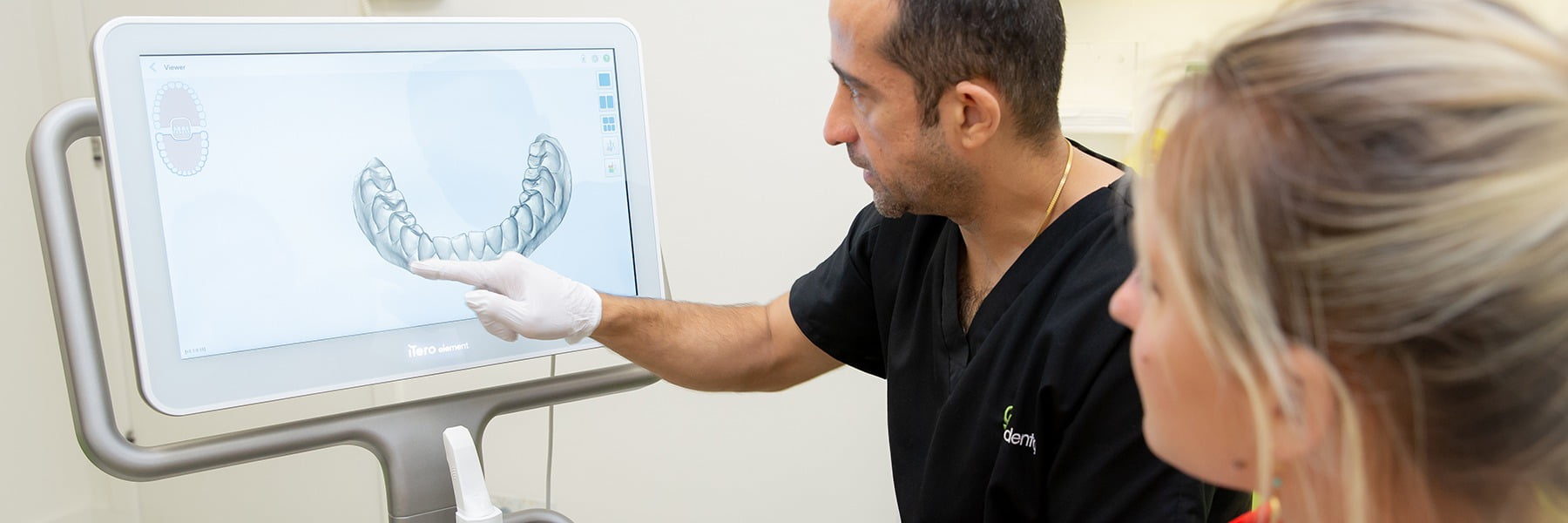
At Glow Dental, implant treatment is planned using 3D digital scanning and digital implant-planning technology. Guided implant surgery can then be used in suitable cases to help position the implant according to the planned location.
You can learn more about the process on our dental implants in Battersea page.
What Are the Risks of Dental Implants?
Most patients complete implant treatment without serious complications, but no surgical procedure can be described as completely risk-free.
Possible complications include:
- Pain, swelling or bruising following surgery
- Post-operative infection
- Bleeding
- The implant failing to integrate with the jawbone
- Damage or irritation to a nearby nerve in certain areas of the jaw
- Problems involving the sinus when treating some areas of the upper jaw
- Gum recession around the implant
- Peri-implant disease developing later
- Loosening or fracture of restorative components
- Damage to the implant crown or bridge
Cambridge University Hospitals notes that altered sensation or numbness can occur when implants are placed close to important nerves, although permanent nerve problems are described as very rare.
Careful examination and imaging allow these risks to be assessed before treatment.
Can Your Body Reject a Dental Implant?
Patients sometimes hear the phrase “implant rejection”, but this is not usually an accurate description of dental implant failure.
A dental implant is not a transplanted organ, so the body’s immune system does not normally “reject” it in the same way it might reject donor tissue.
If an implant fails shortly after placement, it is more commonly because it has not successfully integrated with the jawbone.
Factors that may contribute include:
- Poor healing
- Inadequate stability during healing
- Infection
- Smoking
- Insufficient or compromised bone
- Excessive forces on the implant before integration is complete
- Certain medical or patient-specific factors
If an implant fails to integrate, it normally becomes mobile and cannot be used to support the planned tooth.
Can Dental Implants Fall Out?
A successfully integrated dental implant should not simply fall out.
Once osseointegration has occurred, the implant is firmly anchored within the jawbone. However, an implant can lose stability if integration fails or if supporting bone is subsequently lost.
Possible causes include:
- Failure to integrate during the initial healing period
- Advanced peri-implantitis
- Significant bone loss
- Severe trauma
- Rare mechanical failure
You can read more in our dedicated guide: Can Dental Implants Fall Out?
My Dental Implant Feels Loose — Has It Failed?
Not necessarily. This is an important distinction.
A dental implant restoration contains several components, and sometimes the part that is moving is the crown, bridge, abutment or retaining screw rather than the implant fixture inside the bone.
A dentist therefore needs to establish exactly which component is loose.
If the Crown or Screw Is Loose
The implant fixture may still be completely healthy and stable.
Depending on the cause, your dentist may be able to:
- Tighten or replace a retaining screw
- Repair the crown
- Replace the crown
- Replace an abutment
- Adjust the bite if excessive forces contributed to the problem
If the Actual Implant Is Moving
This is more significant.
A properly integrated implant fixture should not move independently within the bone. Genuine implant mobility may indicate failure of osseointegration or significant loss of supporting bone.
If you notice any movement, do not repeatedly test the implant with your fingers or tongue and do not continue chewing hard foods on it. Arrange an examination instead.
Can Dental Implants Get Infected?
The implant itself cannot develop tooth decay, but the gum and bone surrounding a dental implant can develop inflammatory disease associated with bacterial plaque.
There are two important conditions to understand.
Peri-Implant Mucositis
Peri-implant mucositis is inflammation affecting the soft tissue around an implant without the progressive supporting-bone loss that defines peri-implantitis.
Possible signs include:
- Bleeding around the implant
- Redness
- Swollen or tender gum tissue
It is important to identify peri-implant mucositis because controlling plaque and inflammation can help prevent progression to more serious disease.
Peri-Implantitis
Peri-implantitis is a more serious inflammatory condition involving the tissues around an implant together with progressive loss of supporting bone.
If enough bone is lost, the implant can eventually become unstable.
The European Federation of Periodontology stresses that peri-implant disease can progress rapidly in some patients and can be challenging to treat, which makes prevention and early diagnosis particularly important.
For a more detailed explanation, read Can Dental Implants Get Infected?
What Are the Signs of Peri-Implantitis?
You should arrange an implant assessment if you notice:
- Bleeding when brushing or cleaning around the implant
- Persistent redness or swelling
- Pus or discharge
- A persistent unpleasant taste
- New discomfort around an implant
- Gum recession around the restoration
- Increasing difficulty cleaning around the implant
- The implant or restoration appearing to move
One important point is that peri-implant disease may not be painful in its earlier stages. Waiting until an implant hurts is therefore not a reliable way to monitor its health.
Who Is More Likely to Develop Peri-Implant Problems?
The risk is not identical for every patient.
Important factors include:
Poor Plaque Control
Dental plaque is the primary trigger for inflammation around implants. Effective daily cleaning is therefore essential.
A History of Gum Disease
Patients who have previously experienced periodontitis are at increased risk of peri-implant disease and generally require particularly careful monitoring.
Glow Dental provides specialist periodontal care for patients who require more advanced management of the gums and implant-supporting tissues.
Smoking
Smoking is associated with poorer implant outcomes and is an important consideration both before and after implant treatment.
If you smoke, reducing or stopping is beneficial for both your dental and general health. You can find more information in our smoking cessation advice.
Irregular Professional Maintenance
Implants require ongoing monitoring rather than being fitted and forgotten.
The European Federation of Periodontology recommends a structured supportive-care programme with periodic assessment of the tissues surrounding implants.
Medical Factors
Certain medical conditions can influence healing and risk. For example, poorly controlled diabetes may require additional consideration when planning implant treatment.
This does not automatically mean that somebody with diabetes or another medical condition cannot have implants. Suitability should be assessed individually.
Does Teeth Grinding Make Implants Fall Out?
Grinding or clenching does not cause bacterial peri-implantitis, but it can place substantial mechanical forces on an implant restoration.
This may contribute to problems such as:
- Chipped ceramic
- Crown damage
- Loose screws
- Wear of restorative components
If you have evidence of significant grinding, your dentist may recommend a protective night guard.
What Happens if a Dental Implant Comes Out?
If an implant fixture genuinely becomes detached from the jaw, do not attempt to put it back yourself.
Instead:
- Keep the area clean without repeatedly touching or probing it.
- Avoid chewing over the affected area.
- Keep any component that has come out and bring it with you.
- Contact your dentist promptly for an assessment.
Your dentist will need to identify why the implant failed before deciding what should happen next.
Depending on the situation, treatment may involve:
- Allowing the site to heal
- Treating inflammation or infection
- Assessing the remaining bone
- Bone grafting if required
- Considering a replacement implant
- Discussing an alternative such as a bridge or denture
Can a Failed Dental Implant Be Replaced?
Often, yes — but replacement should not be automatic.
The reason for the original failure needs to be understood first.
If an implant failed because of uncontrolled gum disease, smoking, inadequate bone, poor positioning or another modifiable factor, simply putting another implant into the same environment may increase the risk of another problem.
Some patients require a healing period before another implant can be placed. Others need bone grafting to rebuild lost bone first.
In selected circumstances a replacement implant can be successful, but every case needs individual assessment.
Can an Infected Dental Implant Be Saved?
Sometimes. A diagnosis of peri-implantitis does not automatically mean that an implant needs to be removed.
Treatment depends on factors including:
- How much bone has been lost
- The pattern of bone loss
- Whether the implant remains stable
- The position of the implant
- The design of the restoration
- How easily the area can be cleaned
- The patient’s oral-hygiene and risk factors
Treatment may involve professional cleaning and plaque-control measures, while more advanced peri-implantitis may require specialist non-surgical or surgical management.
Removing the implant is generally considered when preserving it is no longer predictable or appropriate.
Can Dental Implants Be Removed?
Yes. Although implants are intended to remain in the jaw long term, they can be removed when clinically necessary.
Reasons may include:
- Failure to integrate
- Severe peri-implantitis and bone loss
- Implant mobility
- Implant fracture
- Persistent complications that cannot be successfully treated
- A position that prevents a satisfactory or maintainable restoration
Removing a loose implant that never integrated may be relatively simple. Removing a firmly osseointegrated implant can be considerably more involved because the dentist needs to preserve as much healthy surrounding bone as possible.
Read our dedicated guide to dental implant removal for more information.
How Long Do Dental Implants Last?
There is no universal expiry date for a dental implant.
Research shows excellent long-term survival, and many implants remain functional for decades. However, implants should not be advertised as guaranteed to last forever.
It is also important to distinguish the implant fixture from the tooth fitted on top. The implant inside the bone may remain healthy while the:
- Crown
- Bridge
- Retaining screw
- Abutment
eventually requires maintenance, repair or replacement.
For a more detailed explanation, read Do Dental Implants Last Forever?
How Can You Reduce the Risk of Dental Implant Failure?
The long-term health of an implant depends heavily on looking after the gum and bone surrounding it.
Brush Thoroughly Twice Daily
Clean carefully around the implant crown and gum line every day.
Clean Between Your Implants and Teeth
Depending on the restoration, you may need:
- Interdental brushes
- Floss
- Superfloss
- Other specialist cleaning aids
Your dentist or hygienist can show you which method is most appropriate.
Attend Hygiene Appointments
Our dental hygienists can assess the gums, provide professional cleaning and help you keep difficult areas around implants plaque-free.
Keep Up With Dental Examinations
Regular dental examinations allow the implant, restoration, bite and surrounding tissues to be checked over time.
Avoid Smoking
Smoking adversely affects oral tissues and is associated with increased implant complications.
Protect Your Implant if You Grind
If you grind or clench your teeth heavily, a night guard may help protect your implants and natural teeth from excessive mechanical forces.
Report Problems Early
Do not wait for significant pain before seeking help. Bleeding, movement, persistent swelling or a change in how an implant feels should be assessed.
Are Dental Implants Suitable for Everyone?
Not necessarily. Implant suitability depends on much more than age.
Your dentist needs to assess:
- Your general and dental health
- Whether your gums are healthy
- Whether active dental disease has been controlled
- The amount of available jawbone
- Your oral-hygiene habits
- Smoking
- Medication
- Medical conditions that could affect treatment
- Your ability to maintain the implant long term
If bone volume is insufficient, this does not automatically rule out implants. Bone grafting or a sinus lift may sometimes make implant placement possible.
Are Dental Implants Painful?
Implant placement is normally carried out using local anaesthetic, so you should not feel the surgical procedure itself.
Once the anaesthetic wears off, some temporary:
- Soreness
- Swelling
- Bruising
- Tenderness
can occur.
The amount varies according to the complexity of treatment and the individual patient.
Dental Implant vs Dental Bridge: Which Is Safer?
Both implants and bridges are established methods of replacing missing teeth, and neither is automatically the right option for every patient.
A major advantage of an implant is that it can replace a missing tooth without requiring the neighbouring teeth to be prepared for crowns.
A conventional bridge, on the other hand, avoids implant surgery but relies on adjacent teeth for support.
The best choice depends on:
- The condition of the neighbouring teeth
- Your gums and bone
- The position of the missing tooth
- Your bite
- Your medical history
- Your preferences
- Cost and treatment complexity
Glow Dental also provides dental bridges where this is the more appropriate treatment.
Frequently Asked Questions About Dental Implant Safety
What is the success rate of dental implants?
Dental implants have high long-term survival rates. A systematic review of contemporary implants estimated approximately 96% survival at 10 years, although figures vary between studies and according to patient risk factors. It is more accurate to discuss survival over a defined period than to promise a universal lifetime “success rate”.
Can dental implants fail?
Yes. Failure can happen during the initial healing stage if the implant does not integrate, or years later because of supporting-bone loss, peri-implantitis or other biological or mechanical complications.
Can dental implants get cavities?
No. Titanium implants and ceramic implant crowns cannot develop tooth decay. However, plaque can cause inflammation and disease in the gum and bone surrounding the implant.
Can an implant become infected years later?
Yes. Peri-implant disease can develop around an implant even after many years of successful function, which is why lifelong oral hygiene and professional maintenance remain important.
Can a loose implant be tightened?
It depends on what is moving. A loose crown or retaining screw may be repairable or replaceable. A genuinely mobile implant fixture inside the jawbone requires a different assessment and should not simply be tightened.
Can an implant fall out while eating?
A healthy, integrated implant should not come out during ordinary eating. If something comes loose while eating, it may be the crown or another restorative component rather than the implant itself. Keep the component and arrange an examination.
Can a failed dental implant be replaced?
Often, yes. However, the cause of the failure should be identified and treated first. Healing or bone grafting may sometimes be required before another implant can be considered.
How long do dental implants last?
Many implants function successfully for decades, but no implant can be guaranteed for life. The final crown or other restorative components may require maintenance or replacement even while the implant fixture remains healthy.
Are implants safe for older adults?
Age alone does not determine whether somebody can have implants. General health, oral hygiene, gum health, available bone, medication and the ability to maintain the restoration are usually more important considerations.
When Should You Contact a Dentist About an Implant?
Arrange an assessment if you notice:
- Movement of an implant crown or implant
- Persistent bleeding around an implant
- Red or swollen gums
- Pus or discharge
- New pain around an established implant
- Gum recession
- A chipped or fractured implant crown
- A sudden change in your bite
- Difficulty chewing comfortably
If dental or facial swelling becomes rapidly worse, you develop a fever or feel significantly unwell, seek urgent dental advice.
Are Dental Implants Safe? The Bottom Line
Dental implants are generally a safe, predictable and highly successful option for replacing missing teeth when treatment is carefully planned and the patient is suitable.
However, implants are not completely risk-free and they are not maintenance-free.
The implant needs healthy bone and gum tissue throughout its life. Good plaque control, regular professional care, avoiding smoking and identifying problems early all help improve the chances of long-term success.
If an implant crown becomes loose, it does not necessarily mean that the implant has failed. If the actual implant fixture moves, or if there are signs of peri-implantitis and bone loss, more extensive treatment may be required.
At Glow Dental in Battersea, implant treatment is digitally planned using modern 3D technology, with guided surgery available as part of our implant workflow. We also provide ongoing dental, hygiene and specialist periodontal care to help maintain implant health after treatment.
You can learn more about dental implant treatment at Glow Dental, see examples in our dental implant before-and-after gallery, or read our guide to dental implant costs.
If you are considering an implant or are worried about an existing implant that feels loose, painful or inflamed, contact Glow Dental in Battersea to arrange an assessment.
For independent information about implant treatment and its potential risks, you can also read the NHS information on dental implants.
Written by:
Glow Dental
Published:
Last updated: