
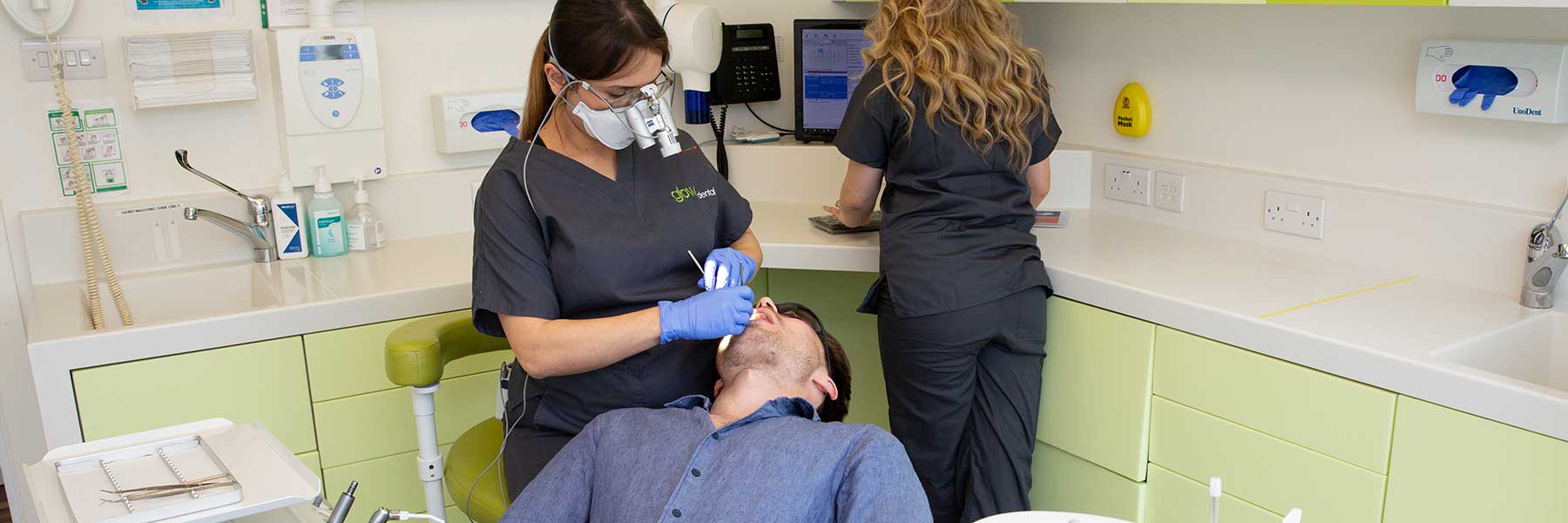
Yes. A dentist can drain a dental abscess when drainage is clinically appropriate. In fact, current UK dental guidance recommends treating most dental abscesses with local measures to achieve drainage and remove the source of the infection wherever possible.
However, “draining an abscess” does not always mean making a cut in the gum. Depending on where the infection started, a dentist may drain it:
- Through the tooth during root canal treatment
- Through a small incision in swollen gum tissue
- By cleaning and draining a periodontal pocket
- By extracting a tooth that cannot be saved
The important point is that drainage alone may relieve pressure, but the underlying cause still needs to be treated. Otherwise, the infection can return.
If you have significant toothache, swelling or think you may have an abscess, Glow Dental provides emergency dental treatment in Battersea.
What Is a Dental Abscess?
A dental abscess is a localised collection of pus caused by bacterial infection. It can develop around the root of a tooth, within the gum tissues or around a partially erupted tooth such as a wisdom tooth.
Different types of dental abscess require different treatment.
Periapical Abscess
A periapical abscess develops around the tip of a tooth root.
It usually begins when bacteria reach the dental pulp — the soft tissue containing nerves and blood vessels inside the tooth. This can happen because of:
- Deep tooth decay
- A cracked or fractured tooth
- Trauma to the tooth
- A leaking or damaged restoration
Once the pulp becomes infected or dies, infection can spread through the root canal and into the tissues around the root.
Where the tooth can be saved, root canal treatment may be used to remove the infected tissue, disinfect the canals and retain the natural tooth.
Periodontal Abscess
A periodontal abscess develops in the gum and supporting tissues next to a tooth rather than originating inside the tooth itself.
It is often associated with a deep periodontal pocket and may occur in people with existing gum disease.
Treatment can involve draining the infected area and thoroughly cleaning the periodontal pocket to remove plaque, calculus and other material contributing to the infection.
Patients with more advanced gum problems may benefit from assessment through our specialist periodontics service.
Pericoronitis and Infection Around a Wisdom Tooth
Infection can also develop around the gum covering a partially erupted tooth, most commonly a wisdom tooth. This is known as pericoronitis.
Food and bacteria can collect beneath the flap of gum around the tooth, causing:
- Pain
- Swelling
- Difficulty cleaning the area
- An unpleasant taste
- Difficulty opening the mouth in more severe cases
Local cleaning and irrigation are usually important first steps. Further treatment depends on the position of the tooth, whether symptoms recur and how severe the infection is.
What Are the Symptoms of a Dental Abscess?
Symptoms vary depending on where the infection is located and how far it has progressed.
Possible signs include:
- Severe or persistent toothache
- Throbbing pain
- Pain when biting or chewing
- Swollen or tender gum tissue
- Facial or jaw swelling
- A pimple-like swelling on the gum
- Pus or an unpleasant taste in the mouth
- Bad breath
- Increased sensitivity to hot or cold
- Tender lymph nodes
- Fever or feeling generally unwell in more significant infections
- Difficulty opening the mouth if the infection becomes more severe
Not every abscess produces extreme pain. If the infected tooth’s nerve has already died or pus has found a route to drain, pain may temporarily reduce even though the infection is still present.
Can a Dental Abscess Go Away on Its Own?
You should not rely on a dental abscess resolving by itself.
Sometimes an abscess bursts or drains spontaneously and the pressure decreases. This can make the tooth feel dramatically better.
However, this does not necessarily mean the infection has been cured. If bacteria remain inside an infected root canal, periodontal pocket or other untreated source, the abscess can return.
The safest approach is therefore to have a suspected abscess assessed even if the pain suddenly improves.
Will a Dentist Drain an Abscess?
Usually, the dentist will try to establish drainage when pus is present and it is clinically appropriate to do so.
Current UK dental prescribing guidance recommends local treatment as the first-line approach for a dental abscess, with removal of the underlying cause wherever possible.
The exact method depends on the source and location of the infection.
Drainage Through the Tooth
If the abscess originates from an infected dental pulp, the dentist may open the tooth and gain access to the root canal system.
This can allow infection to drain through the tooth while infected or dead pulp tissue is removed.
Definitive root canal treatment can then clean, disinfect and seal the root canal system so that the infection does not simply return.
Incision and Drainage
If there is an accessible collection of pus within the soft tissues, the dentist may make a small incision to allow the pus to escape.
The area may then be cleaned or irrigated as appropriate.
Incision and drainage can reduce pressure and swelling, but it does not necessarily eliminate the original source of infection. A tooth may still require root canal treatment or extraction afterwards.
Drainage Through a Periodontal Pocket
A gum abscess may sometimes be drained through the periodontal pocket around the affected tooth.
The dentist can also remove plaque, calculus and other debris from the area.
Drainage by Tooth Extraction
If the tooth cannot be restored predictably, extraction may remove the main source of the infection and allow drainage through the socket.
An infected tooth does not automatically need a course of antibiotics before it can be extracted. If the infection is localised and the patient is otherwise well, removing the source may be the most appropriate treatment.
Will the Dentist Drain the Abscess on the First Appointment?
Often the dentist will provide treatment intended to relieve pain and control the infection at the urgent appointment, but it is not possible to promise that every abscess will be completely drained at the first visit.
The dentist first needs to assess:
- Where the infection originated
- Whether there is an accessible collection of pus
- Whether the tooth can be saved
- How far the infection has spread
- Whether local treatment can be carried out safely
- Your medical history
- Whether specialist or hospital treatment is required
An emergency appointment may involve definitive treatment, initial drainage or temporary treatment followed by a further appointment.
What Happens at an Emergency Appointment for a Dental Abscess?
The first priority is to determine the source and severity of the infection.
1. Dental Examination
Your dentist will ask about:
- When the pain or swelling started
- Whether symptoms are becoming worse
- Whether you have a fever or feel unwell
- Any difficulty swallowing or opening your mouth
- Your medical history
- Medication and allergies
The teeth, gums, mouth and any facial swelling will then be examined.
2. Dental X-Rays
An X-ray may be taken to help determine whether the source of the infection is inside a tooth or within the surrounding tissues and bone.
Imaging can also help the dentist assess whether a tooth may be suitable for root canal treatment or whether another approach is required.
3. Assessment of the Severity of Infection
If there are signs of a more significant infection, the dentist may assess factors such as:
- Temperature
- The extent of swelling
- Lymph nodes
- How widely you can open your mouth
- Whether swallowing or breathing is affected
4. Local Anaesthetic
Where a procedure is needed, local anaesthetic will usually be used to make treatment as comfortable as possible.
5. Treatment of the Source
Depending on the diagnosis, treatment may involve:
- Root canal access and drainage
- Incision and drainage
- Periodontal treatment
- Extraction
- Referral for specialist or hospital treatment in more serious cases
Does Draining a Dental Abscess Hurt?
The area is normally treated with local anaesthetic before an incision, extraction or root canal procedure is performed.
The aim is therefore for you not to experience sharp pain during treatment, although you may still be aware of pressure, movement or contact.
Very inflamed tissues can sometimes be more difficult to anaesthetise completely, so the dentist may need to modify the anaesthetic technique or provide additional anaesthetic.
Tell your dentist if you feel pain during treatment rather than trying to tolerate it.
Why Does Drainage Help a Dental Abscess?
A collection of pus can create pressure within the tissues, contributing to significant pain and swelling.
Allowing the pus to drain can:
- Reduce pressure
- Decrease bacterial load
- Improve discomfort
- Help the tissues begin to recover
Importantly, current UK dental guidance also notes that antibiotics may penetrate a localised abscess poorly because the collection can be relatively isolated from the circulation.
This is one reason why local dental treatment and drainage are usually more important than simply prescribing antibiotics.
Do You Need Antibiotics After a Dental Abscess Is Drained?
Not necessarily.
If the infection is localised, drainage has been achieved and the patient is otherwise well, antibiotics may provide little additional benefit.
Current UK dental prescribing guidance recommends antibiotics mainly when there is:
- Spreading infection
- Cellulitis
- Significant swelling extending beyond the immediate area
- Lymph-node involvement
- Fever or malaise
- A higher risk of complications because of certain medical conditions
- An infection where immediate adequate drainage cannot be achieved
Antibiotics are used in addition to appropriate dental treatment, not as a substitute for it.
Can Antibiotics Cure a Dental Abscess Without Drainage?
Usually not permanently.
Antibiotics can help control a spreading infection, but they cannot remove:
- Dead or infected pulp tissue inside a tooth
- Deep tooth decay
- A severely damaged tooth
- Calculus and infection within a periodontal pocket
This is why repeated courses of antibiotics without definitive treatment can lead to the same infection returning.
The priority is to remove or treat the source wherever possible.
Can You Drain a Dental Abscess Yourself?
No. Do not squeeze, pierce, cut or attempt to “pop” a dental abscess at home.
Trying to drain an abscess yourself can:
- Damage the surrounding tissues
- Introduce additional bacteria
- Cause bleeding
- Fail to treat the source of infection
- Delay appropriate dental treatment
Even if pus comes out naturally, the source still needs to be assessed by a dentist.
What if a Dental Abscess Bursts by Itself?
If an abscess begins draining spontaneously, you may notice:
- A sudden unpleasant or salty taste
- Fluid or pus in the mouth
- A rapid reduction in pressure
- Temporary improvement in pain
Spit out any discharge and gently rinse your mouth, but still arrange a dental appointment.
A burst abscess is not proof that the underlying infection has disappeared.
How Quickly Will Pain Improve After an Abscess Is Drained?
Reducing the pressure within an abscess can sometimes produce noticeable relief relatively quickly.
However, recovery varies according to:
- The extent of the infection
- The treatment performed
- Whether the source has been completely treated
- The amount of surrounding inflammation
- Your general health and healing response
It is therefore better not to promise that every abscess will improve within a specific number of hours.
What matters is the overall trend: pain and swelling should begin improving after appropriate treatment rather than continuing to become progressively worse.
What Should You Do After an Abscess Has Been Drained?
Follow the individual instructions provided by your dentist because aftercare varies according to whether you have had an incision, root canal treatment, extraction or periodontal treatment.
General advice may include:
- Take recommended pain relief as directed.
- Take antibiotics exactly as instructed if they were clinically required.
- Keep the mouth clean.
- Brush carefully around the treated area.
- Choose softer foods temporarily if chewing is uncomfortable.
- Avoid repeatedly pressing or touching the area.
- Attend any follow-up or definitive-treatment appointments.
If a temporary root canal procedure has been carried out, make sure you return to complete treatment rather than assuming the tooth is cured because the pain has stopped.
Can a Dental Abscess Come Back?
Yes. An abscess can recur if the underlying source remains.
Examples include:
- A root canal has been opened for emergency drainage but treatment is not completed.
- A severely decayed tooth remains untreated.
- Periodontal disease remains active.
- A problematic wisdom tooth repeatedly develops pericoronitis.
This is why emergency drainage and definitive treatment should be viewed as connected parts of the same treatment plan.
When Does a Dental Abscess Need Root Canal Treatment?
If infection originates from inside a tooth and the tooth can be restored, root canal treatment may allow the natural tooth to be retained.
The treatment involves:
- Accessing the root canal system
- Removing infected or dead pulp tissue
- Cleaning and disinfecting the canals
- Sealing the root canal system
- Restoring the tooth appropriately
At Glow Dental, specialist root canal treatment is available for teeth where endodontic treatment is appropriate.
When Does an Abscessed Tooth Need to Be Extracted?
Extraction may be considered when the tooth cannot be restored predictably.
This might be because of:
- Extensive decay
- A severe fracture
- Insufficient healthy tooth structure
- Advanced periodontal damage
- A poor prognosis for root canal treatment
The presence of an infection itself does not automatically mean that a tooth must be removed. If there is enough healthy tooth structure and the prognosis is reasonable, saving the tooth with root canal treatment may be possible.
When Is a Dental Abscess an Emergency?
A dental abscess should be treated urgently, but some infections require immediate hospital assessment because they can spread into deeper tissues or threaten the airway.
Red-flag symptoms include:
- Difficulty breathing
- Difficulty swallowing
- Significant swelling beneath the tongue or in the floor of the mouth
- Rapidly spreading facial or neck swelling
- Significant difficulty opening the mouth
- Swelling around the eye or difficulty opening the eye
- Signs of severe systemic illness or sepsis
If swelling is affecting your airway or making breathing difficult, call 999 immediately.
For severe toothache or swelling without these life-threatening symptoms, contact a dentist for an urgent appointment. If you cannot access a dentist, NHS 111 can help direct you to urgent dental care.
Can a Dental Abscess Cause Sepsis?
Most dental abscesses are successfully treated before they become this serious, but an untreated or rapidly spreading infection can occasionally lead to severe systemic infection.
Seek urgent medical help if a dental infection is accompanied by rapidly worsening swelling and severe illness, particularly symptoms such as:
- Extreme weakness or lethargy
- Confusion
- Rapid breathing
- Rapid heart rate
- Very high or unusually low temperature
- Breathing or swallowing difficulty
The important point is not to wait for these severe symptoms before seeking dental treatment for an abscess.
Can You Prevent a Dental Abscess?
Not every dental infection can be prevented, but reducing tooth decay and gum disease can significantly reduce the likelihood of many abscesses.
Brush Twice Daily With Fluoride Toothpaste
Most adults should brush twice daily using toothpaste containing 1,350–1,500 ppm fluoride.
Clean Between the Teeth
Use interdental brushes or floss where appropriate to remove plaque that an ordinary toothbrush cannot reach.
Limit Frequent Sugary Foods and Drinks
Reducing how frequently your teeth are exposed to sugar helps lower the risk of tooth decay.
Do Not Ignore Toothache
Treating decay before it reaches the dental pulp may prevent the tooth from progressing to infection and abscess formation.
Keep Your Gums Healthy
Our dental hygienists can help control plaque and gum disease and provide personalised advice on interdental cleaning.
Attend Appropriate Dental Examinations
Regular dental examinations allow problems such as decay, cracked teeth and gum disease to be identified before they become dental emergencies.
Frequently Asked Questions About Dental Abscess Drainage
Will a dentist always drain an abscess?
Not necessarily by making an incision. Drainage may be achieved through the root canals, through the gum, through a periodontal pocket or by extraction. The correct approach depends on where the infection originated.
Will my dentist drain an abscess on the first visit?
Where possible, urgent dental treatment aims to control pain and address the source promptly. However, what can safely be completed at the first visit depends on the location and severity of the infection, the condition of the tooth and whether specialist or hospital treatment is required.
Does an abscess need antibiotics before it can be drained?
No. Local treatment and drainage are generally the first-line management of a dental abscess. Antibiotics are mainly required when infection is spreading, systemic symptoms are present, drainage cannot be achieved immediately or the patient has an increased risk of complications.
Do antibiotics cure a dental abscess?
Antibiotics can help control spreading infection but generally do not remove the underlying source. Root canal treatment, drainage, periodontal treatment or extraction may still be required.
Can an infected tooth be extracted without antibiotics?
Yes, in many cases. If infection is localised and the patient is otherwise well, extraction can remove the source without antibiotics being required first.
What happens if an abscess bursts?
Pressure and pain may temporarily improve, but you should still see a dentist. Spontaneous drainage does not necessarily eliminate the source of infection.
Is drainage always through the gum?
No. A periapical abscess may be drained through the tooth during root canal treatment, while an infected tooth that cannot be saved may be drained as part of an extraction.
How quickly should I feel better after drainage?
Some patients experience relatively rapid reduction in pressure and discomfort, but the speed of improvement depends on the severity of the infection and treatment performed. Contact your dentist if symptoms continue to worsen or new symptoms appear.
Can a dental abscess return after drainage?
Yes, particularly if the underlying tooth, gum or wisdom-tooth problem has not received definitive treatment.
Can I pop a gum abscess myself?
No. Do not puncture, squeeze or cut an abscess at home. It will not treat the underlying source and may cause additional tissue damage or delay appropriate treatment.
Emergency Dental Abscess Treatment at Glow Dental
If you have severe toothache, facial swelling, a swollen gum or think you may have a dental abscess, prompt assessment is important.
At Glow Dental in Battersea, our dentists can determine where the infection has originated and recommend the appropriate treatment.
Depending on the diagnosis, this may include:
- Emergency drainage
- Root canal treatment
- Tooth extraction where a tooth cannot be saved
- Periodontal treatment
- Antibiotics where there is a genuine clinical indication
- Referral to hospital where a spreading infection presents serious red-flag symptoms
Glow Dental offers emergency dental appointments in Battersea and aims to arrange the next available appointment for patients with urgent dental problems.
If you are experiencing severe toothache or swelling, contact Glow Dental for an urgent assessment.
Written by:
Glow Dental
Published:
Last updated: