
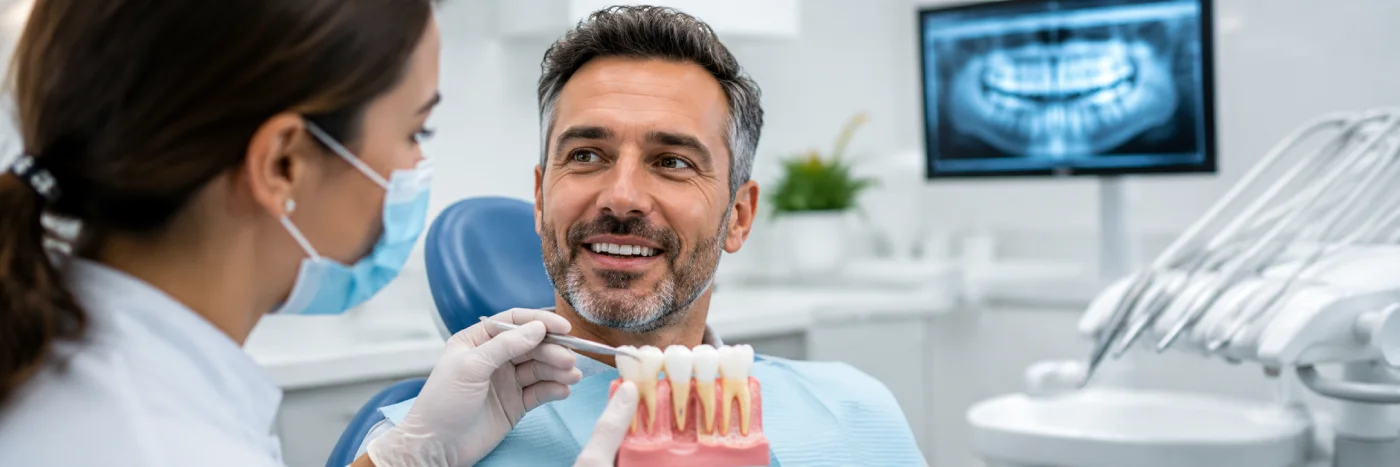
Periodontal disease, also known as gum disease, affects the gums and the structures that support the teeth.
Early gum disease, called gingivitis, can often be reversed through effective daily plaque removal and professional care. However, once the condition has progressed to periodontitis and caused loss of gum attachment or supporting bone, it does not normally go away by itself.
This does not mean that periodontitis cannot be treated. With appropriate periodontal treatment, good home cleaning, control of risk factors and regular maintenance, the disease can often be stabilised and further damage reduced.
Will Periodontal Disease Go Away? The Short Answer
Gingivitis can often be reversed, but periodontitis usually needs lifelong management.
Gingivitis affects the gums without causing permanent loss of the supporting tissues around the teeth. With improved brushing, daily interdental cleaning and professional dental hygiene care, the inflammation can often resolve.
Periodontitis is more advanced. It can cause gum pockets, recession and loss of the bone and connective tissues that hold the teeth in place. Treatment aims to control the inflammation, reduce the risk of further damage and help patients retain their natural teeth.
What Is Periodontal Disease?
Periodontal disease is an inflammatory condition affecting the gums and supporting structures around the teeth. It is commonly associated with a build-up of dental plaque, although the way the disease develops is also influenced by individual risk factors.
Plaque is a sticky film containing bacteria that continually forms on the teeth. If it is not removed effectively, it can irritate the gums and contribute to inflammation.
Possible signs of gum disease include:
- Bleeding when brushing or cleaning between the teeth
- Red, swollen or tender gums
- Persistent bad breath
- Gum recession
- Teeth appearing longer
- Spaces developing between teeth
- Loose or shifting teeth
- Pus or discharge around the gums
- Changes in the way the teeth meet when biting
Periodontal disease does not always cause pain. A person may have significant gum and bone changes without experiencing obvious discomfort, which is why regular dental examinations are important.
What Is the Difference Between Gingivitis and Periodontitis?
Gingivitis
Gingivitis is the earliest stage of gum disease. The inflammation is limited mainly to the gums, without the loss of supporting bone and attachment seen in periodontitis.
Common signs include bleeding, redness, swelling and tenderness around the gum line.
Because the deeper supporting structures have not yet been permanently damaged, gingivitis can often be reversed through:
- Effective brushing twice daily
- Daily cleaning between the teeth
- Professional removal of plaque and tartar
- Improved cleaning around the gum line
- Management of relevant risk factors
Periodontitis
Periodontitis develops when inflammation affects the tissues and bone supporting the teeth. The gum can detach from the tooth surface, creating deeper spaces known as periodontal pockets.
These pockets can collect plaque and tartar below the gum line, making the area difficult to clean effectively at home. As the condition progresses, supporting bone and attachment may be lost.
Bone and attachment already lost through periodontitis do not normally regrow simply through improved brushing or routine professional cleaning. However, selected periodontal defects may be suitable for regenerative treatment following specialist assessment.
Will Periodontal Disease Go Away Without Treatment?
Periodontitis is unlikely to resolve without professional treatment. Better brushing can reduce plaque and inflammation, but a toothbrush cannot reliably remove hardened tartar or deposits from deep periodontal pockets.
Without appropriate care, the condition may continue to progress. Possible consequences include:
- Increasing gum-pocket depth
- Further gum recession
- Continued loss of supporting bone
- Movement or drifting of the teeth
- Difficulty chewing
- Loose teeth
- Eventual tooth loss
Bleeding gums should not simply be ignored. Regular bleeding often indicates inflammation and should be professionally assessed.
Can Periodontal Disease Be Cured?
The word “cured” can be misleading when discussing periodontitis.
Gingivitis can often be reversed. Established periodontitis is generally treated as a long-term condition that must be controlled and monitored.
Successful treatment may:
- Reduce gum inflammation and bleeding
- Reduce or stabilise periodontal pocket depths
- Make the gums easier to maintain
- Slow or stop further attachment and bone loss
- Improve comfort when cleaning or chewing
- Help patients retain their teeth
Even after successful treatment, periodontitis can become active again. Continued daily cleaning and supportive periodontal care are therefore essential.
What Causes Periodontal Disease?
The main local cause is dental plaque accumulating around and below the gum line. However, not everyone responds to plaque in the same way.
Factors that can increase the risk or severity of periodontitis include:
- Ineffective daily plaque removal
- Smoking
- Diabetes, particularly where it is not well controlled
- Previous periodontal disease
- Family history and individual susceptibility
- Certain medicines or medical conditions
- Difficulty cleaning crowded or poorly positioned teeth
- Missed dental and periodontal maintenance appointments
A periodontal assessment should consider both the condition of the gums and the individual factors that may influence disease progression.
How Is Periodontal Disease Diagnosed?
Diagnosis normally involves more than simply looking for bleeding gums.
The dentist, hygienist or periodontist may:
- Ask about symptoms, medical history and smoking
- Examine the gums for inflammation and recession
- Measure the spaces between the gums and teeth
- Record bleeding around the teeth
- Assess plaque and tartar levels
- Check whether teeth are loose or have moved
- Assess the patient’s bite
- Take X-rays to evaluate supporting bone levels
The findings help determine whether the patient has gingivitis or periodontitis and, where periodontitis is present, how extensive and complex the condition may be.
What Happens During Periodontal Treatment?
The exact treatment plan depends on the severity of the disease, the areas affected and the patient’s individual risk factors.
Improving daily plaque control
Effective home cleaning is central to successful treatment. The dental team may demonstrate how to clean along the gum line and between the teeth using appropriately sized interdental brushes, floss or other aids.
Professional plaque and tartar removal
Plaque and tartar may be removed from above and below the gum line. Treatment below the gum line may be described as subgingival instrumentation, root surface debridement, deep cleaning or scaling and root planing.
Local anaesthetic may be used where deeper areas need to be treated.
Managing risk factors
The treatment plan may include advice about smoking, diabetes control and other factors that can influence healing and disease progression.
Reviewing the response
After the initial treatment, the gums are reviewed. The dental professional may reassess bleeding, plaque control, pocket depths and the patient’s ability to maintain the area.
Where inflammation has reduced and the condition is stable, the patient can move into supportive periodontal care.
Further or surgical treatment
If deep or active areas remain, additional non-surgical treatment or periodontal surgery may be considered.
Possible specialist procedures include:
- Access surgery to clean persistent deep pockets
- Pocket-reduction procedures
- Regenerative treatment for selected bone defects
- Gum grafting for suitable recession defects
- Extraction of teeth with a very poor prognosis
Does Periodontal Treatment Hurt?
Gum assessment and routine professional cleaning may cause temporary sensitivity or tenderness, particularly where the gums are inflamed.
Local anaesthetic can be used for deeper periodontal cleaning to make treatment more comfortable. Patients may experience some tenderness, sensitivity or minor bleeding afterwards, but this should normally improve as the tissues settle.
Patients who are worried about treatment should discuss this before their appointment. Glow Dental provides support for nervous patients and can explain each stage before treatment begins.
Can Periodontal Pockets Heal?
Periodontal pockets may become shallower after inflammation is controlled and the gums respond to treatment.
The amount of improvement depends on factors including:
- The original pocket depth
- The amount and pattern of bone loss
- The patient’s plaque control
- Smoking
- Diabetes control
- The tooth’s shape and position
- How well the area responds to treatment
Some deeper pockets may remain after initial treatment. These areas may require repeated treatment, specialist assessment, periodontal surgery or closer maintenance.
Can Gums Grow Back After Periodontal Disease?
Inflamed and swollen gums may become firmer and healthier after treatment, but gum tissue lost through recession does not usually grow back naturally.
In selected cases, a periodontist may consider gum-grafting or other mucogingival procedures. Whether treatment is appropriate depends on the cause and extent of recession, tissue thickness, tooth position, symptoms and cleaning ability.
How Often Is Periodontal Maintenance Needed?
Supportive periodontal care is an important part of keeping treated periodontitis stable.
The interval between appointments should be tailored to the condition of the gums, the response to treatment and individual risk factors. Maintenance visits may be recommended at intervals ranging from approximately three to twelve months.
Patients with unstable, advanced or higher-risk disease may require appointments more frequently. Longer intervals may be considered where the condition remains stable and the patient maintains effective plaque control.
During a periodontal maintenance visit, the dental professional may:
- Check plaque control and home-cleaning techniques
- Assess gum bleeding and inflammation
- Measure selected periodontal pockets
- Monitor gum recession and tooth mobility
- Remove plaque and tartar
- Clean below the gum line where required
- Review smoking, diabetes and other risk factors
- Adjust the maintenance interval where necessary
Periodontal maintenance is not necessarily the same as a routine scale and polish. It is a risk-based programme designed to monitor and maintain a previously treated periodontal condition.
How Can Periodontal Disease Be Prevented?
Not every case can be prevented completely, but effective plaque removal and control of modifiable risk factors can considerably reduce the risk.
Brush twice daily
Brush twice a day with fluoride toothpaste. Clean carefully around the gum line rather than focusing only on the visible surfaces and biting edges of the teeth.
Clean between the teeth every day
A toothbrush cannot clean every surface between the teeth. Interdental brushes are suitable for many adults, although floss or another recommended aid may be more appropriate for some spaces.
The dental team can advise which sizes and cleaning methods are suitable.
Attend appropriate dental and hygiene appointments
Regular examinations can identify gum inflammation, recession, pocketing and bone loss before the patient notices obvious symptoms.
Professional hygiene care can help remove plaque and tartar that cannot be removed effectively at home.
Stop smoking
Smoking is an important risk factor for periodontitis and can reduce the response to treatment.
Smoking can also reduce visible gum bleeding, potentially making the disease appear less active than it is. Stopping smoking can improve the outlook for the gums and overall oral health.
Manage diabetes
Diabetes and periodontitis have an important two-way relationship. Diabetes can increase susceptibility to gum disease, particularly when blood glucose is not well controlled.
Patients should tell their dentist about diabetes and any changes to their health or medicines. Regular dental monitoring and good diabetes management are both important.
What Does a Periodontist Do?
A periodontist is a dentist with additional training in the prevention, diagnosis and treatment of conditions affecting the gums and supporting bone.
A periodontist may:
- Carry out a detailed periodontal assessment
- Diagnose and classify periodontitis
- Provide complex non-surgical periodontal treatment
- Treat persistent deep periodontal pockets
- Carry out periodontal surgery where appropriate
- Assess gum recession and possible grafting
- Provide regenerative treatment for selected defects
- Develop a supportive periodontal maintenance plan
- Assess the gums and bone before dental implant treatment
Referral may be considered where gum disease is advanced, complex, progressing despite treatment or affected by significant medical or behavioural risk factors.
Can You Keep Your Teeth With Periodontal Disease?
Many patients can keep their natural teeth after a diagnosis of periodontitis, particularly when the condition is identified, treated and maintained appropriately.
The outlook for an individual tooth depends on:
- The amount and pattern of supporting bone loss
- The depth of periodontal pockets
- Whether the tooth is loose
- The presence of plaque, tartar and inflammation
- Smoking
- Diabetes and general health
- The condition of the tooth itself
- The patient’s home cleaning
- Attendance for supportive periodontal care
Some teeth may have a good long-term outlook after treatment, while others with severe bone loss, significant mobility or additional dental problems may be less predictable.
What Happens If a Tooth Cannot Be Saved?
A tooth may need to be removed where there is very limited supporting bone, severe mobility, an untreatable fracture or another problem that makes predictable restoration unlikely.
If a tooth is extracted, replacement options may include a dental implant, dental bridge or denture.
Active periodontal disease should be controlled before implant treatment is considered because implants also depend on healthy gums and supporting bone.
When Should You Arrange a Gum Assessment?
Book a dental appointment if you notice:
- Regular bleeding when brushing
- Red, swollen or tender gums
- Persistent bad breath
- Receding gums
- Teeth appearing longer
- Loose or drifting teeth
- Pus or discharge around the gums
- Pain when chewing
- A change in the way the teeth bite together
Do not wait for the condition to become painful. Periodontitis can progress without producing severe discomfort.
Why Choose Glow Dental for Periodontal Care?
At Glow Dental, gum care begins with an assessment of the gums, teeth, supporting bone, medical history and relevant risk factors.
Depending on the findings, care may involve:
- Advice on brushing and interdental cleaning
- Professional dental hygiene treatment
- Detailed periodontal charting
- Dental X-rays where clinically indicated
- Non-surgical periodontal treatment
- Review of the response to treatment
- Specialist periodontal assessment
- A personalised maintenance programme
Book a Periodontal Assessment at Glow Dental
Bleeding gums, persistent bad breath, gum recession or loose teeth may indicate gum disease and should be professionally assessed.
Glow Dental provides gum assessments, dental hygiene care and specialist periodontal treatment at our practice on Northcote Road in Battersea, close to Clapham Junction.
We welcome patients from Clapham, Wandsworth, Chelsea and surrounding areas of South West London.
During your appointment, we can assess gum bleeding, pocket depths, recession, tooth mobility and supporting bone and explain whether hygiene care or specialist periodontal treatment may be appropriate.
Patients attending the practice for the first time can read our new patient information.
Book a gum health assessment at Glow Dental.
Further Information and Sources
Written by:
Glow Dental
Published:
Last updated: