
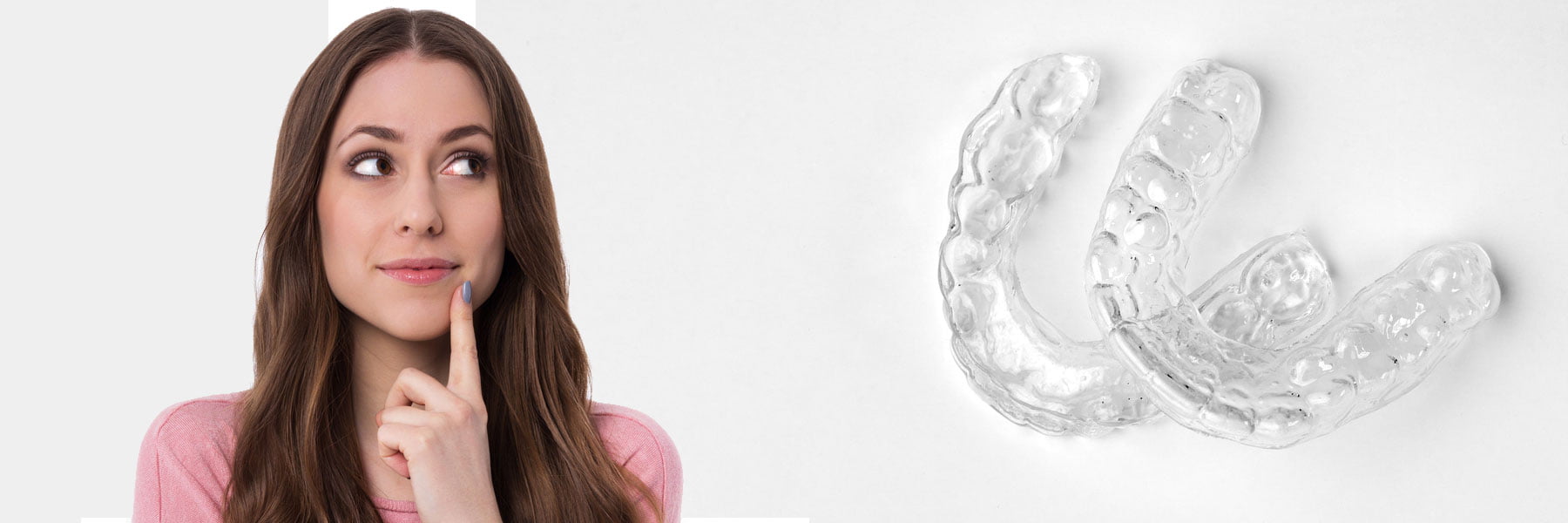
If you are considering orthodontic treatment, one of the biggest decisions may be whether to choose traditional fixed braces or Invisalign clear aligners. Both can straighten teeth and correct a wide range of bite problems, but they work differently and suit different patients.
Invisalign offers a discreet, removable approach that makes eating and cleaning easier, while fixed braces provide continuous tooth movement without relying on the patient remembering to wear an appliance. Fixed braces can also provide greater control for some complex orthodontic movements.
There is therefore no universal winner. The best treatment depends on your teeth, bite, treatment complexity, lifestyle and how reliably you can follow the treatment instructions.
Invisalign vs Fixed Braces: Quick Comparison
| Feature | Invisalign | Fixed Braces |
|---|---|---|
| Appearance | Clear and discreet | Visible, although clear brackets are available |
| Removable | Yes | No |
| Eating | Removed for meals, so few food restrictions | Some hard and sticky foods should be avoided |
| Cleaning | Aligners removed for normal brushing and interdental cleaning | Extra care needed around brackets and wires |
| Compliance | Must normally be worn 20–22 hours per day | Does not rely on remembering to wear the appliance |
| Complex cases | Can treat many complex cases, sometimes with attachments, elastics and refinements | Can offer greater control for some complex movements and extraction cases |
| Comfort | No conventional brackets or wires; temporary pressure still occurs | Temporary soreness and bracket or wire irritation can occur |
| Retention afterwards | Required | Required |
What Are Fixed Braces?
Fixed braces use brackets attached to the teeth and orthodontic wires to produce controlled tooth movement.
The orthodontist changes the wires and other components during treatment to guide the teeth towards their planned positions.
Fixed appliances can include:
- Traditional metal braces
- Clear or ceramic brackets
- Lingual braces placed on the inside of the teeth
Glow Dental provides specialist fixed-brace treatment in Battersea, including metal, clear and lingual orthodontic options.
What Is Invisalign?
Invisalign uses a sequence of custom-made clear plastic aligners to gradually move the teeth.
Each aligner applies controlled pressure to selected teeth before the patient progresses to the next aligner in the sequence.
Invisalign recommends wearing the aligners for approximately 20–22 hours each day. They are normally removed for eating, drinking anything other than plain water, brushing and cleaning between the teeth.
Because the appliance is removable, Invisalign gives patients considerably more control over their daily routine—but that also means treatment depends heavily on consistent wear.
Which Looks Better: Invisalign or Braces?
Invisalign is generally the more discreet option.
The clear aligners fit closely around the teeth and can be difficult to notice during ordinary conversation.
However, Invisalign is not completely invisible. Many patients need small tooth-coloured composite shapes called attachments bonded to selected teeth to help the aligners produce more complex movements. Some cases also require orthodontic elastics.
Traditional metal braces are much more visible, although clear or ceramic brackets can provide a less noticeable fixed alternative.
You can see examples of clear-aligner treatment in Glow Dental’s Invisalign before-and-after gallery.
Which Is More Effective: Invisalign or Fixed Braces?
Both can be highly effective when used for an appropriate case.
A recent systematic review comparing clear aligners with fixed appliances found no significant difference in overall treatment quality in many non-extraction cases.
However, fixed braces performed better in extraction-based treatment, where greater control of tooth roots, space closure and anchorage can be required.
Modern Invisalign can now treat considerably more than simple front-tooth crowding, but there remain movements where fixed appliances may provide greater predictability.
What Can Invisalign Treat?
Depending on the individual diagnosis, Invisalign may be used to treat:
- Crowded teeth
- Gaps between teeth
- Rotated teeth
- Some deep bites
- Some open bites
- Crossbites
- Increased overjet
- Relapse following previous orthodontic treatment
- Selected more complex bite problems
More complicated movements may require attachments, elastics, interproximal reduction or additional aligners.
When Might Fixed Braces Be Better?
Fixed appliances can offer particular advantages when the orthodontist needs very precise control over complicated tooth movements.
Examples can include:
- Complex extraction cases
- Significant root movement
- More demanding torque control
- Complex space closure
- Some severe rotations
- Cases requiring precise control of several teeth simultaneously
Recent research suggests fixed appliances may offer better root and torque control in some extraction and complex anterior-tooth movements.
This does not mean every difficult case requires braces. Modern clear-aligner treatment can incorporate several additional orthodontic techniques, so suitability needs to be determined individually.
Which Is Faster: Invisalign or Fixed Braces?
Neither treatment is universally faster.
Treatment duration depends much more on the orthodontic problem than on whether the teeth are being moved with clear aligners or brackets.
A recent systematic review found no significant overall difference in treatment duration between aligners and fixed braces in non-extraction cases. In extraction cases, fixed appliances may offer advantages because of their greater biomechanical control.
Factors that affect treatment time include:
- Severity of crowding
- The type of bite problem
- Whether teeth need extracting
- The movements required
- Biological response to orthodontic forces
- Missed appointments
- Broken fixed appliances
- How consistently Invisalign is worn
- Whether refinements are required
You should therefore be cautious of any provider promising that Invisalign or braces will automatically straighten your teeth substantially faster.
Which Is More Comfortable?
Both treatments move teeth by applying orthodontic forces, so temporary tenderness is normal with either system.
Invisalign does not have conventional brackets or projecting wires, which means there is less opportunity for those components to rub against the lips and cheeks.
Recent reviews suggest clear-aligner patients may experience less pain during the early stages of treatment, although the difference becomes less important as patients adapt.
Invisalign can still cause:
- Pressure after changing aligners
- Temporary tooth tenderness
- Occasional irritation from aligner edges
- Discomfort from attachments or elastics
Fixed braces can cause temporary pressure after adjustment and occasional irritation from brackets or wires.
Which Is Easier for Eating?
Invisalign has a clear practical advantage because the aligners are removed for meals.
You can normally continue eating your usual foods, provided the aligners are removed first.
With fixed braces, you should avoid or modify foods that can damage brackets and wires, particularly:
- Very hard foods
- Sticky sweets
- Chewing ice
- Hard crusts bitten directly with the front teeth
- Foods that could pull brackets away from the teeth
The restrictions are temporary, but they do require some adjustment throughout fixed-brace treatment.
Which Is Easier to Keep Clean?
Invisalign usually makes normal home cleaning easier because the aligners are removed and you can brush and clean between your teeth without brackets or wires getting in the way.
Fixed braces create additional plaque-retentive surfaces and therefore require more careful brushing and interdental cleaning.
Recent research generally finds better periodontal measurements among clear-aligner patients, although the certainty of this evidence remains relatively low and the benefit is strongly dependent on patient behaviour.
Someone who repeatedly places Invisalign aligners back over unclean teeth can still develop tooth decay or gum inflammation.
Whichever treatment you choose, regular dental examinations remain important. A dental hygienist can also provide additional support if plaque control becomes difficult during orthodontic treatment.
Can Fixed Braces Cause White Marks on Teeth?
Fixed braces themselves do not create cavities or white marks, but plaque can accumulate around brackets if cleaning is inadequate.
Repeated acid production from plaque bacteria can remove mineral from the enamel and create chalky white spot lesions.
These areas can remain visible after the braces are removed.
The risk can be reduced by:
- Brushing carefully twice daily with fluoride toothpaste
- Cleaning around every bracket
- Using appropriate interdental brushes
- Limiting frequent sugary foods and drinks
- Maintaining regular dental care
Does Invisalign Require More Discipline?
Yes. This is one of the biggest differences between Invisalign and fixed braces.
Because Invisalign aligners are removable, the patient needs to take responsibility for wearing them consistently.
They should normally be worn for approximately 20–22 hours every day.
If aligners are regularly left out for meals, social occasions or long periods during the day, the teeth may not follow the planned movement. This can result in poor aligner fit, delayed progress and the need for additional refinements.
Fixed braces remain attached continuously and therefore do not rely on remembering to wear the appliance.
What Are Invisalign Refinements?
The digital treatment plan predicts how the teeth should move, but biological tooth movement does not always reproduce every predicted movement perfectly.
If certain teeth have not reached their intended positions, another digital scan can be taken and additional aligners manufactured. This is known as a refinement.
Refinements are common in clear-aligner treatment and do not necessarily mean anything has gone wrong.
When comparing Invisalign prices, it is worth asking whether refinements are included in your treatment package or charged separately.
Can You See Your Invisalign Result Before Starting?
Digital treatment planning allows a simulation to be created showing the intended movement of the teeth.
This can be extremely useful when discussing your treatment goals, but a computer-generated simulation should not be treated as a guarantee that every tooth will finish in precisely the illustrated position.
The clinician still needs to monitor the biological response throughout treatment and modify the plan where necessary.
What Happens if a Fixed Brace Breaks?
Brackets can occasionally become detached or wires can bend or break, particularly after biting hard or sticky foods.
Minor problems are usually straightforward to repair, but a broken appliance should be reported to the orthodontic team because leaving part of the brace inactive can interfere with planned tooth movement.
This is one reason following the dietary advice provided for fixed braces is important.
Which Is Better if You Have Gum Problems?
Active periodontitis should normally be stabilised before substantial orthodontic tooth movement begins, regardless of which appliance is being considered.
Clear aligners can make home plaque control easier because they are removable, but they do not make orthodontic treatment safe in the presence of uncontrolled periodontal disease.
Glow Dental can coordinate treatment between its specialist orthodontic and specialist periodontal teams where required.
Which Is Better for Teenagers?
Both treatments can be appropriate for teenagers.
Invisalign may appeal to teenagers who prefer a discreet appliance or want fewer food restrictions. However, successful treatment requires the aligners to be worn consistently for most of the day.
Fixed braces may be preferable where:
- Compliance with removable aligners is uncertain
- The tooth movements favour fixed appliances
- The patient would prefer not to keep removing and replacing aligners
Younger children with developing jaw or eruption problems may need a different approach. Glow Dental also provides early orthodontic assessment and treatment.
Which Is Better for Adults?
Both Invisalign and fixed braces work for adults provided the teeth and supporting tissues are healthy enough for orthodontic treatment.
Adults often choose Invisalign because the aligners are discreet and removable, particularly where appearance matters in professional or social situations.
Other adults choose fixed braces because they prefer an appliance that remains in place continuously or because fixed mechanics are more suitable for the required treatment.
There is no upper age at which someone automatically becomes too old for braces.
Do You Need Retainers After Invisalign?
Yes. Retainers are required after Invisalign just as they are after fixed braces.
Teeth have a natural tendency to move after orthodontic treatment. This is called relapse.
Long-term retention is therefore essential if you want to maintain the corrected tooth positions.
Retainers can include:
- Clear removable retainers
- Fixed retainers bonded behind the teeth
- A combination of fixed and removable retention
The British Orthodontic Society recommends long-term retention following orthodontic treatment.
Do Teeth Stay Straighter After Braces Than Invisalign?
There is currently limited evidence that one appliance type provides inherently better long-term stability than the other when an appropriate result has been achieved.
The more important factor is retainer use.
Whether your teeth were moved with Invisalign or fixed braces, failing to follow the retention plan increases the risk that they will move again.
How Much Does Invisalign Cost at Glow Dental?
Glow Dental currently publishes the following Invisalign fees:
| Invisalign Package | Current Starting Fee |
|---|---|
| Invisalign Express | From £2,500 |
| Invisalign Lite | From £3,300 |
| Invisalign Moderate | From £4,100 |
| Invisalign Full | From £4,300 |
Glow Dental currently includes at-home teeth whitening and retainers with the Lite, Moderate and Full Invisalign packages.
The practice also advertises a current Invisalign offer worth up to £1,300, although promotions and package inclusions can change.
How Much Do Fixed Braces Cost at Glow Dental?
Glow Dental’s current orthodontic fees list:
- Metal braces: £4,000–£5,900
- Clear brackets: £4,100–£6,000
- Lingual braces: £8,600–£13,500
A specialist orthodontic consultation is currently £95.
The final price depends on treatment complexity and the appliance required, so comparing only the lowest advertised Invisalign and brace prices can be misleading.
You can see the latest figures on the Glow Dental fee page or read our detailed guide to metal braces costs in the UK.
Is Invisalign More Expensive Than Fixed Braces?
Not necessarily.
A short Invisalign Express treatment can cost less than comprehensive fixed braces, while more extensive Invisalign treatment can cost a similar amount to fixed orthodontics.
When comparing treatment plans, check:
- Which Invisalign package or brace system is being proposed
- Whether diagnostic records are included
- Whether refinements are included
- Whether retainers are included
- Whether repairs or replacement aligners have additional charges
- Whether whitening or other extras are included
- What happens if treatment takes longer than expected
Can You Pay Monthly for Invisalign or Braces?
Glow Dental provides finance options for eligible patients who prefer to spread the cost of orthodontic treatment.
Interest-free options are currently available subject to the relevant terms and eligibility.
Does Glow Dental Offer a Free Invisalign Consultation?
Yes. Glow Dental currently offers a free Cosmetic & Invisalign Consultation.
This allows you to discuss your goals and explore whether clear aligners may be appropriate without immediately committing to treatment.
A free initial consultation should not be confused with all of the diagnostic records required before comprehensive orthodontic treatment. Further examination, scanning or imaging may be required before the final treatment plan is prescribed.
Invisalign vs Fixed Braces: Which Should You Choose?
Invisalign may suit you particularly well if:
- You want the most discreet appliance possible
- You want to remove the appliance for meals
- You want easier access for brushing and interdental cleaning
- You are confident you can wear aligners for 20–22 hours every day
- Your orthodontic problem is suitable for clear-aligner treatment
Fixed braces may suit you particularly well if:
- Your treatment requires more complex tooth movements
- You have an extraction-based orthodontic case
- You do not want treatment to rely on remembering to wear aligners
- You are comfortable with a visible fixed appliance
- Your orthodontist considers fixed mechanics more predictable for your bite
Frequently Asked Questions About Invisalign vs Braces
Is Invisalign better than braces?
Not universally. Invisalign provides advantages in appearance, removability and ease of cleaning, while fixed braces can provide better control for some complicated orthodontic movements. The better option depends on the individual case.
Is Invisalign faster than fixed braces?
Not automatically. Current research suggests similar overall treatment times in many non-extraction cases. Treatment complexity and patient compliance are more important than appliance type alone.
Can Invisalign treat severe crowding?
Potentially. Modern Invisalign can treat many cases of significant crowding, but the treatment may require attachments, interproximal reduction, expansion, elastics or occasionally tooth extraction. Some complex cases remain more predictable with fixed appliances.
Can Invisalign fix an overbite?
It can treat some deep-bite and overjet problems. The term “overbite” covers many different orthodontic relationships, so the severity and underlying cause need to be assessed before deciding which appliance is suitable.
Does Invisalign hurt less than braces?
Research suggests clear-aligner patients may experience less pain during the early stages of treatment, but neither system is completely painless. Both create temporary pressure as teeth move.
Can you eat normally with Invisalign?
Yes. Aligners are removed for meals, so there are few orthodontic food restrictions. Anything other than plain water should generally be consumed with the aligners removed.
Can you take fixed braces off for special occasions?
No. Fixed braces remain bonded to the teeth throughout active treatment. Invisalign can be removed briefly, but total daily wear still needs to remain around 20–22 hours.
Which is easier to clean?
Invisalign generally makes brushing and interdental cleaning easier because the aligners can be removed. Fixed braces require additional cleaning around the brackets and wires.
Do Invisalign and braces give the same result?
They can produce similarly high-quality outcomes in many non-extraction cases. Fixed appliances can offer advantages for particular complex movements and extraction treatment.
Do both treatments need retainers?
Yes. Long-term retention is required after either Invisalign or fixed braces to reduce the risk of orthodontic relapse.
Invisalign and Fixed Braces at Glow Dental
Glow Dental provides both Invisalign treatment and comprehensive specialist orthodontics in Battersea.
This is important because Invisalign should not be recommended simply because a patient initially asks for clear aligners. The orthodontic diagnosis should determine whether aligners, metal braces, clear fixed braces, lingual braces or another approach is most likely to produce an appropriate result.
Before orthodontic treatment begins, your teeth and gums also need to be sufficiently healthy. Glow Dental can coordinate care with general dentistry, dental hygiene and specialist periodontics where necessary.
You can view real Invisalign patient results, compare our current orthodontic fees, review finance options or check our current Invisalign offer.
If you are new to Glow Dental, contact the practice to discuss your orthodontic options.
Conclusion: Invisalign or Fixed Braces?
Both Invisalign and fixed braces are effective orthodontic treatments, and neither is automatically the better choice for every patient.
Invisalign offers the advantages of a discreet appearance, removability, fewer dietary restrictions and easier access for oral hygiene. Its main limitation is that treatment depends heavily on consistent patient wear, and some complex tooth movements remain more predictable with fixed appliances.
Fixed braces provide continuous orthodontic forces without relying on patient wear compliance and remain particularly valuable for some complex or extraction cases. Their main disadvantages are visibility, additional cleaning requirements and temporary food restrictions.
The best way to choose between them is to have your teeth and bite properly assessed. A specialist orthodontic consultation at Glow Dental can compare the options based on the tooth movements you actually need rather than choosing treatment based on appearance alone.
Written by:
Glow Dental
Published:
Last updated: