
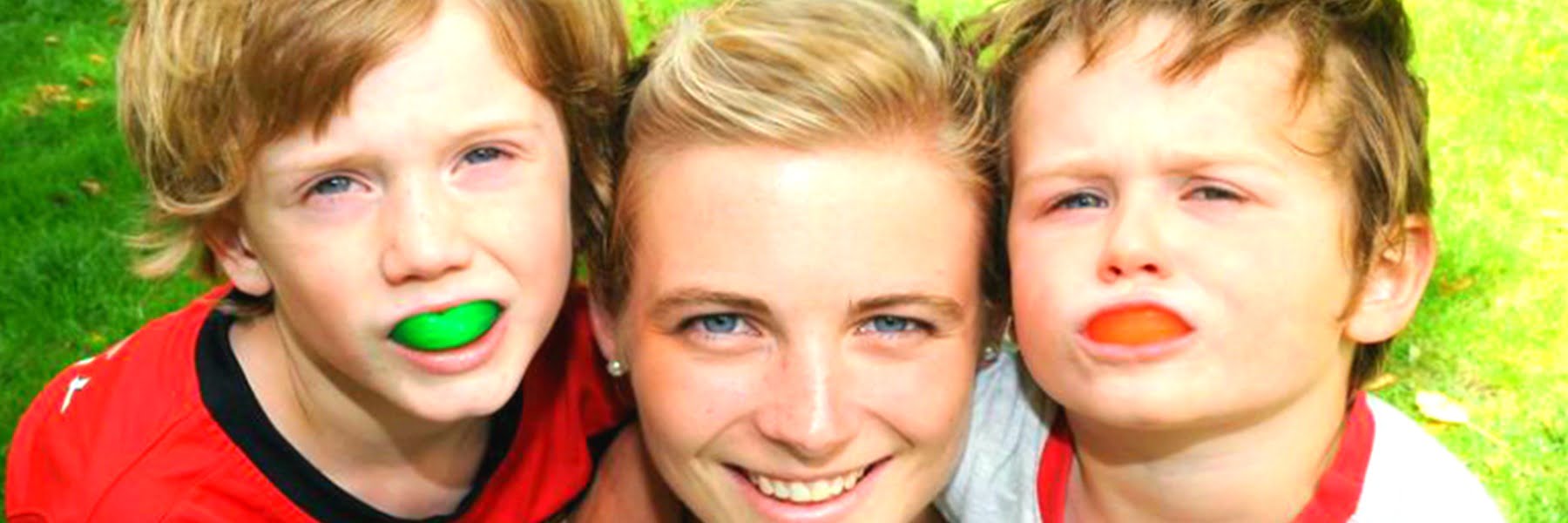
When children return to school after the holidays, sport is often one of the things they look forward to most. Football, rugby, hockey, cricket, basketball and other activities are great for fitness, confidence and social development — but they can also increase the risk of injuries to the teeth, lips, gums and jaw.
Fortunately, many sports-related dental injuries can be prevented or made less severe by wearing a properly fitted sports mouthguard. This is particularly important for children and teenagers, whose teeth and jaws are still developing.
UK guidance from the Faculty of Sport and Exercise Medicine recommends that athletes who are at risk of dental or facial injury wear a well-fitting mouthguard during both training and competition. The evidence cited in its position statement suggests that athletes who do not wear a mouthguard have more than twice the risk of suffering an orofacial injury compared with those who do.
Why Are Sports Mouthguards Important for Children?
A blow to the mouth can cause considerably more than a small cut or chipped tooth. Depending on the force and direction of the impact, a sports injury may result in:
- Chipped, cracked or fractured teeth
- A tooth being loosened or displaced
- A permanent tooth being completely knocked out
- Cuts to the lips, cheeks, tongue or gums
- Damage to the supporting tissues around a tooth
- Injury to the jaw or jaw joint
- Damage to orthodontic braces or appliances
- Injury to the nerve and blood supply inside a tooth
Dental trauma is not always immediately obvious either. A tooth may initially look intact but later become painful, discoloured or infected if the nerve inside it has been damaged. In some cases, further treatment such as root canal treatment may eventually be necessary.
This is why prevention is so important — particularly for children with healthy permanent teeth that should ideally last them for life.
Which Sports Have the Highest Risk of Dental Injuries?
Dental injuries are most closely associated with activities where there is a possibility of collisions, falls or being struck by a ball, stick, elbow or another player. However, injuries are certainly not restricted to traditional contact sports.
Children and teenagers should consider wearing a mouthguard for activities such as:
- Rugby – tackles and player-to-player contact can result in direct facial impacts.
- Hockey – injuries may occur through collisions as well as contact with sticks or the ball.
- Boxing and martial arts – direct blows to the face make dental protection particularly important.
- Football – accidental elbows, clashes of heads, falls and impacts from the ball can all cause dental trauma.
- Cricket – a fast-moving cricket ball presents an obvious risk to the teeth and face.
- Basketball – player collisions and accidental elbows frequently bring the face into contact with another player.
- Gymnastics and acrobatics – falls can result in significant dental injuries even though the activity is not considered a contact sport.
- Cycling and skateboarding – falls onto a hard surface can damage the front teeth and jaw.
The important question is therefore not simply whether a sport is classified as a “contact sport”, but whether there is a realistic possibility of your child receiving an impact to the mouth or face.
How Does a Mouthguard Protect the Teeth?
A sports mouthguard forms a protective layer over the teeth and gums. When an impact occurs, the mouthguard helps absorb and distribute some of the force rather than allowing that force to be concentrated directly on individual teeth.
A well-fitting guard can therefore help reduce the likelihood and severity of injuries such as fractured or displaced teeth, as well as helping protect the lips, cheeks, gums and other structures within the mouth.
For a mouthguard to work effectively, however, fit is extremely important. A guard that continually moves around, has to be held in position by biting down or makes breathing uncomfortable is less likely to be worn consistently — and protection only works when the mouthguard is actually being used.
What Are the Different Types of Sports Mouthguard?
There are three main options available.
1. Stock or Ready-Made Mouthguards
These are inexpensive, pre-formed mouthguards sold in standard sizes. Because they are not designed around the individual shape of your child’s teeth, the fit can be less secure and they may feel bulky.
A poorly fitting mouthguard may also need to be held in place by clenching the teeth, potentially making talking and breathing less comfortable during sport.
2. Boil-and-Bite Mouthguards
Boil-and-bite mouthguards are softened in hot water and then shaped around the teeth at home. They can provide a closer fit than a completely stock mouthguard, but the final result depends heavily on how accurately the mouthguard is moulded.
They can be a practical option where a professionally made mouthguard is not available, but parents should regularly check that the guard remains secure and comfortable.
3. Custom-Made Dental Mouthguards
A custom-made sports mouthguard is produced specifically for your child’s teeth and bite. Current UK sports medicine guidance considers professionally fitted custom mouthguards to offer the highest level of protection against dental trauma.
Because the guard is made individually, it can provide:
- A more secure and comfortable fit
- Better retention while the mouth is open
- More even protection around the teeth
- Less interference with breathing
- Better comfort when communicating during sport
- Protection tailored to the child’s teeth, bite and chosen sport
At Glow Dental, we take a digital scan of the teeth, which is then used by the dental laboratory to create an individually fitted sports guard. Children can also choose from different colours, which can make wearing one considerably more appealing.
Do Children Need Their Mouthguards Replaced More Often?
Yes. Children’s mouths change much more rapidly than adults’ mouths. Baby teeth are lost, permanent teeth erupt and the jaws continue to grow, all of which can alter the way a mouthguard fits.
A mouthguard should therefore be checked regularly and replaced if it becomes:
- Too tight
- Loose or difficult to retain
- Uncomfortable
- Split, torn or damaged
- Noticeably thin or worn
Regular appointments with your child’s dentist provide a useful opportunity to check both their dental development and the fit of their mouthguard. Our children’s dentistry team can advise you on preventive care as your child’s teeth develop, while routine dental examinations allow us to monitor their teeth, bite and overall oral health.
Can Children Wear a Mouthguard With Braces?
Yes — and protecting the mouth can be particularly important when a child is wearing braces. An impact can damage the teeth as well as brackets and wires, while braces themselves may cause additional cuts to the inside of the lips or cheeks if the mouth is hit.
However, orthodontic teeth are actively moving, so a mouthguard must allow for those changes. A standard tightly fitting guard may quickly become unsuitable.
If your child is having early orthodontic treatment or wears fixed braces, ask their dentist or orthodontist which type of sports guard is appropriate and how frequently its fit should be reviewed.
How Should You Look After a Sports Mouthguard?
Looking after the mouthguard properly helps maintain its shape, hygiene and protective qualities.
Encourage your child to rinse the guard after every use and clean it regularly with cool water. It should be allowed to dry before being stored in a clean, ventilated protective case.
Avoid leaving a mouthguard in direct sunlight, near a radiator or in very hot water, as excessive heat can distort the material and affect the fit.
Before training or a match, check the guard for tears, thinning or other signs of damage. If it no longer stays securely in place or your child says it feels uncomfortable, arrange to have the fit assessed rather than continuing to use it.
What Should You Do If Your Child Injures a Tooth During Sport?
Even when a mouthguard is worn, dental injuries can still happen. If your child chips, breaks, loosens or knocks out a tooth, they should be assessed by a dentist as soon as possible.
Glow Dental provides emergency dental treatment in Battersea for urgent dental problems, including teeth that have been chipped or knocked out.
If a permanent adult tooth is completely knocked out, time is important. The NHS advises holding the tooth by the crown — the white part normally visible in the mouth — and avoiding touching the root. If it is dirty, it can be gently rinsed in milk, saline or saliva. If it cannot easily be placed back into the socket, keep it in milk or saliva and seek emergency dental care as soon as possible.
Never attempt to put a knocked-out baby tooth back into the socket, as this could damage the permanent tooth developing underneath.
For further guidance, see the NHS advice on knocked-out teeth.
What About Jaw Pain After a Sports Injury?
Any significant facial trauma accompanied by severe pain, swelling, difficulty opening or closing the mouth, a change in the way the teeth meet, heavy bleeding or suspected facial fracture requires urgent medical or dental assessment.
Less severe jaw discomfort can sometimes affect the jaw joint and surrounding muscles. If your child continues to experience clicking, discomfort or difficulty opening their mouth after an injury, speak to their dentist. You can also read more about the assessment of jaw problems and the jaw joint at Glow Dental.
Should My Child Wear a Mouthguard During Training?
Yes. Dental injuries do not only happen during competitive matches. Training sessions can involve exactly the same tackles, collisions, balls, sticks and falls that occur during competition.
The Faculty of Sport and Exercise Medicine UK therefore recommends that athletes at risk of dental or facial trauma wear their mouthguard during both training and competition.
Children may also benefit from getting used to a new mouthguard during training before wearing it in an important match. A comfortable, well-fitting mouthguard quickly becomes another routine piece of sports equipment — just like shin pads, boots or a helmet.
Protect Your Child’s Smile With a Custom Sports Mouthguard
Playing sport has enormous physical and social benefits, and concerns about dental injuries should not stop children from participating. The goal is simply to reduce avoidable risks by using appropriate protective equipment.
A well-fitting mouthguard is a relatively simple way to protect teeth that may otherwise require emergency treatment, long-term monitoring or complex restorative dental care following an injury.
At Glow Dental in Battersea, we can assess your child’s teeth and bite and arrange a professionally fitted custom sports mouthguard designed around their individual mouth and sporting needs.
If your child plays rugby, hockey, football, cricket, martial arts or another activity where their teeth could be injured, contact Glow Dental to arrange an appointment and find out which type of sports guard would offer the most appropriate protection.
Written by:
Glow Dental
Published:
Last updated: