
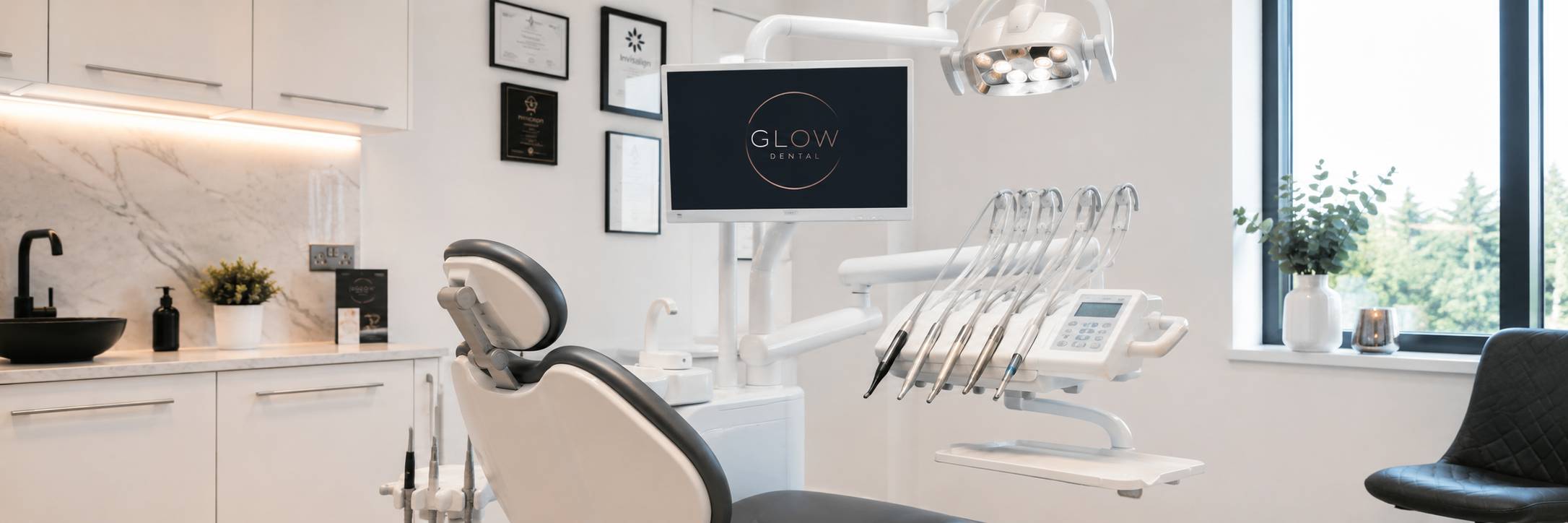
If you are searching for composite bonding near you, choosing the right cosmetic dentist is just as important as choosing the treatment itself.
Composite bonding requires careful planning, attention to detail and an understanding of natural tooth proportions. At Glow Dental, our cosmetic dental team provides personalised composite bonding in Battersea, helping patients improve chipped, worn, uneven or misshapen teeth while preserving as much healthy tooth structure as possible.
Our dental practice is located on Northcote Road, close to Clapham Junction, and welcomes patients from Battersea, Clapham, Wandsworth, Chelsea and surrounding areas of South West London.
Where Can I Get Composite Bonding Near Me?
Composite bonding is provided by many cosmetic dentists, but the quality of the result can vary depending on the dentist’s experience, treatment planning and ability to recreate the natural shape, shade and texture of a tooth.
When looking for composite bonding near you, it is important to choose a dental practice that will assess your entire smile rather than simply applying composite material to individual teeth.
Your dentist should consider:
- The health of your teeth and gums
- Your bite and tooth alignment
- The size and proportions of your teeth
- The colour and translucency of your natural enamel
- How many teeth are visible when you smile
- Whether you grind or clench your teeth
- The cosmetic result you would like to achieve
A thorough assessment helps ensure that composite bonding is suitable for you and that the final result looks balanced and natural.
What Should You Look for in a Composite Bonding Dentist?
Composite bonding combines dentistry with artistic skill. The material must be carefully layered, shaped and polished so that the treated tooth blends naturally with the rest of your smile.
Before choosing a dentist, consider the following:
Experience in cosmetic dentistry
Choose a dentist who regularly performs composite bonding and understands smile design, tooth proportions and natural aesthetics.
Before-and-after examples
Reviewing previous cases can help you understand the type of results a dental practice achieves. You can view examples in our composite bonding patient gallery.
A detailed consultation
Your dentist should examine your teeth, gums and bite before recommending treatment. Composite bonding should not be placed over untreated decay, active gum disease or other dental problems.
Natural-looking treatment planning
The goal should be to enhance your smile without making the teeth appear bulky, excessively white or artificial. Sometimes treating fewer teeth produces the most natural result.
Clear information about limitations
A responsible dentist will explain what composite bonding can achieve, how long it may last and whether another treatment could provide a better result.
What Is Composite Bonding?
Composite bonding is a cosmetic dental treatment that uses a tooth-coloured resin to repair or reshape teeth.
The composite material is applied directly to the tooth, carefully sculpted by the dentist and hardened using a curing light. It is then shaped and polished to create a smooth, natural-looking finish.
Unlike porcelain veneers or dental crowns, composite bonding usually requires little or no removal of healthy enamel. This makes it a conservative treatment for suitable patients.
What Problems Can Composite Bonding Improve?
Composite bonding may be used to improve:
- Chipped or slightly cracked teeth
- Small gaps between teeth
- Uneven or irregular tooth edges
- Worn front teeth
- Small or misshapen teeth
- Teeth that appear too short
- Minor areas of discolouration
- Differences in tooth size or shape
It can be used to repair a single tooth or as part of a wider smile makeover involving several visible teeth.
Is Composite Bonding Suitable for Everyone?
Composite bonding is suitable for many patients, but it is not the right treatment for every dental concern.
You may be a good candidate if your teeth and gums are healthy and you would like to make small or moderate cosmetic improvements.
Another treatment may be recommended if you have:
- Untreated tooth decay
- Active gum disease
- Severe tooth wear
- Large fractures
- Significant bite problems
- Major tooth alignment concerns
- Uncontrolled teeth grinding
Your dentist may recommend treating the underlying dental problem first or considering orthodontics, veneers or crowns. Read our guide explaining who can have composite bonding for more information.
Questions to Ask During Your Consultation
Before proceeding with treatment, it may be helpful to ask:
- Is composite bonding suitable for my teeth and bite?
- How many teeth would need to be treated?
- Can I see examples of similar cases?
- Would teeth whitening be recommended first?
- How long is the treatment likely to last?
- Will I need a night guard?
- What happens if the bonding chips or becomes stained?
- Are there any alternative treatments I should consider?
A good consultation should give you a clear understanding of the expected result, treatment process, limitations and cost.
How Much Does Composite Bonding Cost?
The cost of composite bonding depends on the number of teeth being treated, the complexity of the case and the amount of time needed to achieve the desired result.
In the UK, treatment commonly costs between £200 and £450 per tooth, although prices vary between dental practices and individual cases.
Factors that may affect the cost include:
- The number of teeth requiring treatment
- The amount of reshaping required
- The complexity of the smile design
- Whether whitening is completed beforehand
- Whether additional dental treatment is required
At Glow Dental, you will receive a personalised treatment plan and clear information about the cost before deciding whether to proceed.
How Long Does Composite Bonding Last?
Composite bonding commonly lasts for several years, although its lifespan varies between patients.
How long it lasts can depend on:
- Your oral hygiene
- Your diet and lifestyle
- The position of the treated teeth
- Whether you grind or clench your teeth
- How well you protect the bonding
- Regular dental examinations and hygiene appointments
Avoid biting fingernails, chewing ice, opening packaging with your teeth or biting directly into very hard foods. Minor chips, rough areas or staining can often be polished or repaired without replacing all of the bonding.
Why Choose Glow Dental for Composite Bonding?
At Glow Dental, we focus on creating natural-looking results that complement your facial features and existing teeth.
Every treatment begins with a detailed consultation. We assess your dental health, listen to what you would like to change and explain whether composite bonding is the most suitable option.
Patients choose Glow Dental for:
- Carefully planned cosmetic dental treatment
- Natural-looking smile enhancements
- Modern dental materials and techniques
- Personalised treatment recommendations
- Clear explanations of costs and alternatives
- A friendly dental practice in Battersea
If composite bonding is not the most appropriate option, we will explain why and discuss treatments that may provide a safer or more predictable result.
Composite Bonding Near Battersea and Clapham Junction
Glow Dental is located at 87 Northcote Road in Battersea, close to Clapham Junction.
We provide composite bonding consultations for patients from Battersea, Clapham, Wandsworth, Chelsea, Fulham, Putney and other nearby areas of South West London.
During your consultation, we will examine your teeth and gums, discuss your smile goals and create a personalised treatment plan based on your needs.
Book a Composite Bonding Consultation
If you are looking for composite bonding near you, arrange a consultation with the team at Glow Dental.
We will explain whether composite bonding is suitable, how many teeth may need treatment, what result can realistically be achieved and the cost involved.
Book a composite bonding consultation at Glow Dental and take the first step towards a more balanced, natural-looking smile.
Written by:
Glow Dental
Published:
Last updated: